Where this painting comes from
Because Edgar Payne died in 1947, this work is in the public domain. We are painting a copy of a painting — we never pass it off as the original, and neither should anyone selling you one.
We paint it in oil on canvas, one at a time, in Dafen Village. Nothing is printed, scanned or transferred.
It is an original composition painted before 1947, and our version is painted from the surviving image of it.
If you want something printed, we are the wrong workshop. We do not own a printer that touches canvas.
Looking at it properly
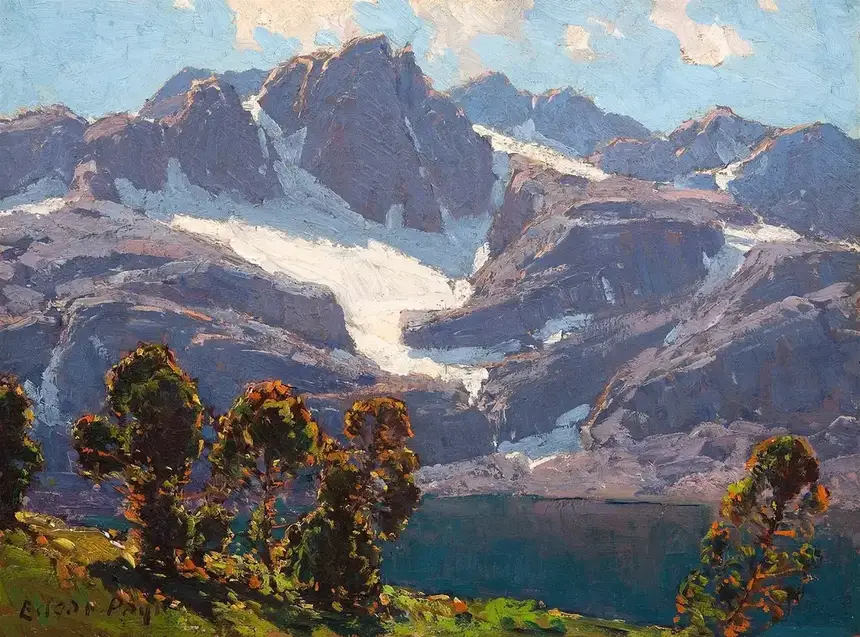
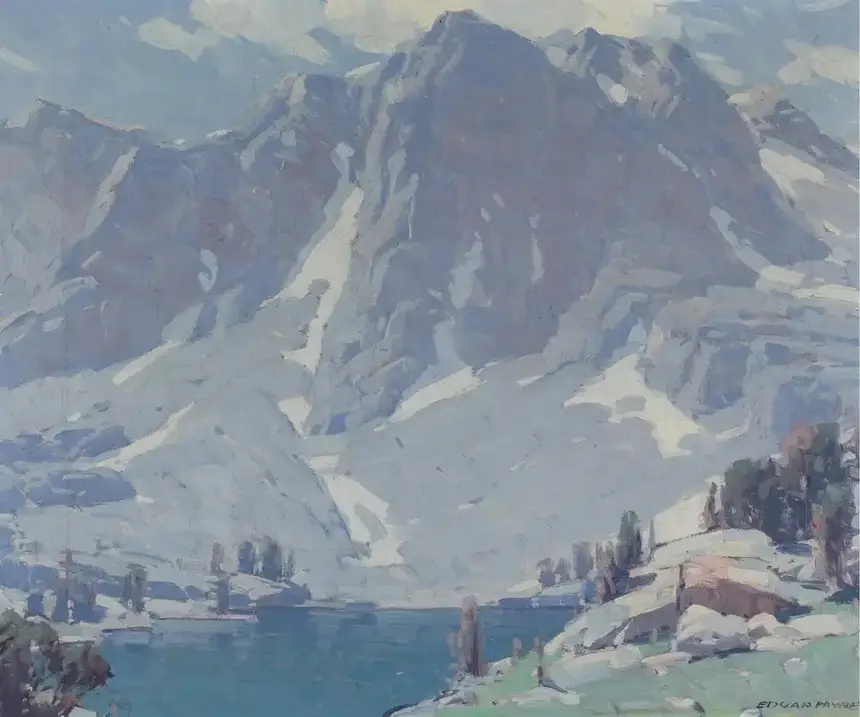
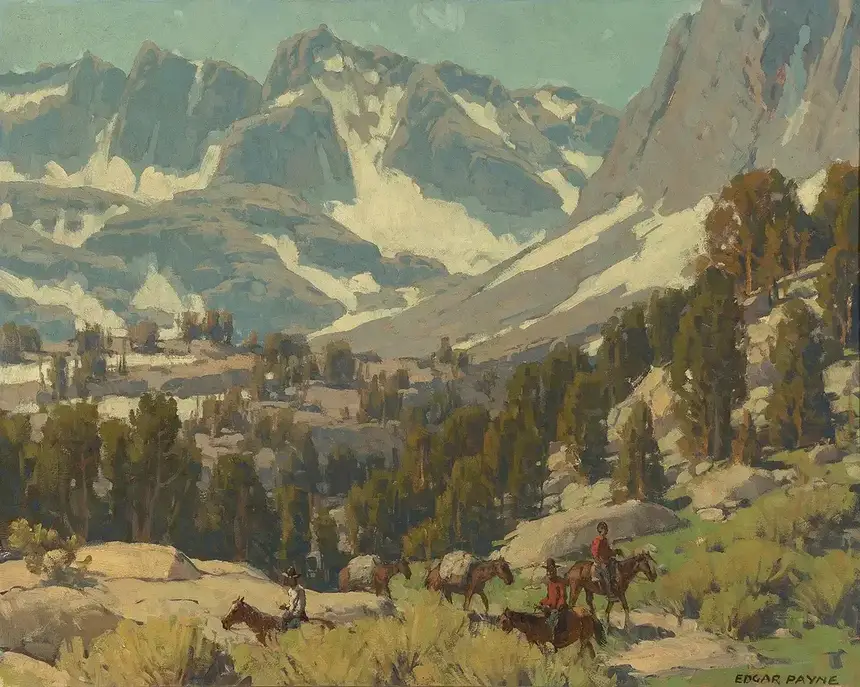
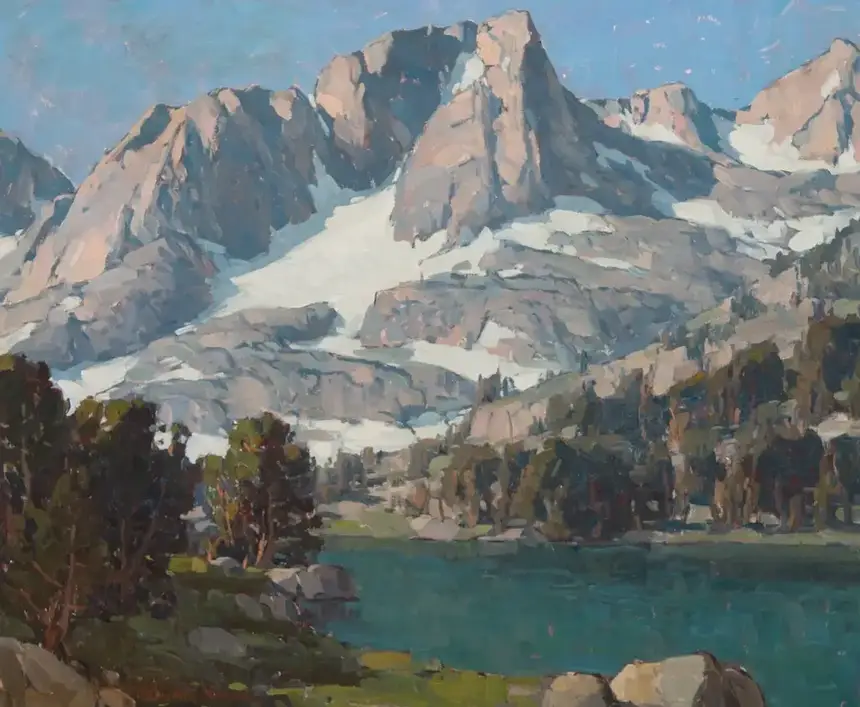
Edgar Alwyn Payne Alpine Lake rewards a second look because the light is doing something specific, and it only does it in oil.
Depth here is a matter of edges: sharp in front, lost at the back. It is the hardest thing to print and the easiest to paint.
The brightest passage is kept small. That is what makes it read as bright.
Saturated colour is kept for a small area; the rest is deliberately knocked back.
The brushwork is left visible, which is the whole argument for painting it by hand.
Getting Edgar Alwyn Payne Alpine Lake right means painting it in the right order, and the order is not obvious.
It suits a room with warm, low light. Strong downlighting flattens the surface.
| Artist | Edgar Payne |
|---|---|
| Title | Edgar Alwyn Payne Alpine Lake |
| Medium | Oil on canvas, hand-painted to order |
| Reproduction | Hand-painted oil on canvas, made to order |
| Copyright | Public domain; the original is out of copyright |
Why hand-painting matters here
A print reproduces the shapes and drops the substance. It is the substance you are buying.
Edges are left soft where the form turns away and sharp where it does not. That single habit is what separates a painting from a copy.
| Aspect | Hand-painted oil | Printed canvas |
|---|---|---|
| Corrections | We adjust it and repaint the passage | The file is reprinted or it is not |
| Edges | Chosen by the painter, passage by passage | Whatever the file happens to contain |
| Impasto | Real paint standing off the canvas | Flat ink, sometimes embossed to imitate |
| Available sizes | Whatever you need, painted to order | What the printer can output |
| Later on | Can be restored, re-framed, handed on | Replaceable, and usually replaced |
What takes time here is the number of separate decisions, not the size of the canvas.
Every canvas is painted to order, so the quote follows your size, frame and destination rather than a fixed list. Tell us what you need on WhatsApp and we reply with an exact figure, usually within the hour. You deal directly with the studio that paints it — no reseller layer.
The sequence on our floor
Every canvas is painted to order, so nothing is pulled off a shelf. This is the sequence:
- We start with the canvas itself — stretched, sized and left to settle before any colour is mixed.
- The drawing goes down — charcoal or thin paint, done by eye rather than traced from a printout.
- The big shapes are blocked in — thin paint, one colour at a time, the whole canvas at once.
- The values are established — this is the stage that decides whether the painting works.
- Colour is built up — warmer and cooler versions of each passage, laid over the underpainting.
- Detail and highlights last — put on thickly and then not touched again.
- It dries, then gets varnished — and only then is it photographed for you.
The hardest passage is the quiet one, where a small mistake has nowhere to hide.
Keeping it
Once the varnish has cured the surface can be cleaned by a conservator, but in a normal house it will not need it for decades.
Framing
Framing is quoted separately, so you can decide after you have seen the finished canvas in photographs.
We can supply a simple floater frame, a traditional gilt, or nothing at all. It is your call.
What it is made of
Oil paint dries by oxidation, not evaporation, which is why a finished canvas needs weeks before it travels. Nothing is sprayed, sealed or laminated. The surface you see is paint and varnish, and that is all.
Large canvases get a cross-brace; anything over about a metre and a half needs one. Stretcher bars are kiln-dried and wedged, so the canvas can be re-tensioned years later.
Getting the size right
Any size is possible. These are simply the ones that come up most often in quotes:
| Size (inches) | Size (cm) | Best for |
|---|---|---|
| 30 × 24 in | 76 × 61 cm | Dining room, bedroom feature wall |
| 24 × 20 in | 60 × 50 cm | Study, home office, above a desk |
| 20 × 16 in | 50 × 40 cm | Bedroom, hallway, above a console |
| 16 × 12 in | 40 × 30 cm | A shelf, a small wall, a gallery group |
| 64 × 48 in | 163 × 122 cm | Villa scale, lobby, hospitality wall |
| 48 × 36 in | 122 × 91 cm | Large living room, stairwell, loft |
We will size the canvas to the room, not to a stock list. Send us the measurement. Import charges, where they exist, are the buyer's responsibility (DAP). We never add them to the quote and never guess what they will be.
This reads well above a sofa or a sideboard, where it will be seen from two to three metres.
Send the wall, the size and whether you want a frame, and we will quote.
💬 Get a Quote for Edgar Alwyn Payne Alpine LakeFrom order to your wall
Allow 9–15 days for the painting itself. Shipping is a separate line on your quote — you see it before payment, not after.
In transit it is typically 7–10 business days by air, tracked door to door. Every shipment goes out with tracking. We do not send anything untracked.
Nothing ships before you have seen it. Photographs of the finished painting go to you first. Changes are handled by telling us what to change; we change it and send new photographs.
We quote DAP, so any duty or tax your country charges is settled by you at import. We do not add a tax line of our own.
You pay a deposit to start and the remainder before shipping. Nothing is hidden in between. If a crate arrives damaged, send us photographs within 48 hours and contact us directly — we will sort it out with you.
What people ask us
When will it actually arrive?
Studio time is 9–15 days, then a few more days for the oil to set before we can photograph and pack it. We tell you where your canvas is at each stage.
Why not just print it?
A print flattens the surface into a poster: the distance collapses and the highlights turn to grey. Paint keeps the depth and the texture the original was built from.
What happens after I message you?
You tell us the painting, size and whether you want a frame. We quote, a painter starts on your canvas, and you get photographs before it ships.
Is owning a reproduction legal?
Yes. The painting is out of copyright because Edgar Payne died more than 70 years ago. We paint copies honestly and never claim they are originals.
What does it cost?
Every canvas is quoted on size, frame and destination rather than a fixed list. Tell us what you need and we reply with an exact figure.
Can you paint a different work by Edgar Payne?
Yes. Send the image and we will quote it, or browse the other paintings we have listed.
Does it come framed?
Frames are priced on their own line. Most clients choose after seeing the photographs.
Is it really painted by hand?
Yes — oil on canvas, brush and knife. There is no printing, no giclée and no canvas transfer at any stage.
What is the canvas made of?
Cotton duck as standard, linen on request, artist-grade oil paint, and a final varnish once the paint is fully dry.
Can you paint it from a different photograph of the same work?
Yes. If you have a better reference, send it on WhatsApp and we will work from yours.
How long does it take?
Allow 9–15 days for the painting itself, then roughly 7–10 business days in transit.
Can I change the size?
Yes. The canvas is painted to your measurement, not taken from a stock list.