Where this painting comes from
Edvard Munch died in 1944. That puts the painting well outside copyright, which is why we can paint it and you can own it anywhere in the world.
Ours is a painting made with brushes. There is no giclée, no canvas transfer and no digital underlayer anywhere in the process.
The painting was made in the years before 1944, and what we reproduce is the record of it, not the object.
You are buying a painting, not a file. That distinction is the whole business we are in.
What to look at
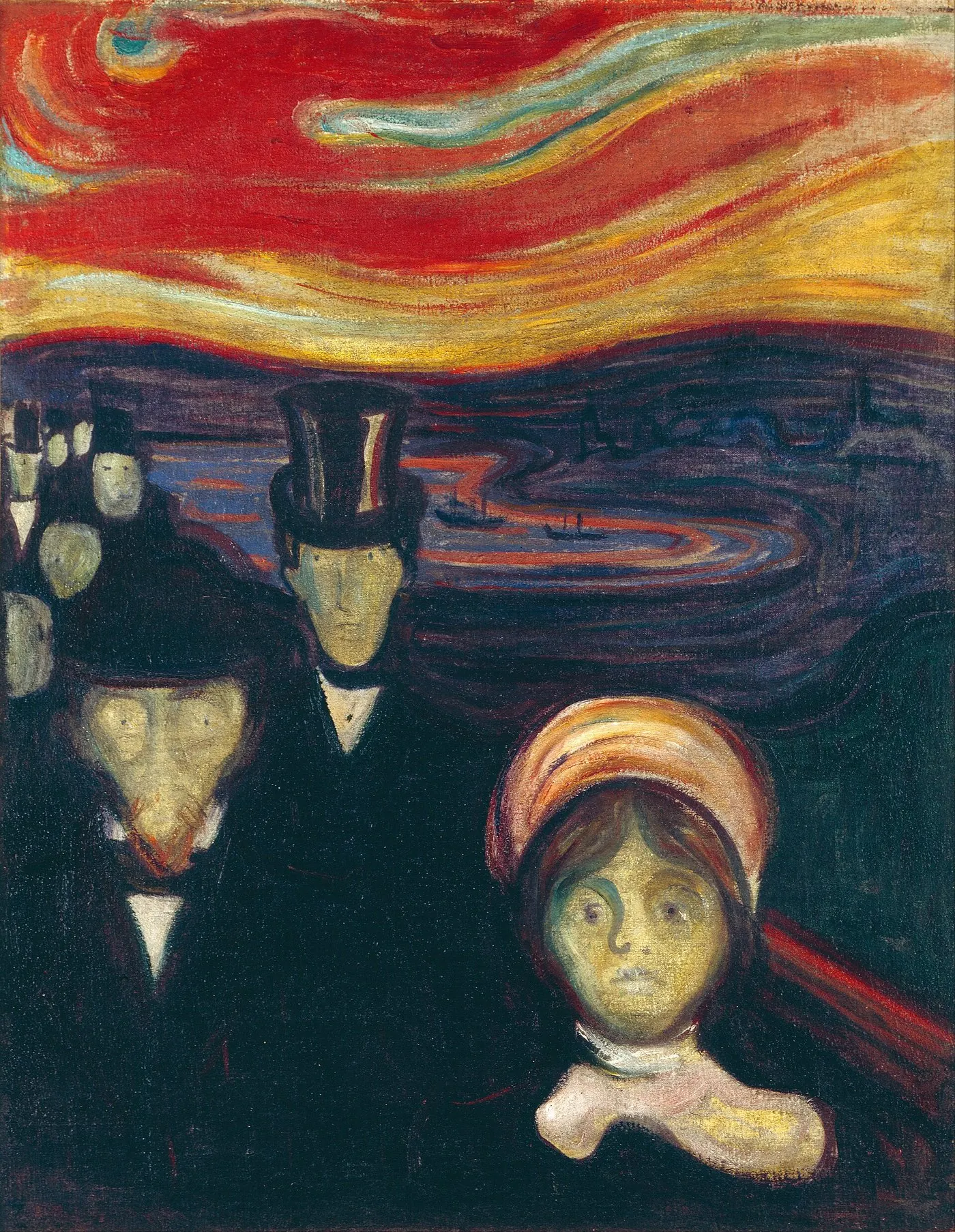
A print flattens Anxiety Hand-Painted Oil Reproduction completely. The whole point of the painting is that it is not flat.
The composition is built to be seen from across a room, and we size it accordingly.
Colour temperature does the pushing and pulling instead of light and shade.
Saturated colour is kept for a small area; the rest is deliberately knocked back.
Edges are made by the brush, not by an outline, and they are the hardest thing to copy.
The risk with an abstract composition is overworking, and the way to avoid it is knowing when to stop.
It is a picture for a room you use, not a corridor you walk through.
| Artist | Edvard Munch |
|---|---|
| Title | Anxiety Hand-Painted Oil Reproduction |
| Created (original) | 1908 |
| Medium | Oil on canvas, hand-painted to order |
| What you receive | A hand-painted oil painting on canvas |
| Public domain | Yes — the artist died over 70 years ago |
What a print loses
Prints are good at information and bad at paint. This subject is mostly paint.
Our painter follows the same logic rather than copying a photograph of it: the far distances go down cool and weak, the near ground stays loaded, and nothing is blended flat.
| Aspect | Hand-painted oil | Printed canvas |
|---|---|---|
| Edge quality | Soft where the form turns, sharp where it does not | Uniformly sharp or uniformly blurred |
| How it ages | Warms and settles; cleanable by a conservator | Fades, then cracks at the stretcher |
| Texture | Ridges and drag you can see from across a room | None, or a printed imitation of it |
| What it takes | One painter, several days, start to finish | A machine, a few minutes |
| Size | Any size, painted to your wall | Limited by the printer |
The difficulty is restraint: leaving out most of what a photograph would show.
Every canvas is painted to order, so the quote follows your size, frame and destination rather than a fixed list. Tell us what you need on WhatsApp and we reply with an exact figure, usually within the hour. There is no agency in between; the studio that paints your canvas is the one answering your messages.
How your painting is made
This is how the painting is built, in the order our painters build it:
- The canvas is stretched and primed — cotton or linen, sized and ready before any paint goes near it.
- Laying in the drawing — done by eye from the reference, not traced or projected.
- Blocking the masses — thin paint, working the whole surface rather than one corner at a time.
- Setting the key — how dark the darks go determines everything that follows.
- Building the colour — a warm and a cool version of each passage, put down in order.
- Finishing passes — the loaded highlights go on at the end and stay there.
- Drying and varnishing — the final varnish goes on once the paint has set, before we photograph it.
Anyone can copy the shapes. The skill is in the transitions, and that is what takes the days.
What it is made of
Linen is worth the extra cost above about a metre across, because it holds tension better in humid rooms. Nothing is sprayed, sealed or laminated. The surface you see is paint and varnish, and that is all.
Oil paint dries by oxidation, not evaporation, which is why a finished canvas needs weeks before it travels. Pigment is artist-grade oil colour, not acrylic and not house paint. It behaves differently and it lasts.
Keeping it
Do not wipe it with anything wet. Dust lightly, hang it somewhere stable, and forget about it.
Framing
If you are shipping, an unframed canvas rolled in a tube is considerably cheaper to move than a framed one.
We can supply a simple floater frame, a traditional gilt, or nothing at all. It is your call.
Sizing it
Because each piece is painted from scratch, you are not limited to stock dimensions. These are the sizes clients ask for most:
| Size (inches) | Size (cm) | Best for |
|---|---|---|
| 24 × 36 in | 61 × 91 cm | Stairwell, tall entrance, gallery group |
| 30 × 45 in | 76 × 114 cm | Double-height space, narrow feature wall |
| 36 × 54 in | 91 × 137 cm | Lobby, chapel-like corner, tall foyer |
| 12 × 16 in | 30 × 40 cm | A narrow wall between two openings |
We will size the canvas to the room, not to a stock list. Send us the measurement. We sell DAP: the price covers the painting and the freight, and any import duties or taxes are the buyer's to settle with customs. We do not collect them and we do not estimate them.
A plain wall is better than a busy one; the painting supplies the interest.
Tell us your size and frame — we reply with an exact quote, usually within the hour.
💬 Get a Anxiety Quote on WhatsAppPlanning a wall or comparing options? Save this painting to Pinterest
Getting it to you
From order to finished canvas is 9–15 days. Freight appears as a separate line on the quote and is fixed before you pay.
Transit is usually 7–10 business days, tracked all the way. We send photographs of the finished painting before it is packed, and again once it is boxed.
You approve the painting from photographs before it is packed — that is the checkpoint. Adjustments are part of the process. Say what you want different and it gets done.
Our terms are DAP, meaning the freight is paid by us and any import charges are yours to settle. We will not estimate them, because the figure is your customs authority's to set.
A deposit starts the canvas and books the painter's time; the balance is due before the crate leaves. Report any transit damage within 48 hours with photographs and we will deal with the carrier. We will not promise a payout, but we will not leave you to argue alone either.
The practical questions
Can I resell the reproduction?
Yes. Because the underlying work is in the public domain, the hand-painted canvas is yours to sell, gift or install commercially.
Is there a rush option?
It depends on the canvas and what else is in the studio. Ask on WhatsApp with your size and we will tell you straight what is possible.
Does changing the size change the composition?
No — we keep the original's proportions and scale from there, rather than cropping the image to fit a standard frame.
How do I hang it?
Centre it at about 145 cm from the floor, or two-thirds the width of the furniture below it. We will tell you the exact number for your wall.
Can you paint it from a different photograph of the same work?
Send your own reference image and we will paint from that instead.
Does it come framed?
Framing is quoted separately, so you can decide once you have seen the finished painting in photographs.
What is the canvas made of?
Cotton duck as standard, linen on request, artist-grade oil paint, and a final varnish once the paint is fully dry.
Can you change the colours to suit my room?
We can shift the palette, but we will tell you honestly when a change would spoil the painting.
What does it cost?
Every canvas is quoted on size, frame and destination rather than a fixed list. Tell us what you need and we reply with an exact figure.
Is owning a reproduction legal?
Yes. Edvard Munch died more than 70 years ago, so the work is in the public domain and owning a hand-painted version is legal anywhere. We never pass ours off as the original.
Do you sell prints?
No. Hand-painted oil on canvas only. No printing, no giclée, no canvas transfer.
Who pays the import duty?
You do. We sell DAP, so any duty or tax your customs authority charges is settled by you at import. We do not collect it and we do not estimate it.
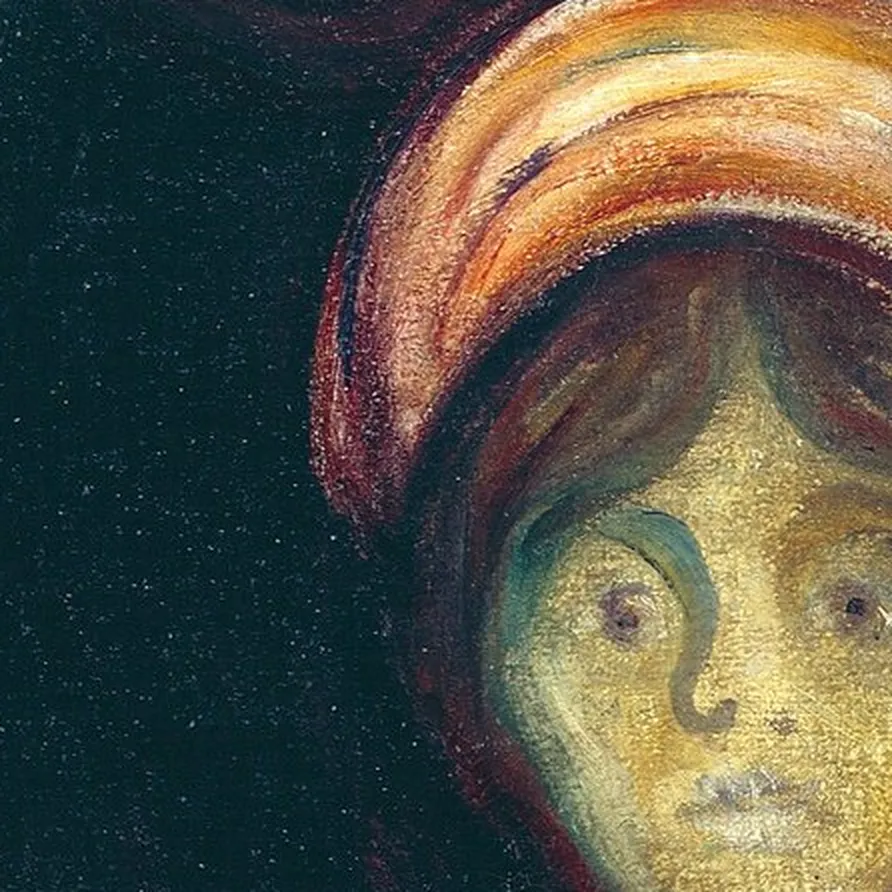
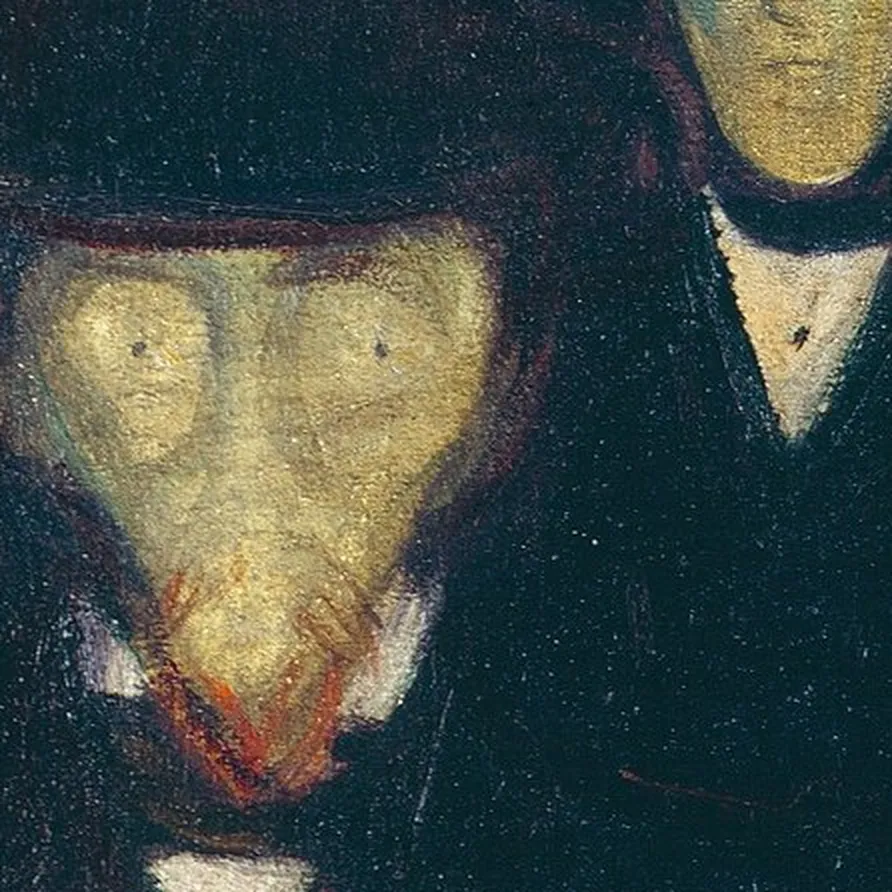
Brushwork details
Close-up crops of this 100% hand-painted oil reproduction — real oil texture, never a print.