What you are buying into
Edward Burne-Jones died in 1898. That puts the painting well outside copyright, which is why we can paint it and you can own it anywhere in the world.
We paint it in oil on canvas, one at a time, in Dafen Village. Nothing is printed, scanned or transferred.
It is an original composition painted before 1898, and our version is painted from the surviving image of it.
You are buying a painting, not a file. That distinction is the whole business we are in.
Where the painting lives
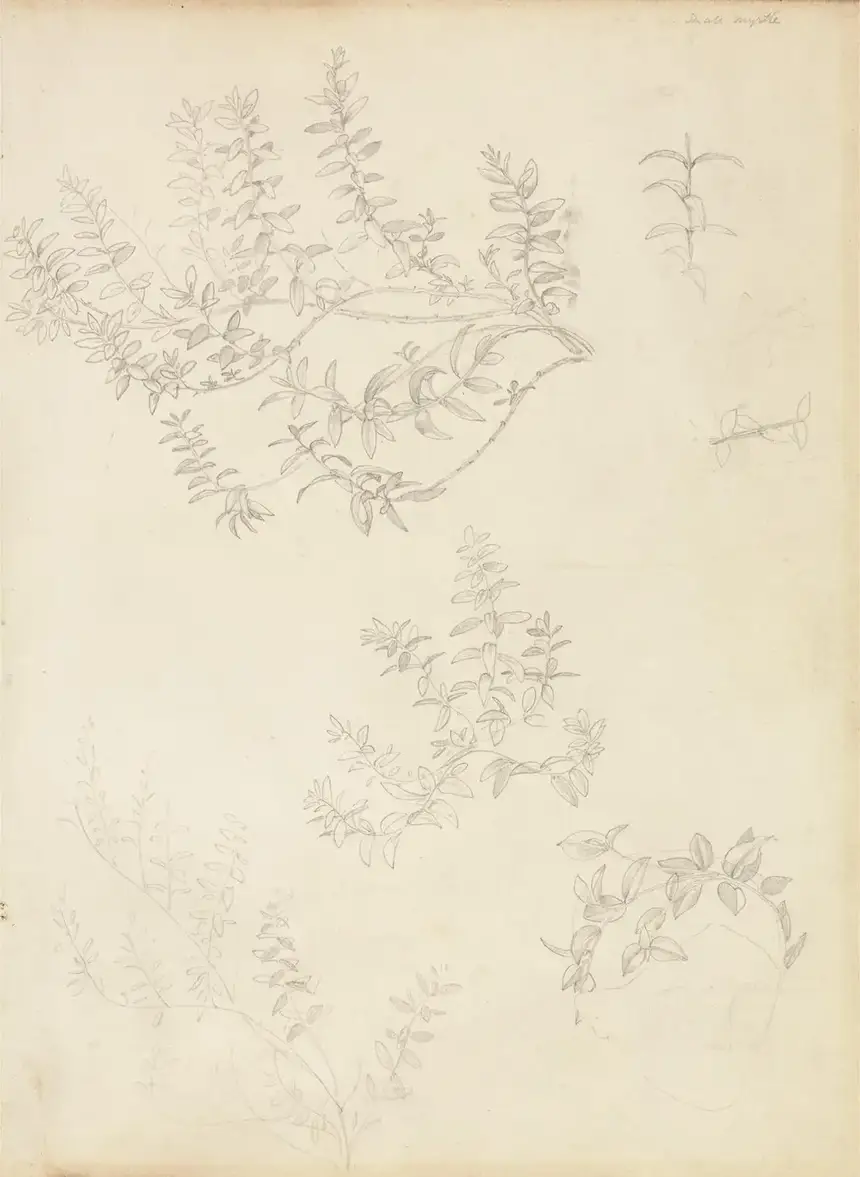
Painted by hand, Sketches of Myrtle and a keeps the hesitation in the brushwork that gives the place its scale.
The near ground is painted loaded and the far ground thin. That single decision creates the whole space.
Our painter leaves the highlights until last and puts them on thickly, so they stand off the surface.
The darks are mixed, not blackened — black straight from the tube would kill the passage.
The thick paint is kept for the light and the thin paint for the dark, which is the traditional way round.
Getting Sketches of Myrtle and a right means painting it in the right order, and the order is not obvious.
This reads well above a sofa or a sideboard, where it will be seen from two to three metres.
| Artist | Edward Burne-Jones |
|---|---|
| Title | Sketches of Myrtle and a |
| Medium | Oil on canvas, hand-painted to order |
| Our version | Oil on canvas, painted by hand to order |
| Original status | Public domain (artist deceased) |
Why this one cannot be printed
Prints are good at information and bad at paint. This subject is mostly paint.
Edges are left soft where the form turns away and sharp where it does not. That single habit is what separates a painting from a copy.
| Aspect | Hand-painted oil | Printed canvas |
|---|---|---|
| Handling of colour | Mixed on the palette and finished on the canvas | Fixed by the colour profile |
| Available sizes | Whatever you need, painted to order | What the printer can output |
| Changing something | Tell us and the passage gets repainted | Usually means starting the file again |
| Value over time | Can be re-stretched, cleaned and re-framed | Little value beyond the print |
| Surface | Hand-painted oil on canvas | Ink on canvas, flat |
The difficulty is restraint: leaving out most of what a photograph would show.
Every canvas is painted to order, so the quote follows your size, frame and destination rather than a fixed list. Tell us what you need on WhatsApp and we reply with an exact figure, usually within the hour. You are buying from the workshop, not a catalogue.
How the canvas is built
This is how the painting is built, in the order our painters build it:
- We start with the canvas itself — stretched, sized and left to settle before any colour is mixed.
- Laying in the drawing — done by eye from the reference, not traced or projected.
- The big shapes are blocked in — thin paint, one colour at a time, the whole canvas at once.
- Getting the values right — the stage that decides whether the finished painting holds together.
- Building the colour — a warm and a cool version of each passage, put down in order.
- Detail and highlights last — put on thickly and then not touched again.
- Drying and varnishing — the final varnish goes on once the paint has set, before we photograph it.
Anyone can copy the shapes. The skill is in the transitions, and that is what takes the days.
Keeping it
Once the varnish has cured the surface can be cleaned by a conservator, but in a normal house it will not need it for decades.
Framing
Framing is quoted separately, so you can decide after you have seen the finished canvas in photographs.
Framing is quoted separately, so you can decide after you have seen the finished canvas in photographs.
What it is made of
The paint is built in layers, fat over lean, which is what stops it cracking later. We use a neutral-sized ground so the whites stay warm rather than going blue over time.
We buy pigment in tubes from the same suppliers the village has used for years, not in bulk drums. Stretcher bars are kiln-dried and wedged, so the canvas can be re-tensioned years later.
What size works
You are not choosing from a list; you are telling us a measurement. These are the common ones:
| Size (inches) | Size (cm) | Best for |
|---|---|---|
| 16 × 12 in | 40 × 30 cm | A shelf, a small wall, a gallery group |
| 64 × 48 in | 163 × 122 cm | Villa scale, lobby, hospitality wall |
| 48 × 36 in | 122 × 91 cm | Large living room, stairwell, loft |
| 40 × 30 in | 102 × 76 cm | Living room focal wall, above a sofa |
Tell us the wall width and we will tell you what looks right rather than what is standard. Duties and import taxes are the buyer's account (DAP). Your customs authority sets them; we do not.
For a stairwell or a double-height space, go larger than you think — the composition was built for distance.
Tell us the size and frame — exact quote back, usually within the hour.
💬 Get a Quote for Sketches of Myrtle and a Head Crowned with MyrtleTimeline and shipping
The painting takes 9–15 days, and delivery is priced separately on the quote so there is no surprise later.
In transit it is typically 7–10 business days by air, tracked door to door. Unframed canvases are rolled face-out on a tube; framed ones are corner-protected and crated.
You approve the painting from photographs before it is packed — that is the checkpoint. If something is not right, tell us what to adjust and we adjust it.
Our terms are DAP, meaning the freight is paid by us and any import charges are yours to settle. We will not estimate them, because the figure is your customs authority's to set.
A deposit starts the canvas and books the painter's time; the balance is due before the crate leaves. Damage in transit should be reported to us within 48 hours, with photographs. We pursue it with the carrier rather than promising a refund.
Questions worth asking
How do I know what size will look right?
Measure the wall and send a photograph. We will say honestly if the canvas you have in mind is too small for the space, which is the most common mistake.
What if my wall is an unusual shape?
That is normal for us. Send the measurements and we will work out a canvas proportion that suits the space.
What about duties and import taxes?
Those are the buyer's responsibility (DAP). The amounts are set by your customs authority, not by us.
What does it cost?
Every canvas is quoted on size, frame and destination rather than a fixed list. Tell us what you need and we reply with an exact figure.
What if it arrives damaged?
send us photographs within 48 hours and contact us directly — we will sort it out with you.
Can you paint it from a different photograph of the same work?
Send your own reference image and we will paint from that instead.
Can you paint a different work by Edward Burne-Jones?
Yes — send us the image, or look through the other Edward Burne-Jones works on the site.
How long does it take?
Allow 9–15 days for the painting itself, then roughly 7–10 business days in transit.
Can I change the size?
Any size you like. We paint to the number you give us rather than to a standard range.
Who pays the import duty?
You do. We sell DAP, so any duty or tax your customs authority charges is settled by you at import. We do not collect it and we do not estimate it.
Do you ship to my country?
We export to more than 20 countries. Tell us where you are and we will quote the freight as a separate line.
Do you sell prints?
No. Hand-painted oil on canvas only. No printing, no giclée, no canvas transfer.