The original, and why we can paint it
Élisabeth Vigée Le Brun died in 1842, so the work has been in the public domain for decades. Reproducing it by hand is legal, and so is owning one.
Ours is a painting made with brushes. There is no giclée, no canvas transfer and no digital underlayer anywhere in the process.
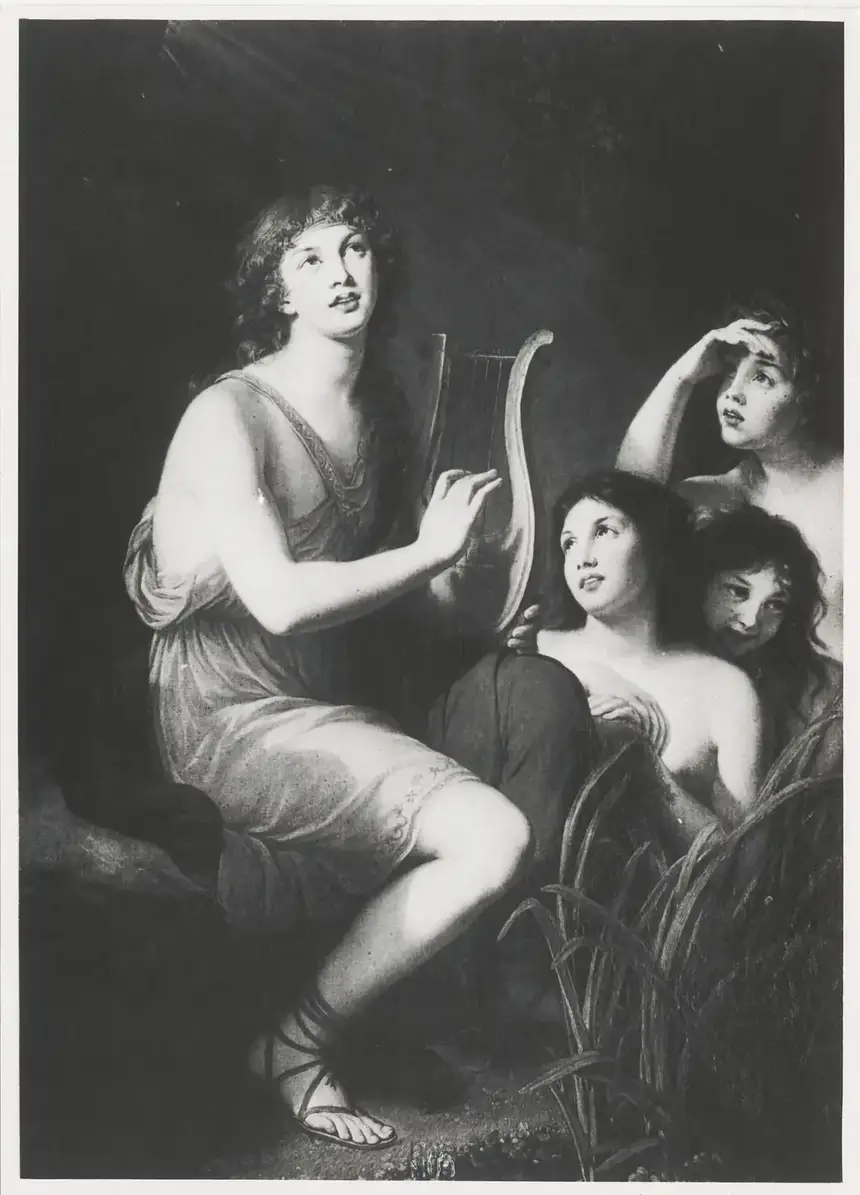
It is an original composition painted before 1842, and our version is painted from the surviving image of it.
You are buying a painting, not a file. That distinction is the whole business we are in.
What the painting is doing
Prince Henryk Lubomirski as rewards a second look because the light is doing something specific, and it only does it in oil.
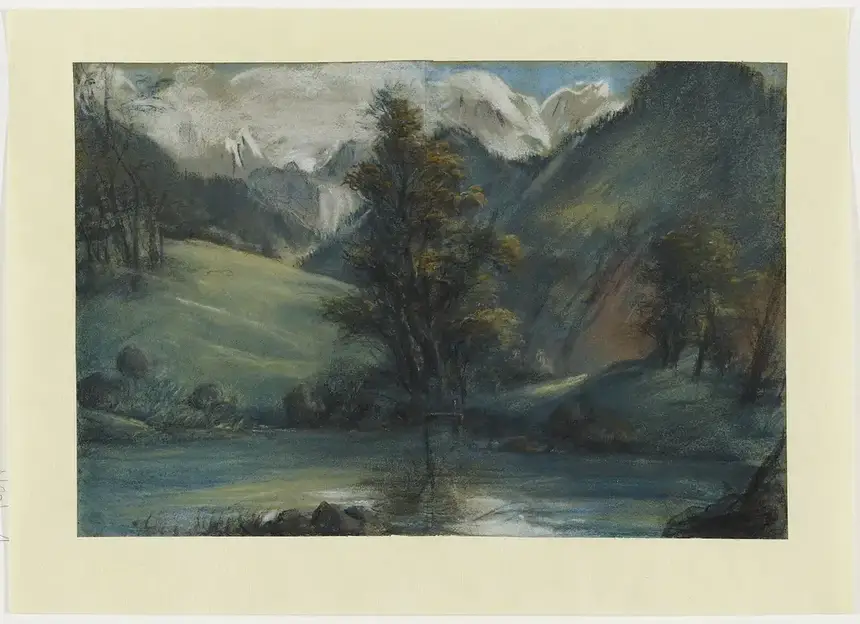
Space in a landscape is made with value, not perspective: things that are further away are painted cooler and weaker.
We do not brighten the picture for reproduction. The original's key is kept as it is.
Colour here is mixed for the passage, not for the object, which is why nothing looks like it was filled in.
The brushwork is left visible, which is the whole argument for painting it by hand.
The hardest passage is the quiet one, where a small mistake has nowhere to hide.
It suits a room with warm, low light. Strong downlighting flattens the surface.
| Artist | Élisabeth Vigée Le Brun |
|---|---|
| Title | Prince Henryk Lubomirski as |
| Medium | Oil on canvas, hand-painted to order |
| Our version | Oil on canvas, painted by hand to order |
| Copyright | Public domain; the original is out of copyright |
Why this one cannot be printed
The difference is not subtle when the two hang side by side. Ink sits on the surface; oil stands off it.
Paint goes on in the original's order — thin first, thick last — so the surface behaves the way the painter intended.
| Aspect | Hand-painted oil | Printed canvas |
|---|---|---|
| The surface | Built up with brushes and knives | Printed flat in one pass |
| How it ages | Warms and settles; cleanable by a conservator | Fades, then cracks at the stretcher |
| Size | Any size, painted to your wall | Limited by the printer |
| Edges | Chosen by the painter, passage by passage | Whatever the file happens to contain |
| Texture | Ridges and drag you can see from across a room | None, or a printed imitation of it |
The risk with a landscape is overworking, and the way to avoid it is knowing when to stop.
Every canvas is painted to order, so the quote follows your size, frame and destination rather than a fixed list. Tell us what you need on WhatsApp and we reply with an exact figure, usually within the hour. You are talking to the people who will actually paint it, not a middleman.
The sequence on our floor
The order of work matters as much as the work itself. Ours runs like this:
- The canvas is stretched and primed — cotton or linen, sized and ready before any paint goes near it.
- Laying in the drawing — done by eye from the reference, not traced or projected.
- Blocking the masses — thin paint, working the whole surface rather than one corner at a time.
- The values are established — this is the stage that decides whether the painting works.
- Colour is built up — warmer and cooler versions of each passage, laid over the underpainting.
- Detail and highlights last — put on thickly and then not touched again.
- Left to dry before varnish — nothing is photographed or packed until the surface is ready.
Matching the original's degree of finish is harder than matching its colours.
Canvas, paint and varnish
Oil paint dries by oxidation, not evaporation, which is why a finished canvas needs weeks before it travels. The ground is a proper acrylic sizing, so the oil does not rot the fabric over time.
Nothing is sprayed, sealed or laminated. The surface you see is paint and varnish, and that is all. Pigment is artist-grade oil colour, not acrylic and not house paint. It behaves differently and it lasts.
Living with it
Once the varnish has cured the surface can be cleaned by a conservator, but in a normal house it will not need it for decades.
Framing
A frame is a separate line on the quote, not a bundle. You choose it once the painting exists.
Most clients wait for the photographs before choosing a frame, which is the sensible order.
Sizing it
You are not choosing from a list; you are telling us a measurement. These are the common ones:
| Size (inches) | Size (cm) | Best for |
|---|---|---|
| 32 × 24 in | 81 × 61 cm | Living room, above a sideboard |
| 30 × 24 in | 76 × 61 cm | Dining room, bedroom feature wall |
| 24 × 20 in | 60 × 50 cm | Study, home office, above a desk |
| 20 × 16 in | 50 × 40 cm | Bedroom, hallway, above a console |
| 16 × 12 in | 40 × 30 cm | A shelf, a small wall, a gallery group |
| 64 × 48 in | 163 × 122 cm | Villa scale, lobby, hospitality wall |
Anything outside this table is fine — we paint to the number you give us. Import charges, where they exist, are the buyer's responsibility (DAP). We never add them to the quote and never guess what they will be.
For a stairwell or a double-height space, go larger than you think — the composition was built for distance.
Message us the dimensions you have in mind and we will come back with a figure.
💬 Get a Quote for Prince Henryk Lubomirski as Genius of FameGetting it to you
Allow 9–15 days for the painting itself. Shipping is a separate line on your quote — you see it before payment, not after.
Transit is usually 7–10 business days, tracked all the way. We send photographs of the finished painting before it is packed, and again once it is boxed.
Before anything is packed, you get photographs of the actual canvas and a chance to ask for changes. Adjustments are part of the process. Say what you want different and it gets done.
DAP terms: we pay the freight, you settle any duty or tax your country applies. We do not collect taxes on anyone's behalf.
You pay a deposit to start and the remainder before shipping. Nothing is hidden in between. Damage in transit should be reported to us within 48 hours, with photographs. We pursue it with the carrier rather than promising a refund.
The practical questions
What about duties and import taxes?
Those are the buyer's responsibility (DAP). The amounts are set by your customs authority, not by us.
How do I know what size will look right?
Measure the wall and send a photograph. We will say honestly if the canvas you have in mind is too small for the space, which is the most common mistake.
When will it actually arrive?
Studio time is 9–15 days, then a few more days for the oil to set before we can photograph and pack it. We tell you where your canvas is at each stage.
How do I hang it?
Centre it at about 145 cm from the floor, or two-thirds the width of the furniture below it. We will tell you the exact number for your wall.
Can I change the size?
Any size you like. We paint to the number you give us rather than to a standard range.
Do you sell prints?
No prints at all — no giclée, no canvas transfer, nothing machine-made.
Does it come framed?
Framing is quoted separately, so you can decide once you have seen the finished painting in photographs.
What does it cost?
There is no price list, because the number depends on your size and frame. Message us and we will quote exactly.
Do you take a deposit?
Work begins on a deposit and ships once the balance is paid. Nothing is charged that is not on the quote.
Will I see it before it ships?
Yes. We send photographs of the finished canvas and wait for your reply before packing.
Is it really painted by hand?
Yes. One painter, oil paint, brushes. We do not own a printer that touches canvas.
How long does it take?
From order to finished canvas is 9–15 days; delivery adds about 7–10 business days by air.