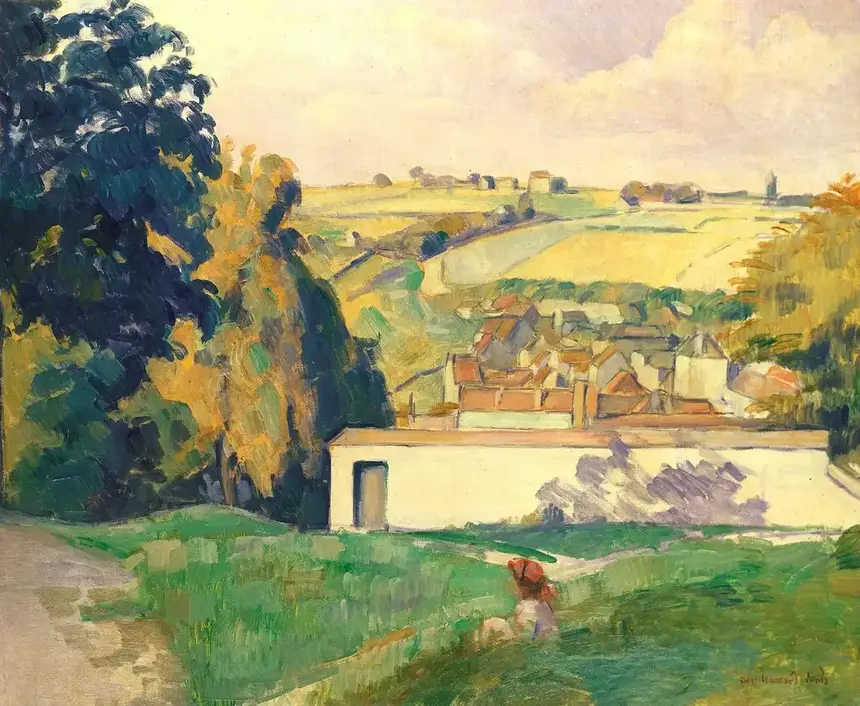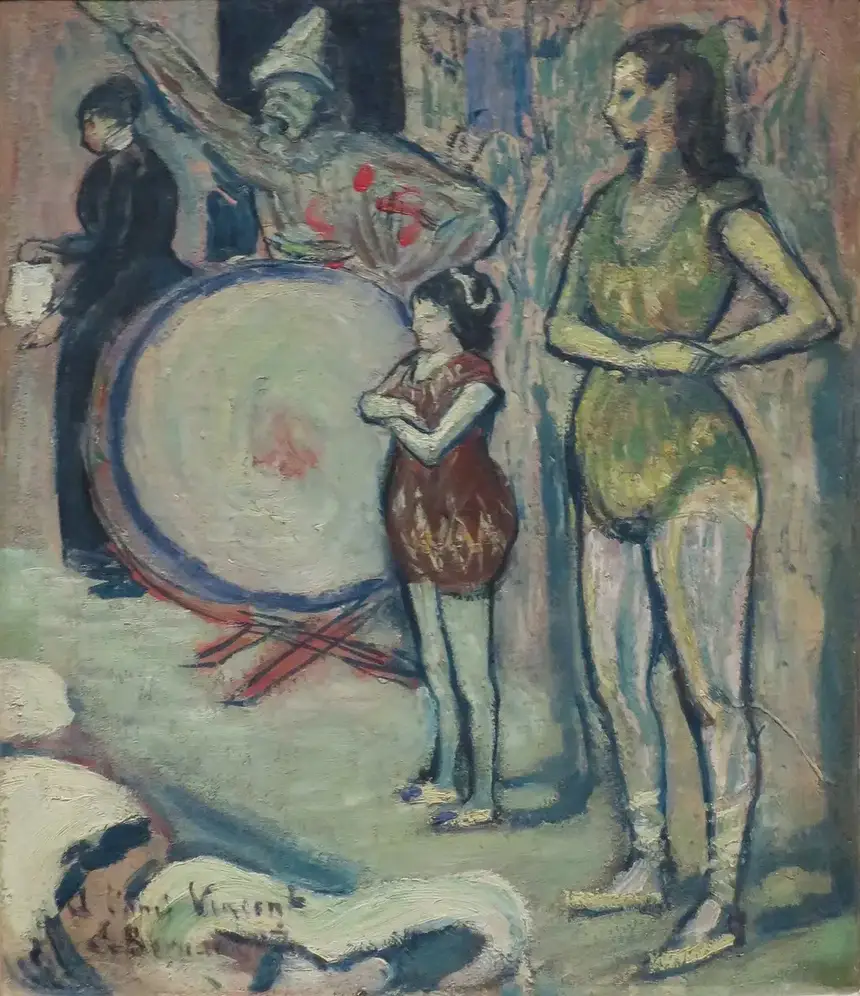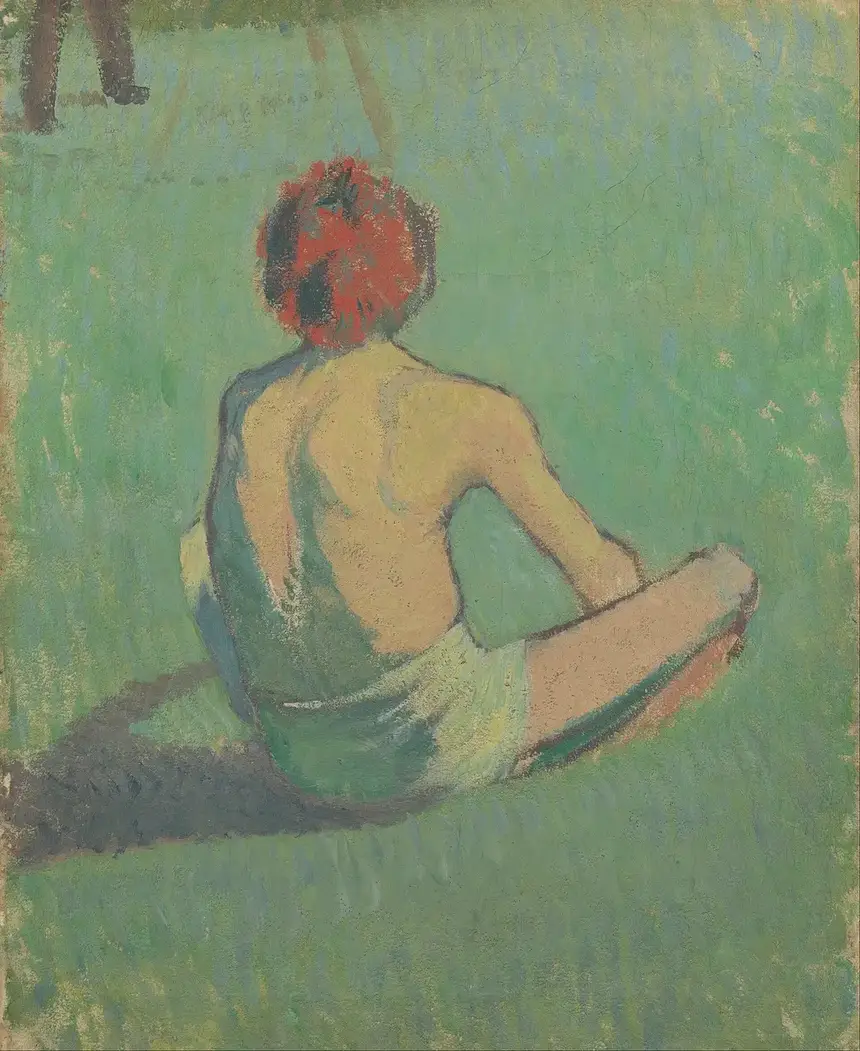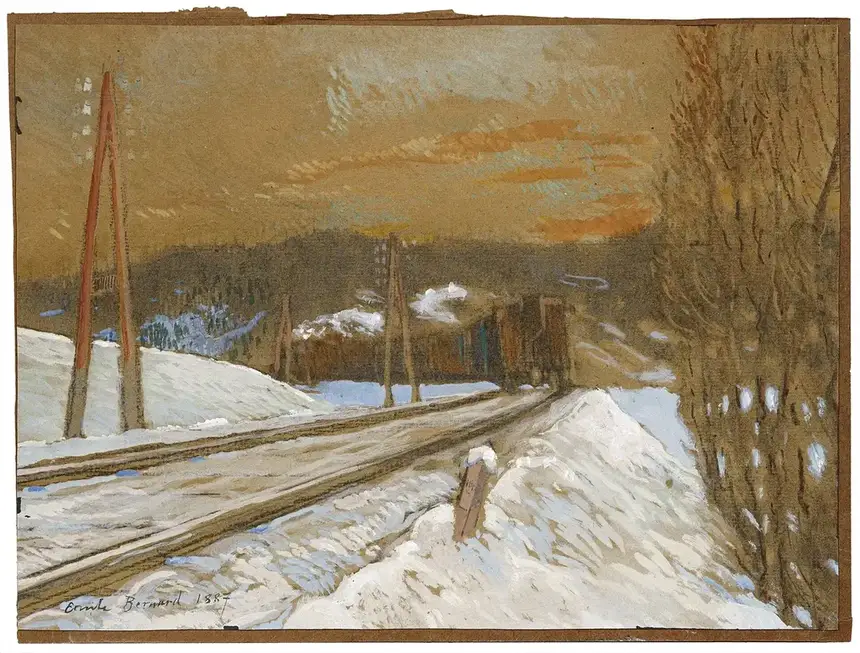
The original, and why we can paint it
Émile Bernard died in 1941. That puts the painting well outside copyright, which is why we can paint it and you can own it anywhere in the world.
We paint it in oil on canvas, one at a time, in Dafen Village. Nothing is printed, scanned or transferred.
It is an original composition painted before 1941, and our version is painted from the surviving image of it.
What arrives is a canvas with paint on it, made by a person. That is the only thing we sell.
What the painting is doing
Ours is painted from the source image, stroke by stroke, so Emile Bernard An der keeps the order it was originally built in.
Our painter blocks the big shapes first and lets the detail come last, so the composition holds at any size.
The light in Emile Bernard An der has a direction, and the painter keeps it consistent across every object in the picture.
Whites here are never white. They are warm or cool depending on the light, and that is what makes them read.
Our painter loads the brush differently for the near and far passages, and you can read the difference.
The risk with a winter scene is overworking, and the way to avoid it is knowing when to stop.
Hang it at eye level — roughly 145 cm from the floor to the centre — and it will hold the wall.
| Artist | Émile Bernard |
|---|---|
| Title | Emile Bernard An der |
| Created (original) | 1887 |
| Medium | Oil on canvas, hand-painted to order |
| What you receive | A hand-painted oil painting on canvas |
| Public domain | Yes — the artist died over 70 years ago |
What a print loses
Prints are good at information and bad at paint. This subject is mostly paint.
Our painter follows the same logic rather than copying a photograph of it: the far distances go down cool and weak, the near ground stays loaded, and nothing is blended flat.
| Aspect | Hand-painted oil | Printed canvas |
|---|---|---|
| Handling of colour | Mixed on the palette and finished on the canvas | Fixed by the colour profile |
| Texture | Ridges and drag you can see from across a room | None, or a printed imitation of it |
| Available sizes | Whatever you need, painted to order | What the printer can output |
| Edges | Chosen by the painter, passage by passage | Whatever the file happens to contain |
| Later on | Can be restored, re-framed, handed on | Replaceable, and usually replaced |
This one repaints badly, so our painter gets the values right early and leaves them.
Every canvas is painted to order, so the quote follows your size, frame and destination rather than a fixed list. Tell us what you need on WhatsApp and we reply with an exact figure, usually within the hour. No resellers, no drop-shipper. The painter's studio handles your commission from first message to final crate.
From blank canvas to finished painting
No two canvases are painted the same way, but the sequence is always this:
- We start with the canvas itself — stretched, sized and left to settle before any colour is mixed.
- Laying in the drawing — done by eye from the reference, not traced or projected.
- The big shapes are blocked in — thin paint, one colour at a time, the whole canvas at once.
- Getting the values right — the stage that decides whether the finished painting holds together.
- Colour is built up — warmer and cooler versions of each passage, laid over the underpainting.
- Finishing passes — the loaded highlights go on at the end and stay there.
- It dries, then gets varnished — and only then is it photographed for you.
Getting Emile Bernard An der right means painting it in the right order, and the order is not obvious.
Whether to frame it
Frames are priced once you have chosen them, not estimated in advance.
A frame is a separate line on the quote, not a bundle. You choose it once the painting exists.
Canvas, paint and varnish
The paint is built in layers, fat over lean, which is what stops it cracking later. We buy pigment in tubes from the same suppliers the village has used for years, not in bulk drums.
Large canvases get a cross-brace; anything over about a metre and a half needs one. Varnish goes on only once the paint is properly dry, months after the last stroke, not before.
Care and cleaning
Oil paint needs very little: no water, no cleaners, no sprays. A dry brush and a stable room.
Sizing it
The canvas is cut to your wall, not the other way round. For reference, these are the dimensions most often requested:
| Size (inches) | Size (cm) | Best for |
|---|---|---|
| 48 × 36 in | 122 × 91 cm | Large living room, stairwell, loft |
| 40 × 30 in | 102 × 76 cm | Living room focal wall, above a sofa |
| 32 × 24 in | 81 × 61 cm | Living room, above a sideboard |
| 30 × 24 in | 76 × 61 cm | Dining room, bedroom feature wall |
| 24 × 20 in | 60 × 50 cm | Study, home office, above a desk |
We will size the canvas to the room, not to a stock list. Send us the measurement. Terms are DAP. Import duties and taxes, where they apply, are paid by the buyer on arrival — we never collect them in advance and never guess at the amount.
It works best on a wall you pass rather than one you sit and stare at — the paint rewards a moving eye.
Give us your size and framing preference and you will have a quote shortly.
💬 Get a Quote for Emile Bernard An der Eisenbahnstrecke im WinterHow it reaches you
Allow 9–15 days for the painting itself. Shipping is a separate line on your quote — you see it before payment, not after.
In transit it is typically 7–10 business days by air, tracked door to door. We send photographs of the finished painting before it is packed, and again once it is boxed.
Nothing ships before you have seen it. Photographs of the finished painting go to you first. Changes are handled by telling us what to change; we change it and send new photographs.
We sell DAP: the price covers the painting and the freight, and any import duties or taxes are the buyer's to settle with customs. We do not collect them and we do not estimate them.
You pay a deposit to start and the remainder before shipping. Nothing is hidden in between. If a crate arrives damaged, send us photographs within 48 hours and contact us directly — we will sort it out with you.
Before you order
How do you handle the sky?
The sky is worked wet into wet so the cloud edges stay soft where they should be. A print flattens a storm into a poster; paint keeps the movement in it.
How do I clean and care for it?
Dust lightly with a dry, soft brush and keep it out of direct sun. Nothing else is needed for decades; oil paint is slow to change and easy to live with.
How long does it take?
From order to finished canvas is 9–15 days; delivery adds about 7–10 business days by air.
What if it arrives damaged?
Report damage within 48 hours with photographs. We deal with the carrier rather than leaving you to argue alone.
Will I see it before it ships?
Yes — photographs of the actual painting go to you first, and nothing is packed until you have seen them.
Who pays the import duty?
The buyer does. Terms are DAP: duties and taxes, where they apply, are paid on arrival. We never add a tax line of our own.
Does it come framed?
Framing is quoted separately, so you can decide once you have seen the finished painting in photographs.
Do you sell prints?
No. Hand-painted oil on canvas only. No printing, no giclée, no canvas transfer.
Can you change the colours to suit my room?
We can shift the palette, but we will tell you honestly when a change would spoil the painting.
How do I hang it?
Centre it at about 145 cm from the floor, or two-thirds the width of the furniture below it. We will tell you the exact number for your wall.
What is the canvas made of?
Cotton duck as standard, linen on request, artist-grade oil paint, and a final varnish once the paint is fully dry.