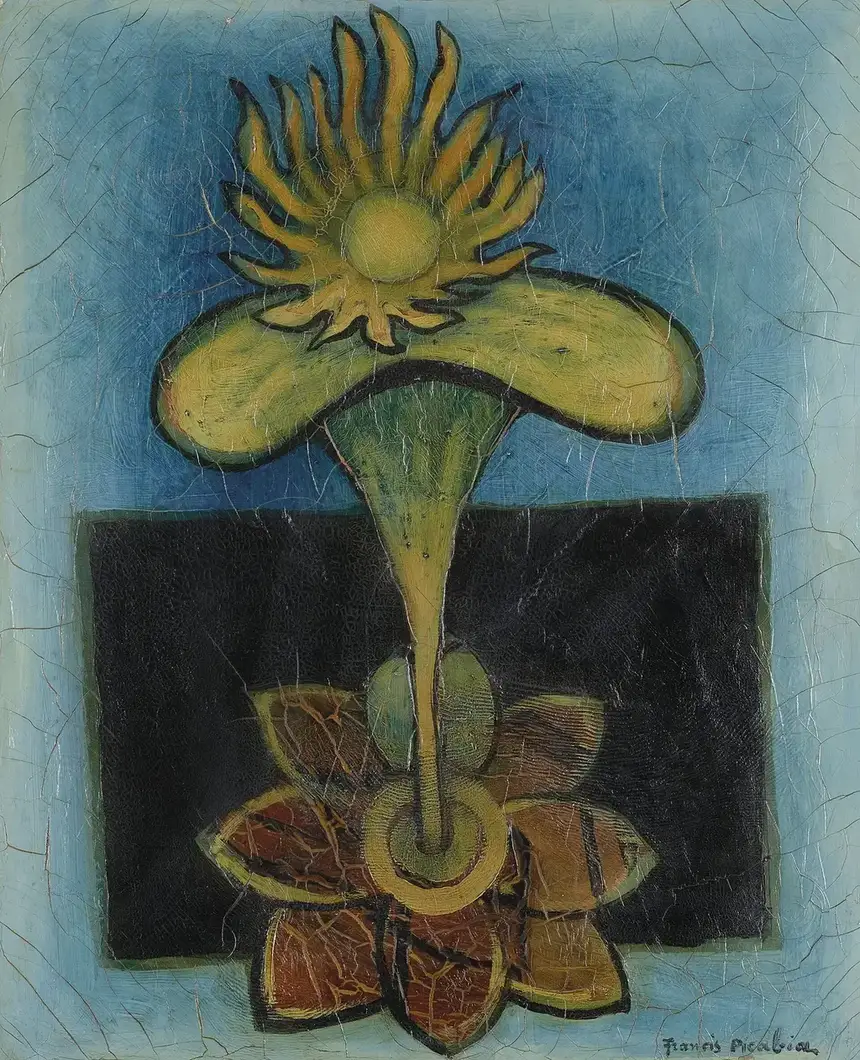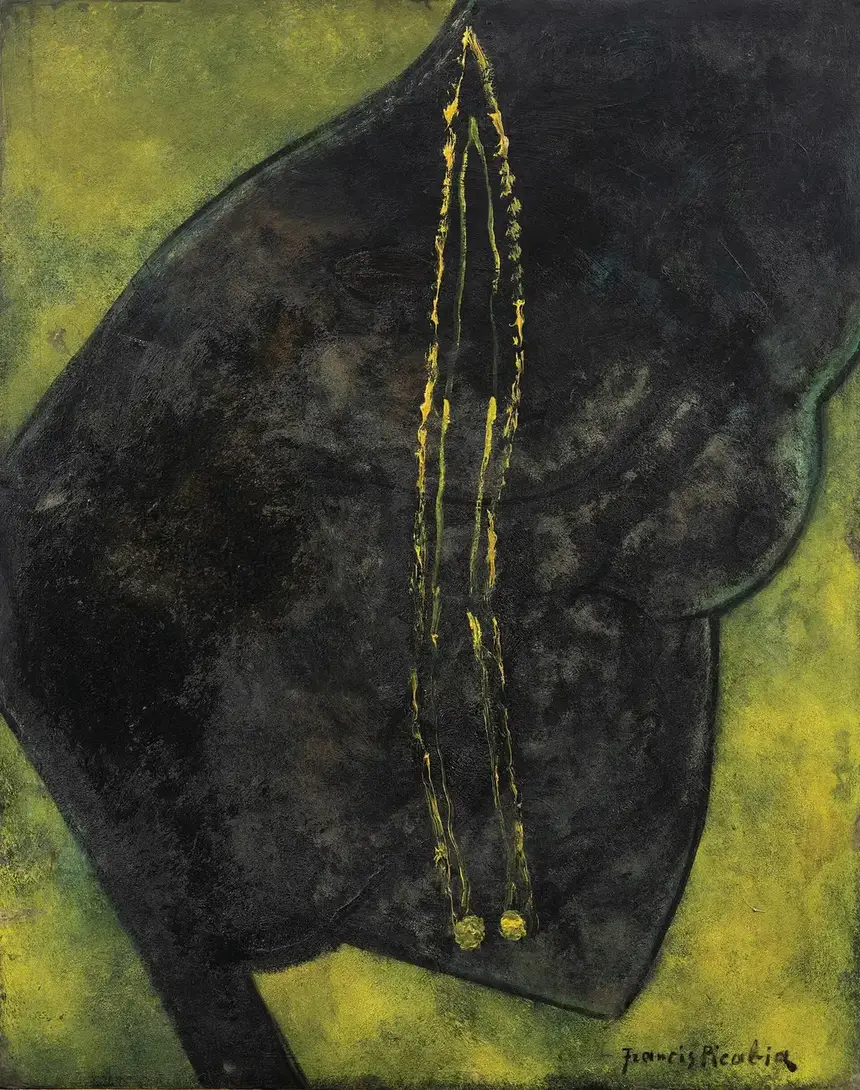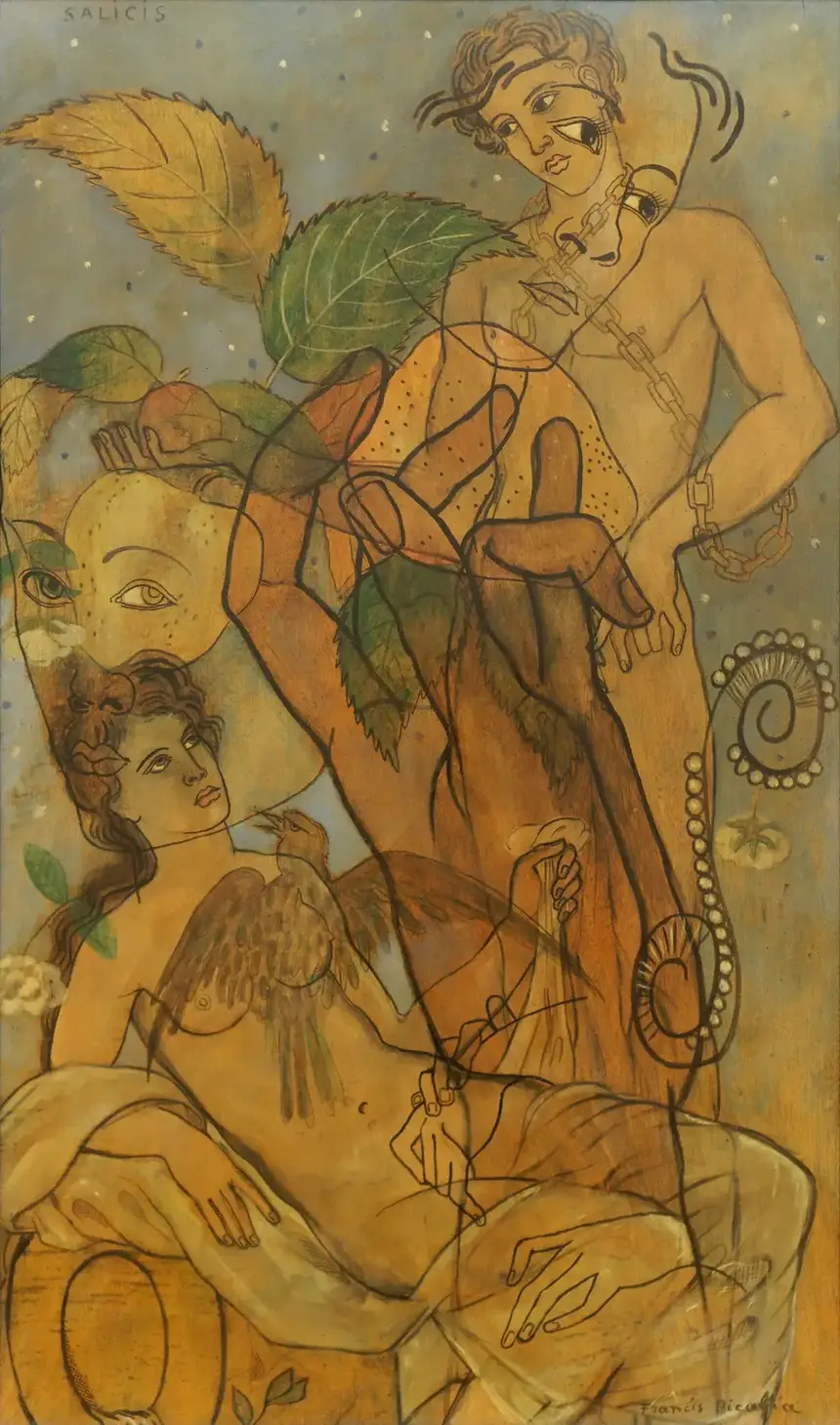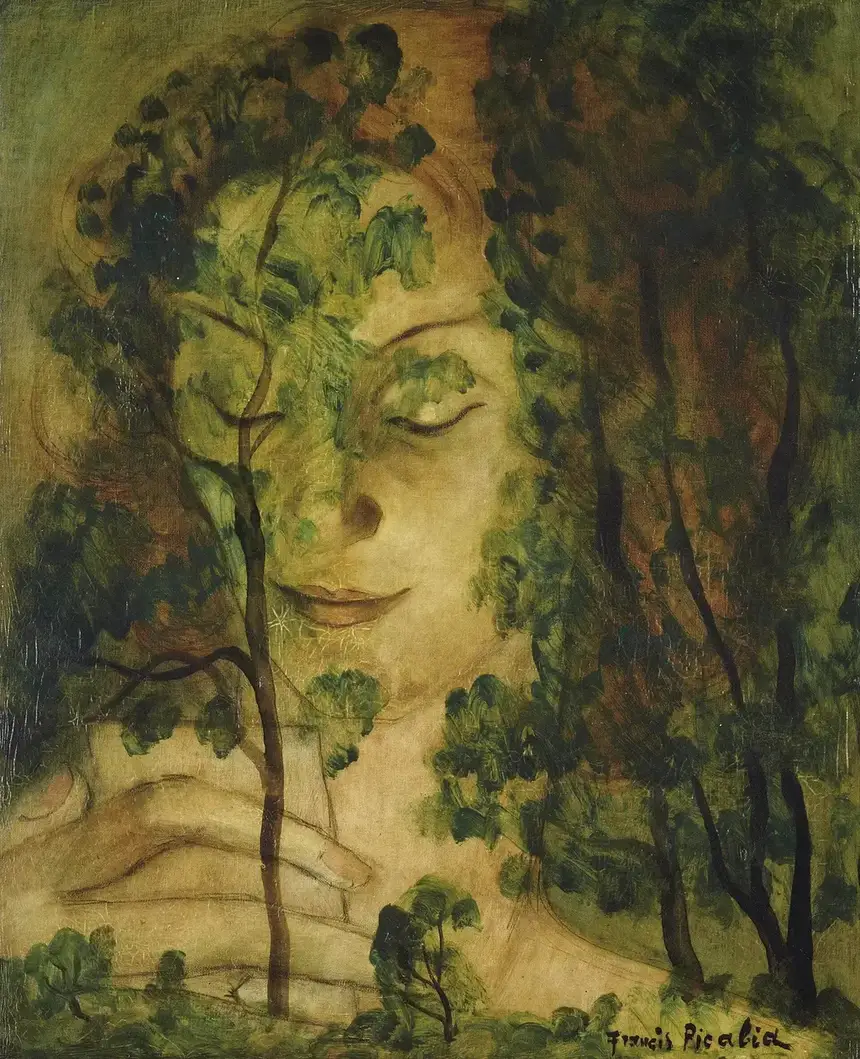
Where this painting comes from
Francis Picabia died in 1953. That puts the painting well outside copyright, which is why we can paint it and you can own it anywhere in the world.
Every version we make is oil on canvas, painted by one painter from start to finish. No printing is involved at any stage.
It is an original composition painted before 1953, and our version is painted from the surviving image of it.
You are buying a painting, not a file. That distinction is the whole business we are in.
Looking at it properly
A painted a landscape is an argument about air. Copy the shapes and you still have not copied the argument.
Space in a landscape is made with value, not perspective: things that are further away are painted cooler and weaker.
We do not brighten the picture for reproduction. The original's key is kept as it is.
Our painter mixes on the palette but finishes on the canvas, which is where the small variations come from.
The brushwork is left visible, which is the whole argument for painting it by hand.
The difficulty is restraint: leaving out most of what a photograph would show.
It works best on a wall you pass rather than one you sit and stare at — the paint rewards a moving eye.
| Artist | Francis Picabia |
|---|---|
| Title | femme aux arbres 2011 PAR 01019 0037 000 |
| Medium | Oil on canvas, hand-painted to order |
| How it is made | Painted by hand in oil on canvas, to your size |
| Original status | Public domain (artist deceased) |
Hand-painted, not printed
The difference is not subtle when the two hang side by side. Ink sits on the surface; oil stands off it.
Where the original is loaded, ours is loaded. Where it is thin, ours is thin. Matching the weight of the paint matters more than matching the colour.
| Aspect | Hand-painted oil | Printed canvas |
|---|---|---|
| What it takes | One painter, several days, start to finish | A machine, a few minutes |
| Changing something | Tell us and the passage gets repainted | Usually means starting the file again |
| The surface | Built up with brushes and knives | Printed flat in one pass |
| Size | Any size, painted to your wall | Limited by the printer |
| Later on | Can be restored, re-framed, handed on | Replaceable, and usually replaced |
Anyone can copy the shapes. The skill is in the transitions, and that is what takes the days.
Every canvas is painted to order, so the quote follows your size, frame and destination rather than a fixed list. Tell us what you need on WhatsApp and we reply with an exact figure, usually within the hour. You are buying from the workshop, not a catalogue.
How it gets painted
No two canvases are painted the same way, but the sequence is always this:
- Stretching and priming the support — cotton duck or linen goes onto the bars and gets its ground.
- A loose underdrawing — proportions checked by eye against the source image.
- The big shapes are blocked in — thin paint, one colour at a time, the whole canvas at once.
- Setting the key — how dark the darks go determines everything that follows.
- The colour passes — each area gets its own mixture rather than one colour used throughout.
- Detail and highlights last — put on thickly and then not touched again.
- It dries, then gets varnished — and only then is it photographed for you.
The risk with a landscape is overworking, and the way to avoid it is knowing when to stop.
What goes into it
We do not use a printer at any stage. There is no giclée, no canvas transfer, no digital underlayer. Brushes, knives and rags. That is the equipment list; there is no machine in the process.
Each painter works on one canvas at a time — the painting you ordered is not shared with another order. Linen is worth the extra cost above about a metre across, because it holds tension better in humid rooms.
Looking after it
Once the varnish has cured the surface can be cleaned by a conservator, but in a normal house it will not need it for decades.
Frames
Most clients wait for the photographs before choosing a frame, which is the sensible order.
If you are shipping, an unframed canvas rolled in a tube is considerably cheaper to move than a framed one.
What size works
Because each piece is painted from scratch, you are not limited to stock dimensions. These are the sizes clients ask for most:
| Size (inches) | Size (cm) | Best for |
|---|---|---|
| 40 × 30 in | 102 × 76 cm | Living room focal wall, above a sofa |
| 32 × 24 in | 81 × 61 cm | Living room, above a sideboard |
| 30 × 24 in | 76 × 61 cm | Dining room, bedroom feature wall |
| 24 × 20 in | 60 × 50 cm | Study, home office, above a desk |
Anything outside this table is fine — we paint to the number you give us. Our terms are DAP, meaning the freight is paid by us and any import charges are yours to settle. We will not estimate them, because the figure is your customs authority's to set.
Given the subject, this sits naturally in a living room or a study rather than a hallway.
Tell us the size and frame — exact quote back, usually within the hour.
💬 Get a Quote for femme aux arbres 2011 PAR 01019 0037 000Timeline and shipping
The painting takes 9–15 days, and delivery is priced separately on the quote so there is no surprise later.
In transit it is typically 7–10 business days by air, tracked door to door. Unframed canvases are rolled face-out on a tube; framed ones are corner-protected and crated.
You see photographs of the finished painting before it ships, and you tell us what to adjust. If something is not right, tell us what to adjust and we adjust it.
We sell DAP: the price covers the painting and the freight, and any import duties or taxes are the buyer's to settle with customs. We do not collect them and we do not estimate them.
You pay a deposit to start and the remainder before shipping. Nothing is hidden in between. Damage in transit should be reported to us within 48 hours, with photographs. We pursue it with the carrier rather than promising a refund.
What people ask us
Can I change something in the composition?
Often yes — background, cropping, or adapting the proportions to your wall. Tell us what you have in mind and we will say honestly whether it will work.
Can I resell the reproduction?
Yes. Because the underlying work is in the public domain, the hand-painted canvas is yours to sell, gift or install commercially.
What does it cost?
Every canvas is quoted on size, frame and destination rather than a fixed list. Tell us what you need and we reply with an exact figure.
Who pays the import duty?
You do. We sell DAP, so any duty or tax your customs authority charges is settled by you at import. We do not collect it and we do not estimate it.
Can I change the size?
Yes. The canvas is painted to your measurement, not taken from a stock list.
What is the canvas made of?
Cotton duck as standard, linen on request, artist-grade oil paint, and a final varnish once the paint is fully dry.
Can you paint a different work by Francis Picabia?
Yes — send us the image, or look through the other Francis Picabia works on the site.
How do I hang it?
Centre it at about 145 cm from the floor, or two-thirds the width of the furniture below it. We will tell you the exact number for your wall.
Is it really painted by hand?
Yes. One painter, oil paint, brushes. We do not own a printer that touches canvas.
How long does it take?
Allow 9–15 days for the painting itself, then roughly 7–10 business days in transit.
Is owning a reproduction legal?
Yes. The painting is out of copyright because Francis Picabia died more than 70 years ago. We paint copies honestly and never claim they are originals.