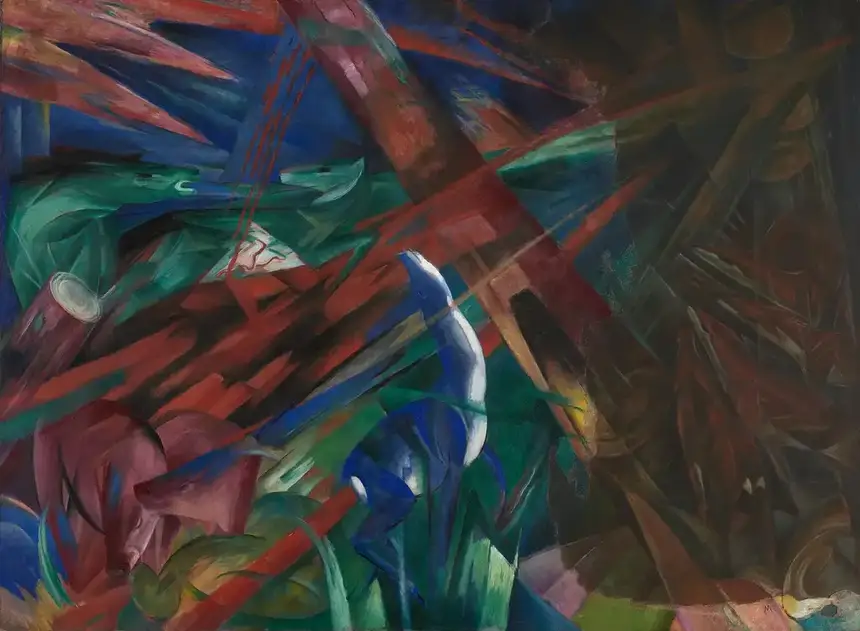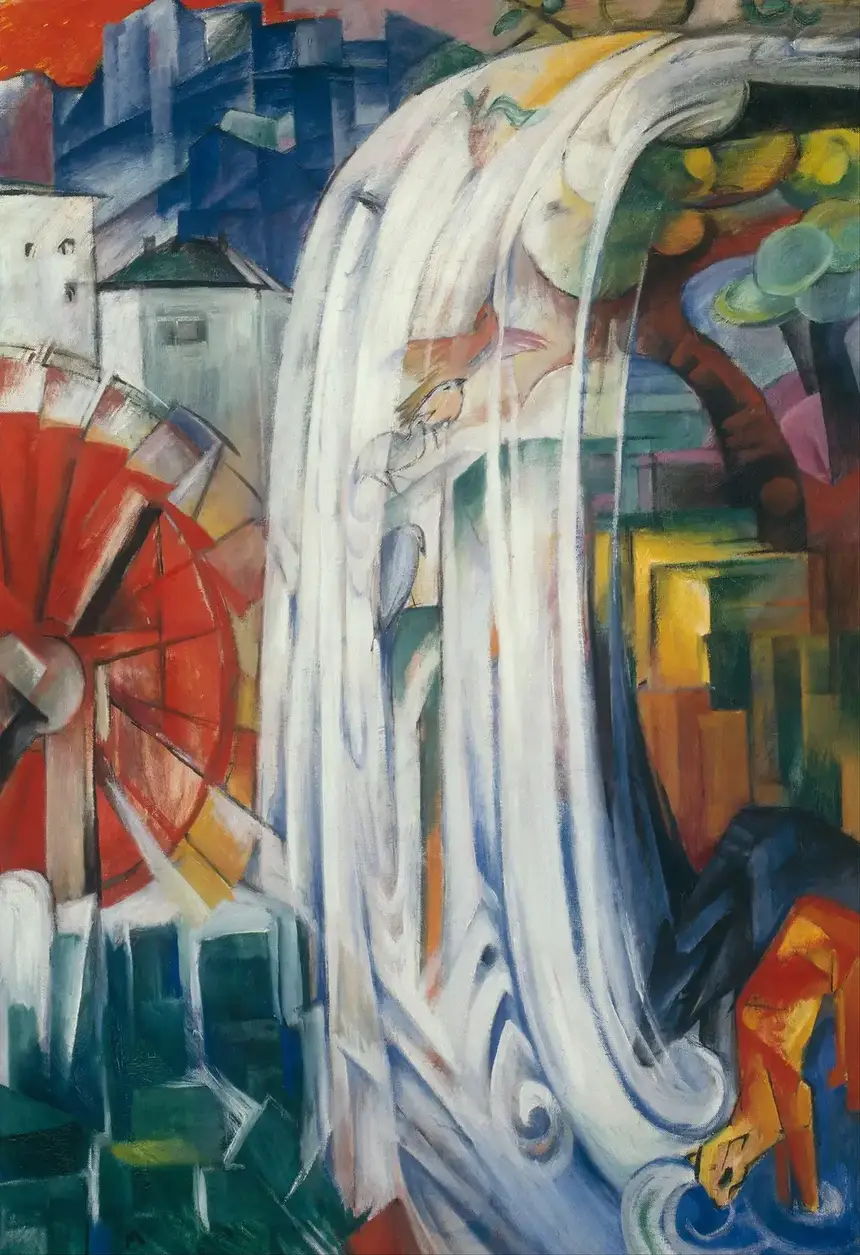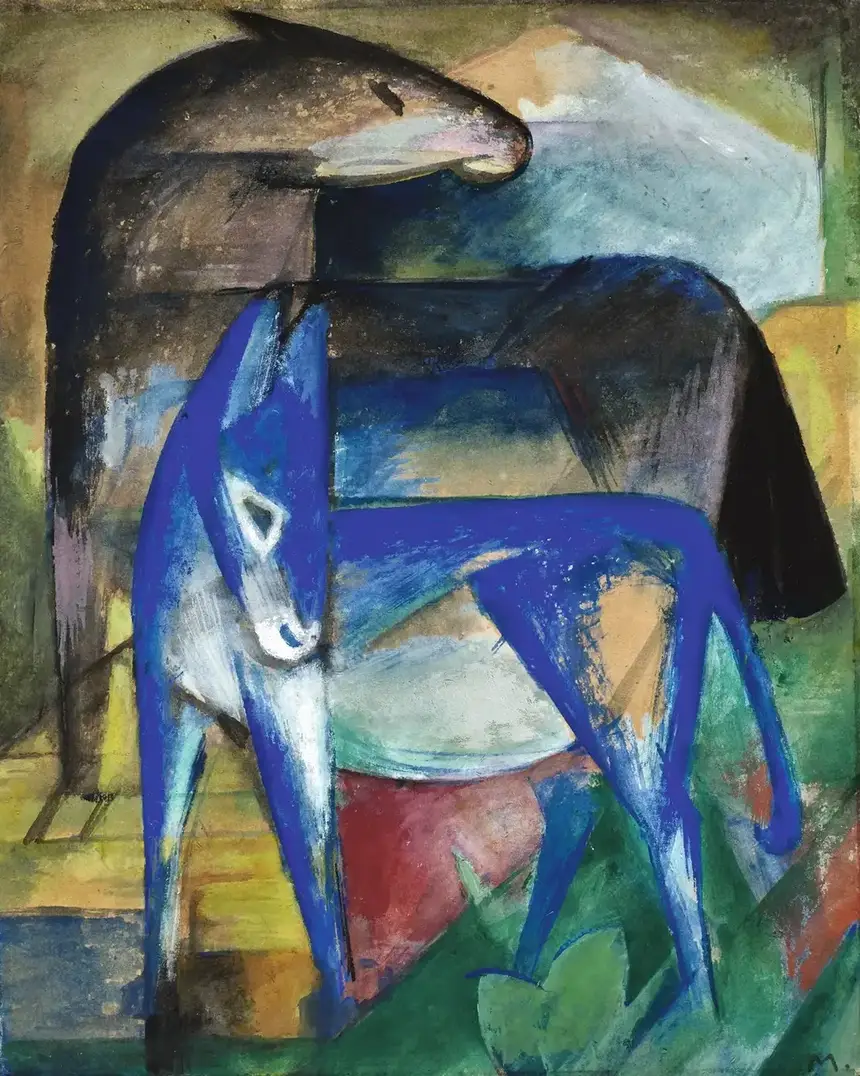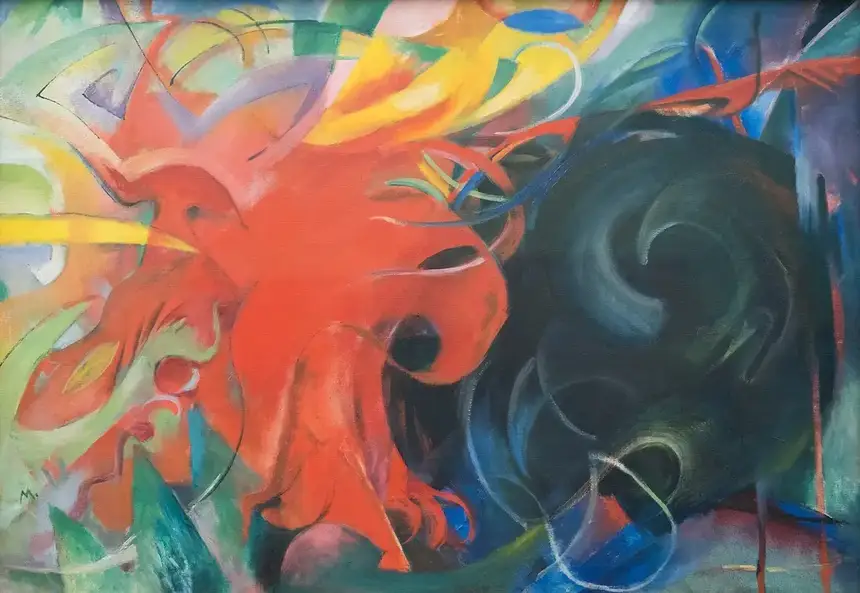
About Kämpfende Formen PA29
Franz Marc died in 1916. That puts the painting well outside copyright, which is why we can paint it and you can own it anywhere in the world.
We paint it in oil on canvas, one at a time, in Dafen Village. Nothing is printed, scanned or transferred.
It is an original composition painted before 1916, and our version is painted from the surviving image of it.
If you want something printed, we are the wrong workshop. We do not own a printer that touches canvas.
Looking at it properly
What makes a landscape worth painting by hand is the distance in it — the space between the near ground and the far one.
Our painter works freehand on a blank canvas, so the scale of the original survives the enlargement.
Sunlight and shadow are two different temperatures here, not one colour at two strengths.
The darks are mixed, not blackened — black straight from the tube would kill the passage.
Where the source has a loaded passage, ours is loaded too — you will feel it from the side.
Anyone can copy the shapes. The skill is in the transitions, and that is what takes the days.
For a stairwell or a double-height space, go larger than you think — the composition was built for distance.
| Artist | Franz Marc |
|---|---|
| Title | Kämpfende Formen PA29 |
| Created (original) | 1914 |
| Medium | Oil on canvas, hand-painted to order |
| Our version | Oil on canvas, painted by hand to order |
| Public domain | Yes — the artist died over 70 years ago |
Why hand-painting matters here
Prints are good at information and bad at paint. This subject is mostly paint.
Our painter follows the same logic rather than copying a photograph of it: the far distances go down cool and weak, the near ground stays loaded, and nothing is blended flat.
| Aspect | Hand-painted oil | Printed canvas |
|---|---|---|
| Colour | Mixed for each passage, warm and cool versions | One flat value per area |
| What it takes | One painter, several days, start to finish | A machine, a few minutes |
| How it ages | Warms and settles; cleanable by a conservator | Fades, then cracks at the stretcher |
| The surface | Built up with brushes and knives | Printed flat in one pass |
| Sense of depth | Real, created by layers of paint | Simulated by darker ink |
The risk with a landscape is overworking, and the way to avoid it is knowing when to stop.
Every canvas is painted to order, so the quote follows your size, frame and destination rather than a fixed list. Tell us what you need on WhatsApp and we reply with an exact figure, usually within the hour. No resellers, no drop-shipper. The painter's studio handles your commission from first message to final crate.
The sequence on our floor
No two canvases are painted the same way, but the sequence is always this:
- Stretching and priming the support — cotton duck or linen goes onto the bars and gets its ground.
- The drawing goes down — charcoal or thin paint, done by eye rather than traced from a printout.
- Blocking the masses — thin paint, working the whole surface rather than one corner at a time.
- Getting the values right — the stage that decides whether the finished painting holds together.
- Building the colour — a warm and a cool version of each passage, put down in order.
- Finishing passes — the loaded highlights go on at the end and stay there.
- Drying and varnishing — the final varnish goes on once the paint has set, before we photograph it.
The hardest passage is the quiet one, where a small mistake has nowhere to hide.
On framing
Frames are priced once you have chosen them, not estimated in advance.
Most clients wait for the photographs before choosing a frame, which is the sensible order.
Living with it
Oil paint needs very little: no water, no cleaners, no sprays. A dry brush and a stable room.
What it is made of
Varnish goes on only once the paint is properly dry, months after the last stroke, not before. We buy pigment in tubes from the same suppliers the village has used for years, not in bulk drums.
The varnish is removable, so a conservator can clean the painting in fifty years without touching the paint. Stretcher bars are kiln-dried and wedged, so the canvas can be re-tensioned years later.
Getting the size right
Because each piece is painted from scratch, you are not limited to stock dimensions. These are the sizes clients ask for most:
| Size (inches) | Size (cm) | Best for |
|---|---|---|
| 32 × 24 in | 81 × 61 cm | Living room, above a sideboard |
| 30 × 24 in | 76 × 61 cm | Dining room, bedroom feature wall |
| 24 × 20 in | 60 × 50 cm | Study, home office, above a desk |
| 20 × 16 in | 50 × 40 cm | Bedroom, hallway, above a console |
| 16 × 12 in | 40 × 30 cm | A shelf, a small wall, a gallery group |
If your wall is an odd shape, send the measurement and we will work to it. Proportions from the original are kept unless you ask us to change them. Import charges, where they exist, are the buyer's responsibility (DAP). We never add them to the quote and never guess what they will be.
It is a picture for a room you use, not a corridor you walk through.
Give us your size and framing preference and you will have a quote shortly.
💬 Get a Quote for Kämpfende Formen PA29Order, painting, shipping
Painting takes 9–15 days. Freight is quoted as its own line on the quote, agreed before you pay anything, and never added afterwards.
Transit is usually 7–10 business days, tracked all the way. Every shipment goes out with tracking. We do not send anything untracked.
You approve the painting from photographs before it is packed — that is the checkpoint. Adjustments are part of the process. Say what you want different and it gets done.
Shipments go out DAP. If your customs office charges duty or tax on arrival, that is between you and them — we do not collect it and we do not put a number on it.
You pay a deposit to start and the remainder before shipping. Nothing is hidden in between. Damage in transit should be reported to us within 48 hours, with photographs. We pursue it with the carrier rather than promising a refund.
What people ask us
What if my wall is an unusual shape?
That is normal for us. Send the measurements and we will work out a canvas proportion that suits the space.
What about duties and import taxes?
Those are the buyer's responsibility (DAP). The amounts are set by your customs authority, not by us.
What is the canvas made of?
Cotton duck as standard, linen on request, artist-grade oil paint, and a final varnish once the paint is fully dry.
Does it come framed?
Framing is quoted separately, so you can decide once you have seen the finished painting in photographs.
Can I change the size?
Yes. The canvas is painted to your measurement, not taken from a stock list.
How long does it take?
From order to finished canvas is 9–15 days; delivery adds about 7–10 business days by air.
Will I see it before it ships?
Yes. We send photographs of the finished canvas and wait for your reply before packing.
Do you sell prints?
No. Hand-painted oil on canvas only. No printing, no giclée, no canvas transfer.
Can you paint it from a different photograph of the same work?
Send your own reference image and we will paint from that instead.
Is it really painted by hand?
Yes. One painter, oil paint, brushes. We do not own a printer that touches canvas.
Can you paint a different work by Franz Marc?
Yes. Send the image and we will quote it, or browse the other paintings we have listed.