The original, and why we can paint it
Giuseppe Arcimboldo died in 1593, so the work has been in the public domain for decades. Reproducing it by hand is legal, and so is owning one.
Every version we make is oil on canvas, painted by one painter from start to finish. No printing is involved at any stage.
The painting was made in the years before 1593, and what we reproduce is the record of it, not the object.
You are buying a painting, not a file. That distinction is the whole business we are in.
Looking at it properly
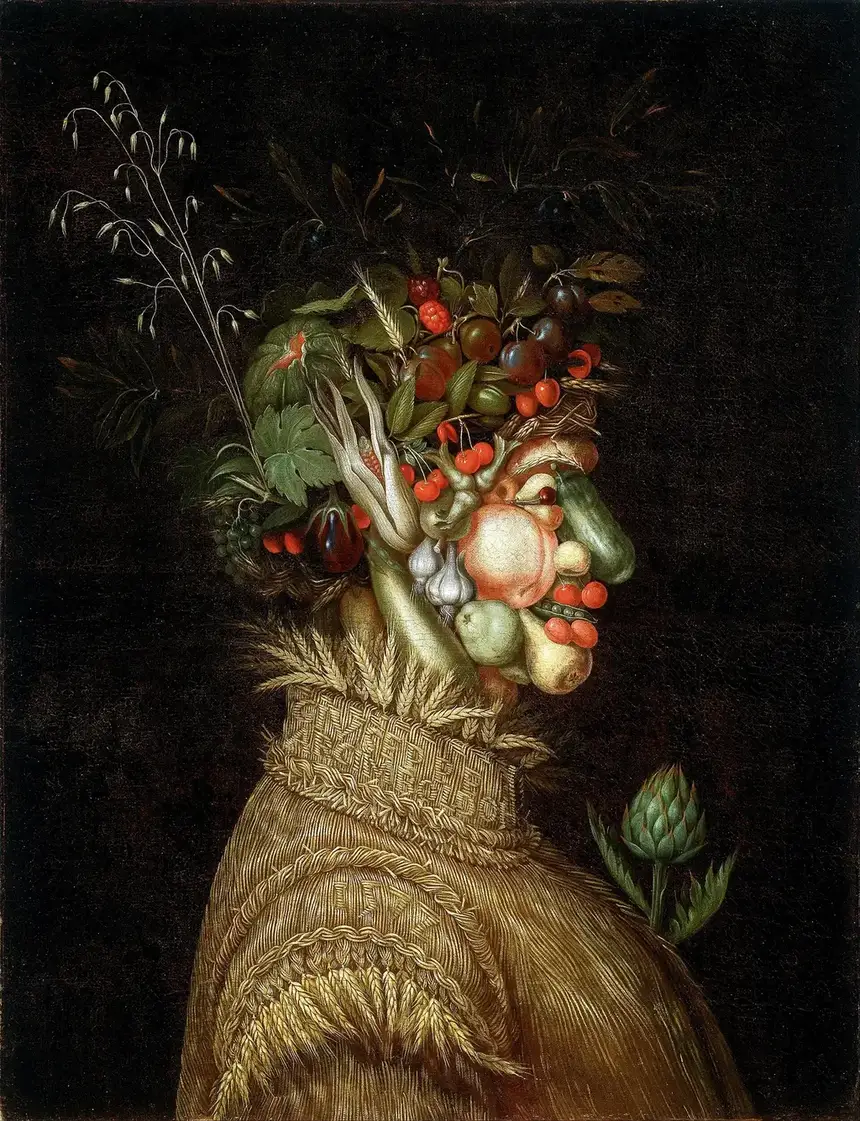
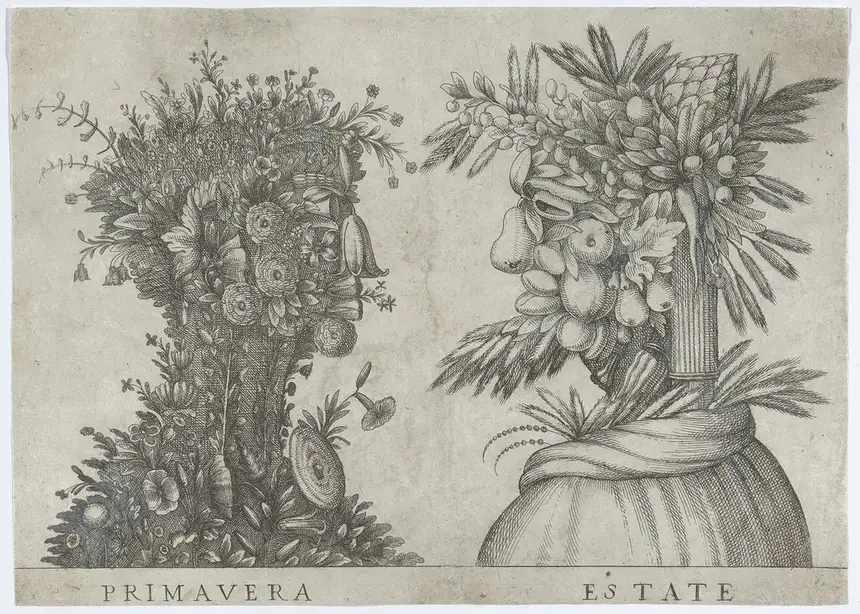
Spring and Summer: two heads rewards a second look because the light is doing something specific, and it only does it in oil.
Space in a landscape is made with value, not perspective: things that are further away are painted cooler and weaker.
The brightest passage is kept small. That is what makes it read as bright.
Our painter mixes on the palette but finishes on the canvas, which is where the small variations come from.
The brushwork is left visible, which is the whole argument for painting it by hand.
This one repaints badly, so our painter gets the values right early and leaves them.
It works best on a wall you pass rather than one you sit and stare at — the paint rewards a moving eye.
| Artist | Giuseppe Arcimboldo |
|---|---|
| Title | Spring and Summer: two heads |
| Medium | Oil on canvas, hand-painted to order |
| Reproduction | Hand-painted oil on canvas, made to order |
| Original status | Public domain (artist deceased) |
The case for painting it by hand
What you lose in a print is the air. A press lays ink flat; a painter builds depth in layers, and the depth is what you actually see.
Paint goes on in the original's order — thin first, thick last — so the surface behaves the way the painter intended.
| Aspect | Hand-painted oil | Printed canvas |
|---|---|---|
| Time to make | Days of one painter's working time | Minutes |
| Handling of colour | Mixed on the palette and finished on the canvas | Fixed by the colour profile |
| The surface | Built up with brushes and knives | Printed flat in one pass |
| Available sizes | Whatever you need, painted to order | What the printer can output |
| Edges | Chosen by the painter, passage by passage | Whatever the file happens to contain |
What takes time here is the number of separate decisions, not the size of the canvas.
Every canvas is painted to order, so the quote follows your size, frame and destination rather than a fixed list. Tell us what you need on WhatsApp and we reply with an exact figure, usually within the hour. No resellers, no drop-shipper. The painter's studio handles your commission from first message to final crate.
How it gets painted
No two canvases are painted the same way, but the sequence is always this:
- The canvas is stretched and primed — cotton or linen, sized and ready before any paint goes near it.
- Laying in the drawing — done by eye from the reference, not traced or projected.
- The big shapes are blocked in — thin paint, one colour at a time, the whole canvas at once.
- Setting the key — how dark the darks go determines everything that follows.
- Building the colour — a warm and a cool version of each passage, put down in order.
- The detail and highlights go on — last, loaded, and left alone once they are down.
- Drying and varnishing — the final varnish goes on once the paint has set, before we photograph it.
The difficulty is restraint: leaving out most of what a photograph would show.
Frames
Most clients wait for the photographs before choosing a frame, which is the sensible order.
Most clients wait for the photographs before choosing a frame, which is the sensible order.
What it is made of
Brushes, knives and rags. That is the equipment list; there is no machine in the process. We use a neutral-sized ground so the whites stay warm rather than going blue over time.
Varnish goes on only once the paint is properly dry, months after the last stroke, not before. Large canvases get a cross-brace; anything over about a metre and a half needs one.
Living with it
Oil paint needs very little: no water, no cleaners, no sprays. A dry brush and a stable room.
Canvas sizes
The canvas is cut to your wall, not the other way round. For reference, these are the dimensions most often requested:
| Size (inches) | Size (cm) | Best for |
|---|---|---|
| 64 × 48 in | 163 × 122 cm | Villa scale, lobby, hospitality wall |
| 48 × 36 in | 122 × 91 cm | Large living room, stairwell, loft |
| 40 × 30 in | 102 × 76 cm | Living room focal wall, above a sofa |
| 32 × 24 in | 81 × 61 cm | Living room, above a sideboard |
Tell us the wall width and we will tell you what looks right rather than what is standard. Import charges, where they exist, are the buyer's responsibility (DAP). We never add them to the quote and never guess what they will be.
It is a picture for a room you use, not a corridor you walk through.
Give us your size and framing preference and you will have a quote shortly.
💬 Get a Quote for Spring and Summer: two heads made from flora typical of those seasonsGetting it to you
From order to finished canvas is 9–15 days. Freight appears as a separate line on the quote and is fixed before you pay.
Transit is usually 7–10 business days, tracked all the way. Every shipment goes out with tracking. We do not send anything untracked.
You see photographs of the finished painting before it ships, and you tell us what to adjust. Changes are handled by telling us what to change; we change it and send new photographs.
DAP terms: we pay the freight, you settle any duty or tax your country applies. We do not collect taxes on anyone's behalf.
You pay a deposit to start and the remainder before shipping. Nothing is hidden in between. Damage in transit should be reported to us within 48 hours, with photographs. We pursue it with the carrier rather than promising a refund.
What people ask us
Why not just print it?
A print flattens the surface into a poster: the distance collapses and the highlights turn to grey. Paint keeps the depth and the texture the original was built from.
Is there a rush option?
It depends on the canvas and what else is in the studio. Ask on WhatsApp with your size and we will tell you straight what is possible.
Does it come with a certificate of authenticity?
No, and we would be wary of anyone who issues one for a public-domain reproduction. What you receive is a hand-painted canvas and photographs of it before it ships.
Is it really painted by hand?
Yes — oil on canvas, brush and knife. There is no printing, no giclée and no canvas transfer at any stage.
Do you take a deposit?
Work begins on a deposit and ships once the balance is paid. Nothing is charged that is not on the quote.
Do you ship to my country?
We ship to over 20 countries. Give us your city and the freight appears as its own line on the quote.
What if it arrives damaged?
Report damage within 48 hours with photographs. We deal with the carrier rather than leaving you to argue alone.
Can you change the colours to suit my room?
Sometimes. We will adjust the palette if it can be done without ruining the picture, and say so if it cannot.
Will I see it before it ships?
Yes. We send photographs of the finished canvas and wait for your reply before packing.
Can you paint it from a different photograph of the same work?
Send your own reference image and we will paint from that instead.
Who pays the import duty?
You do. We sell DAP, so any duty or tax your customs authority charges is settled by you at import. We do not collect it and we do not estimate it.
What is the canvas made of?
Cotton duck as standard, linen on request, artist-grade oil paint, and a final varnish once the paint is fully dry.