What you are buying into
Henri Evenepoel died in 1899, so the work has been in the public domain for decades. Reproducing it by hand is legal, and so is owning one.
We paint it in oil on canvas, one at a time, in Dafen Village. Nothing is printed, scanned or transferred.
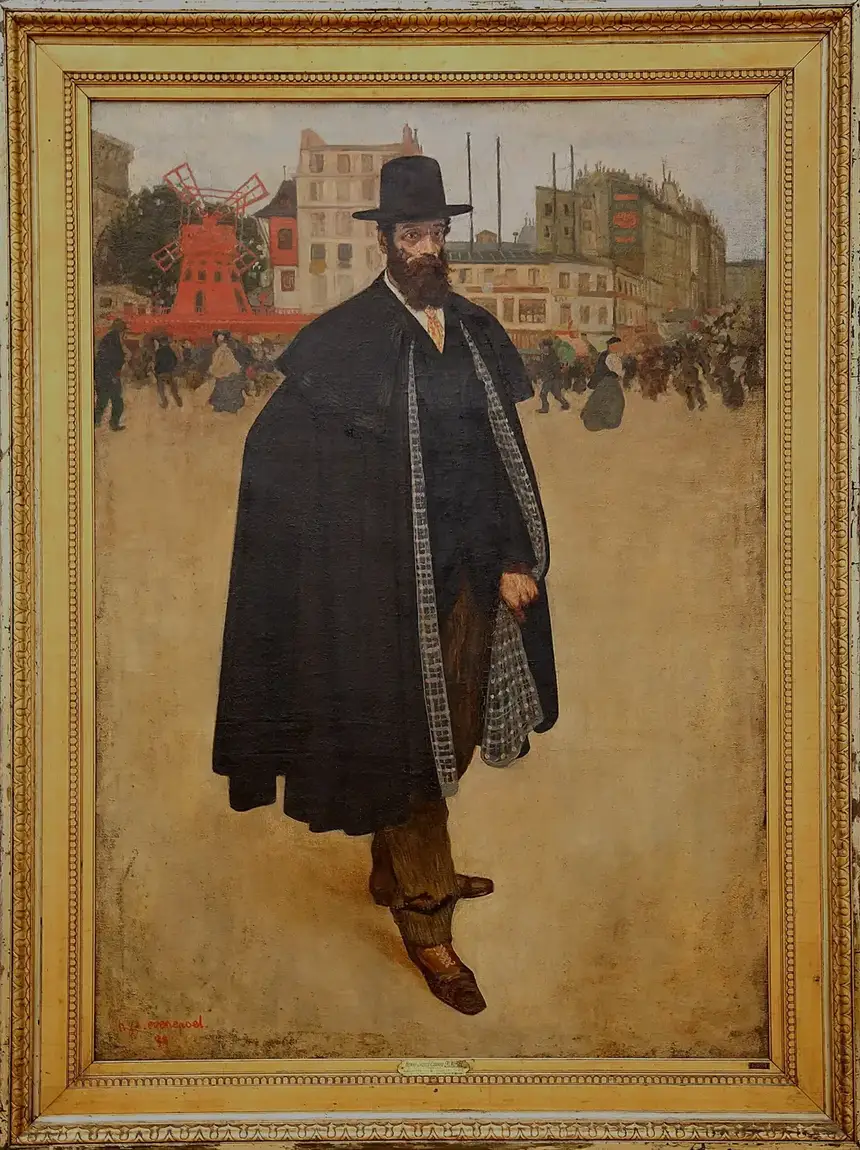
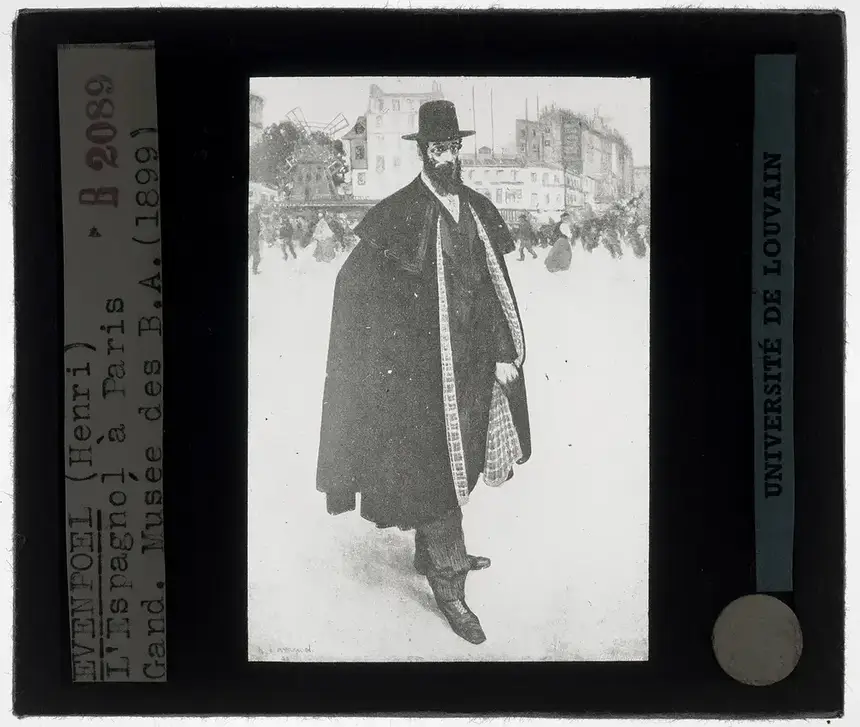
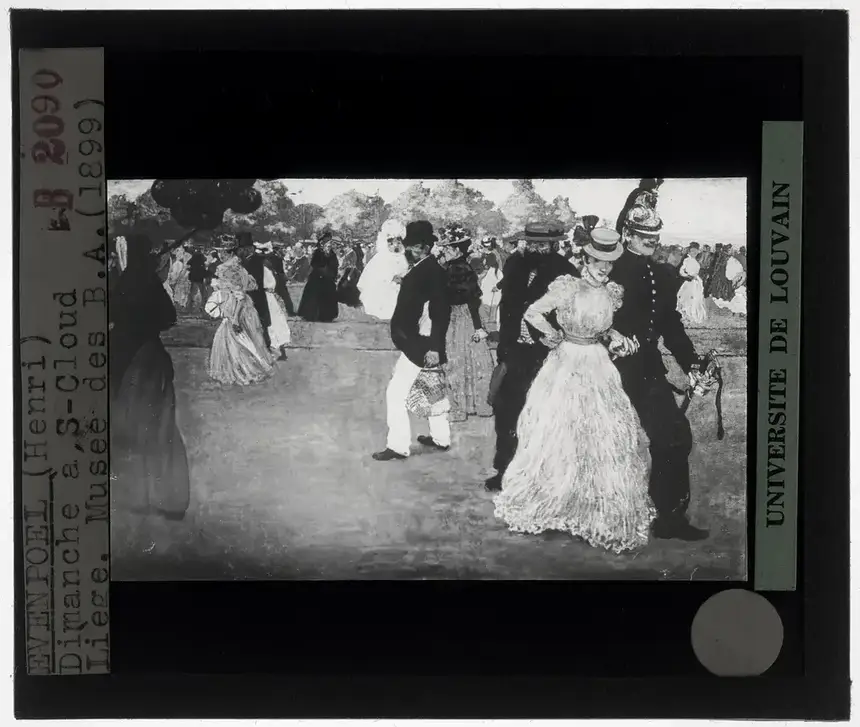
It is an original composition painted before 1899, and our version is painted from the surviving image of it.
If you want something printed, we are the wrong workshop. We do not own a printer that touches canvas.
Looking at it properly
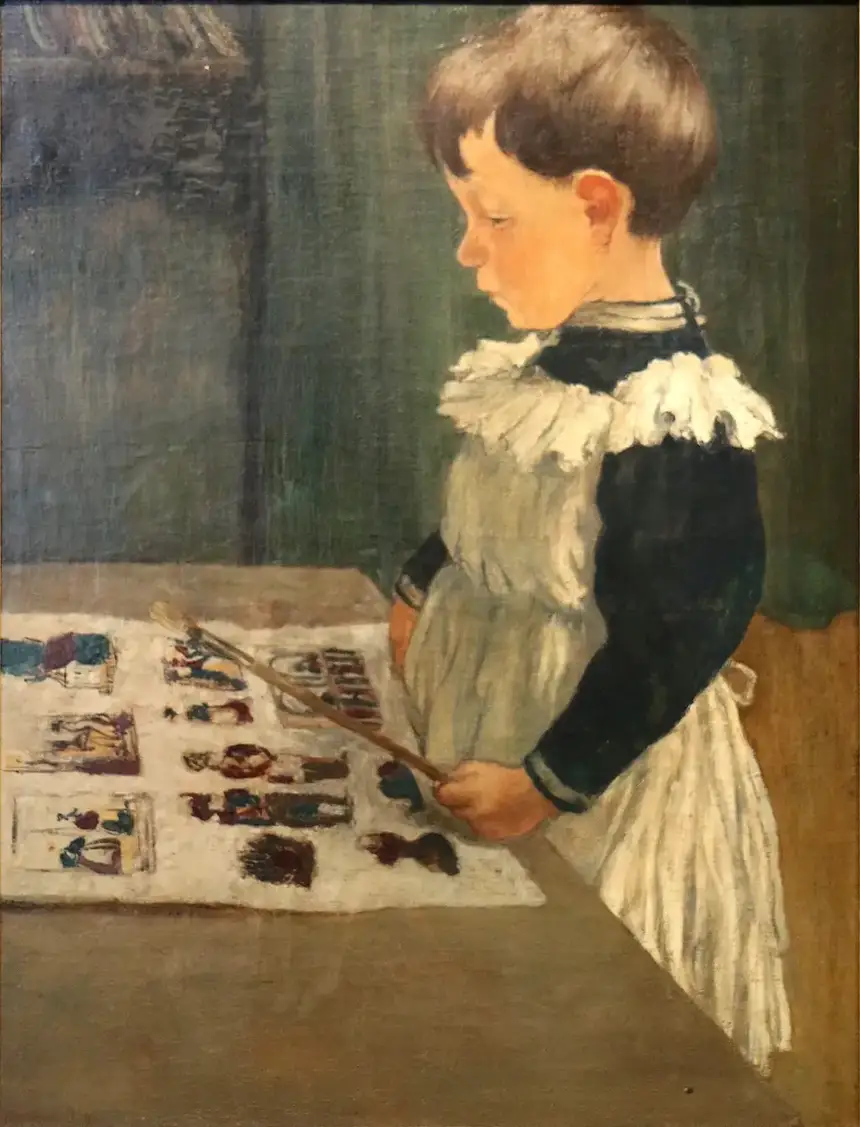
The subject is ordinary. What is not ordinary is how the paint is loaded — that is the part a press cannot reproduce.
Depth here is a matter of edges: sharp in front, lost at the back. It is the hardest thing to print and the easiest to paint.
Light is handled as a value problem: how dark the darkest dark is determines the whole picture.
The darks are mixed, not blackened — black straight from the tube would kill the passage.
The brushwork is left visible, which is the whole argument for painting it by hand.
The difficulty is restraint: leaving out most of what a photograph would show.
It is a picture for a room you use, not a corridor you walk through.
| Artist | Henri Evenepoel |
|---|---|
| Title | Les images |
| Created (original) | 1895 |
| Medium | Oil on canvas, hand-painted to order |
| Our version | Oil on canvas, painted by hand to order |
| Original status | Public domain (artist deceased) |
Hand-painted, not printed
What you lose in a print is the air. A press lays ink flat; a painter builds depth in layers, and the depth is what you actually see.
Edges are left soft where the form turns away and sharp where it does not. That single habit is what separates a painting from a copy.
| Aspect | Hand-painted oil | Printed canvas |
|---|---|---|
| How it ages | Warms and settles; cleanable by a conservator | Fades, then cracks at the stretcher |
| Texture | Ridges and drag you can see from across a room | None, or a printed imitation of it |
| Edge quality | Soft where the form turns, sharp where it does not | Uniformly sharp or uniformly blurred |
| Later on | Can be restored, re-framed, handed on | Replaceable, and usually replaced |
| Colour | Mixed for each passage, warm and cool versions | One flat value per area |
The difficult part is not the detail. It is keeping the whole canvas at the same stage of finish.
Every canvas is painted to order, so the quote follows your size, frame and destination rather than a fixed list. Tell us what you need on WhatsApp and we reply with an exact figure, usually within the hour. You are buying from the workshop, not a catalogue.
From blank canvas to finished painting
This is how the painting is built, in the order our painters build it:
- The canvas is stretched and primed — cotton or linen, sized and ready before any paint goes near it.
- A loose underdrawing — proportions checked by eye against the source image.
- The big shapes are blocked in — thin paint, one colour at a time, the whole canvas at once.
- The values are established — this is the stage that decides whether the painting works.
- The colour passes — each area gets its own mixture rather than one colour used throughout.
- Detail and highlights last — put on thickly and then not touched again.
- Left to dry before varnish — nothing is photographed or packed until the surface is ready.
Matching the original's degree of finish is harder than matching its colours.
Materials
Stretcher bars are kiln-dried and wedged, so the canvas can be re-tensioned years later. The varnish is removable, so a conservator can clean the painting in fifty years without touching the paint.
Varnish goes on only once the paint is properly dry, months after the last stroke, not before. The ground is a proper acrylic sizing, so the oil does not rot the fabric over time.
Framing
We can supply a simple floater frame, a traditional gilt, or nothing at all. It is your call.
If you are shipping, an unframed canvas rolled in a tube is considerably cheaper to move than a framed one.
Care and cleaning
Do not wipe it with anything wet. Dust lightly, hang it somewhere stable, and forget about it.
Canvas sizes
Any size is possible. These are simply the ones that come up most often in quotes:
| Size (inches) | Size (cm) | Best for |
|---|---|---|
| 32 × 24 in | 81 × 61 cm | Living room, above a sideboard |
| 30 × 24 in | 76 × 61 cm | Dining room, bedroom feature wall |
| 24 × 20 in | 60 × 50 cm | Study, home office, above a desk |
| 20 × 16 in | 50 × 40 cm | Bedroom, hallway, above a console |
We will size the canvas to the room, not to a stock list. Send us the measurement. DAP terms: we pay the freight, you settle any duty or tax your country applies. We do not collect taxes on anyone's behalf.
Given the subject, this sits naturally in a living room or a study rather than a hallway.
Tell us the size and frame — exact quote back, usually within the hour.
💬 Get a Quote for Les imagesOrder, painting, shipping
Painting takes 9–15 days. Freight is quoted as its own line on the quote, agreed before you pay anything, and never added afterwards.
Air freight runs about 7–10 business days, tracked, to your door. Unframed canvases are rolled face-out on a tube; framed ones are corner-protected and crated.
Nothing ships before you have seen it. Photographs of the finished painting go to you first. If something is not right, tell us what to adjust and we adjust it.
Duties and import taxes are the buyer's account (DAP). Your customs authority sets them; we do not.
A deposit starts the canvas and books the painter's time; the balance is due before the crate leaves. Report any transit damage within 48 hours with photographs and we will deal with the carrier. We will not promise a payout, but we will not leave you to argue alone either.
What people ask us
How do I know what size will look right?
Measure the wall and send a photograph. We will say honestly if the canvas you have in mind is too small for the space, which is the most common mistake.
Do you work from my own photograph?
Yes, though that is a separate service. This page is for a hand-painted version of {title}; for a photo-to-painting commission, send the image on WhatsApp.
What about duties and import taxes?
Those are the buyer's responsibility (DAP). The amounts are set by your customs authority, not by us.
How do I hang it?
Roughly 145 cm from floor to centre works for most rooms. Tell us your wall and we will give you the measurement.
Do you ship to my country?
We ship to over 20 countries. Give us your city and the freight appears as its own line on the quote.
Can you paint a different work by Henri Evenepoel?
Yes — send us the image, or look through the other Henri Evenepoel works on the site.
Can I change the size?
Any size you like. We paint to the number you give us rather than to a standard range.
How long does it take?
From order to finished canvas is 9–15 days; delivery adds about 7–10 business days by air.
Is owning a reproduction legal?
Yes. Henri Evenepoel died more than 70 years ago, so the work is in the public domain and owning a hand-painted version is legal anywhere. We never pass ours off as the original.
Will I see it before it ships?
Yes. We send photographs of the finished canvas and wait for your reply before packing.
Can you change the colours to suit my room?
We can shift the palette, but we will tell you honestly when a change would spoil the painting.
Can you paint it from a different photograph of the same work?
Yes. If you have a better reference, send it on WhatsApp and we will work from yours.