About the original
Because Jean-François Portaels died in 1895, this work is in the public domain. We are painting a copy of a painting — we never pass it off as the original, and neither should anyone selling you one.
We paint it in oil on canvas, one at a time, in Dafen Village. Nothing is printed, scanned or transferred.
The painting was made in the years before 1895, and what we reproduce is the record of it, not the object.
You are buying a painting, not a file. That distinction is the whole business we are in.
What the painting is doing
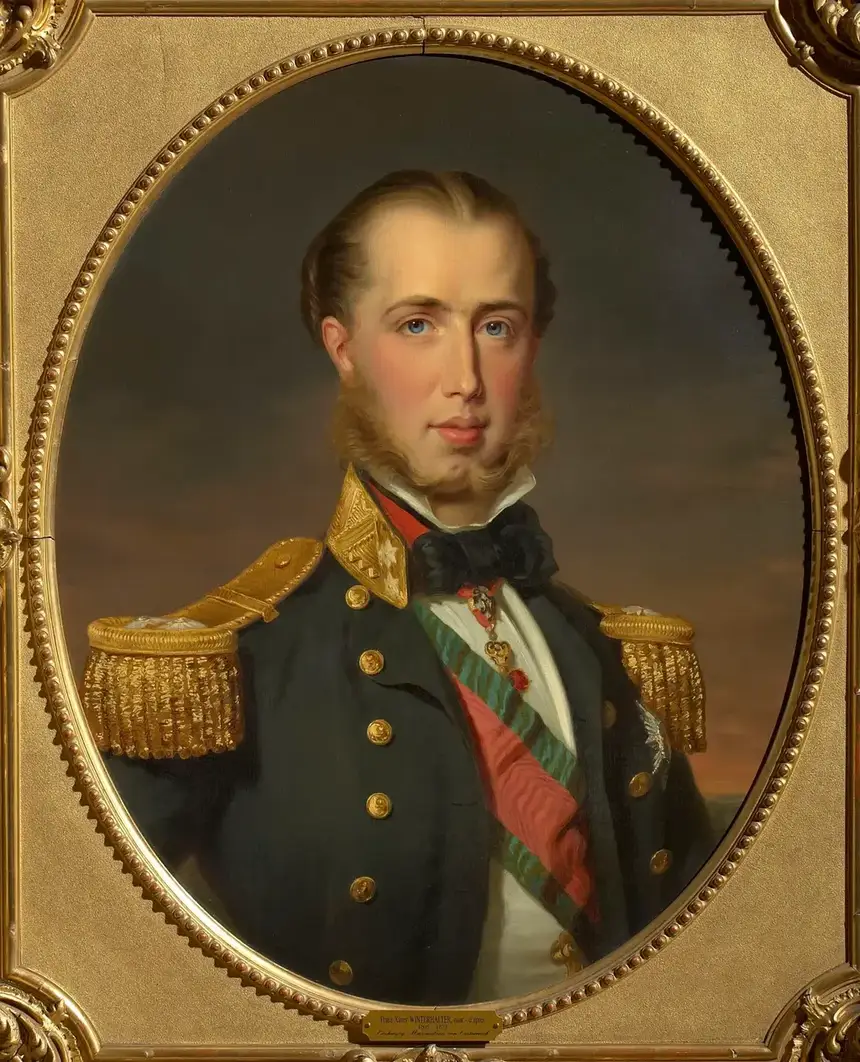
Franz Xaver Winterhalter is not a postcard. There is a decision in every zone of the canvas, and the decision is visible.
Depth here is a matter of edges: sharp in front, lost at the back. It is the hardest thing to print and the easiest to paint.
Our painter keeps the shadows transparent, because a shadow in a landscape is lit by the sky, not by nothing.
Saturated colour is kept for a small area; the rest is deliberately knocked back.
Edges are made by the brush, not by an outline, and they are the hardest thing to copy.
This one repaints badly, so our painter gets the values right early and leaves them.
It suits a room with warm, low light. Strong downlighting flattens the surface.
| Artist | Jean-François Portaels |
|---|---|
| Title | Franz Xaver Winterhalter |
| Created (original) | 1857 |
| Medium | Oil on canvas, hand-painted to order |
| What you receive | A hand-painted oil painting on canvas |
| Public domain | Yes — the artist died over 70 years ago |
What a print loses
A print reproduces the shapes and drops the substance. It is the substance you are buying.
Paint goes on in the original's order — thin first, thick last — so the surface behaves the way the painter intended.
| Aspect | Hand-painted oil | Printed canvas |
|---|---|---|
| Changing something | Tell us and the passage gets repainted | Usually means starting the file again |
| Texture | Ridges and drag you can see from across a room | None, or a printed imitation of it |
| Colour | Mixed for each passage, warm and cool versions | One flat value per area |
| How it ages | Warms and settles; cleanable by a conservator | Fades, then cracks at the stretcher |
| Surface | Hand-painted oil on canvas | Ink on canvas, flat |
Matching the original's degree of finish is harder than matching its colours.
Every canvas is painted to order, so the quote follows your size, frame and destination rather than a fixed list. Tell us what you need on WhatsApp and we reply with an exact figure, usually within the hour. You are buying from the workshop, not a catalogue.
From blank canvas to finished painting
Every canvas is painted to order, so nothing is pulled off a shelf. This is the sequence:
- We start with the canvas itself — stretched, sized and left to settle before any colour is mixed.
- The drawing goes down — charcoal or thin paint, done by eye rather than traced from a printout.
- Blocking the masses — thin paint, working the whole surface rather than one corner at a time.
- Setting the key — how dark the darks go determines everything that follows.
- Colour is built up — warmer and cooler versions of each passage, laid over the underpainting.
- Finishing passes — the loaded highlights go on at the end and stay there.
- Drying and varnishing — the final varnish goes on once the paint has set, before we photograph it.
Anyone can copy the shapes. The skill is in the transitions, and that is what takes the days.
Canvas, paint and varnish
Nothing is sprayed, sealed or laminated. The surface you see is paint and varnish, and that is all. We use a neutral-sized ground so the whites stay warm rather than going blue over time.
Varnish goes on only once the paint is properly dry, months after the last stroke, not before. Brushes, knives and rags. That is the equipment list; there is no machine in the process.
Keeping it
Dust it with a dry, soft brush. Keep it out of direct sun and away from radiators, and it will outlive you.
Whether to frame it
Framing is quoted separately, so you can decide after you have seen the finished canvas in photographs.
Frames are priced once you have chosen them, not estimated in advance.
Sizing it
You are not choosing from a list; you are telling us a measurement. These are the common ones:
| Size (inches) | Size (cm) | Best for |
|---|---|---|
| 24 × 20 in | 60 × 50 cm | Study, home office, above a desk |
| 20 × 16 in | 50 × 40 cm | Bedroom, hallway, above a console |
| 16 × 12 in | 40 × 30 cm | A shelf, a small wall, a gallery group |
| 64 × 48 in | 163 × 122 cm | Villa scale, lobby, hospitality wall |
| 48 × 36 in | 122 × 91 cm | Large living room, stairwell, loft |
If your wall is an odd shape, send the measurement and we will work to it. Proportions from the original are kept unless you ask us to change them. We quote DAP, so any duty or tax your country charges is settled by you at import. We do not add a tax line of our own.
For a stairwell or a double-height space, go larger than you think — the composition was built for distance.
Tell us the size and frame — exact quote back, usually within the hour.
💬 Get a Quote for Franz Xaver WinterhalterTimeline and shipping
Painting takes 9–15 days. Freight is quoted as its own line on the quote, agreed before you pay anything, and never added afterwards.
In transit it is typically 7–10 business days by air, tracked door to door. We send photographs of the finished painting before it is packed, and again once it is boxed.
Before anything is packed, you get photographs of the actual canvas and a chance to ask for changes. Adjustments are part of the process. Say what you want different and it gets done.
Our terms are DAP, meaning the freight is paid by us and any import charges are yours to settle. We will not estimate them, because the figure is your customs authority's to set.
A deposit starts the canvas and books the painter's time; the balance is due before the crate leaves. If a crate arrives damaged, send us photographs within 48 hours and contact us directly — we will sort it out with you.
Before you order
How long does a hand-painted version take?
9–15 days of studio time, depending mostly on size and how much impasto the surface carries, then several more days for the oil to set before we photograph, pack and send.
How do I clean and care for it?
Dust lightly with a dry, soft brush and keep it out of direct sun. Nothing else is needed for decades; oil paint is slow to change and easy to live with.
What if it does not look right to me?
We send photographs of the actual painting for your approval before anything ships. That is the moment to tell us what to adjust.
Does it come framed?
Framing is quoted separately, so you can decide once you have seen the finished painting in photographs.
Do you take a deposit?
Work begins on a deposit and ships once the balance is paid. Nothing is charged that is not on the quote.
Can you change the colours to suit my room?
We can shift the palette, but we will tell you honestly when a change would spoil the painting.
What is the canvas made of?
Cotton or linen, oil colour, and varnish. Stretcher bars are wedged so the canvas can be re-tensioned later.
Can I change the size?
Any size you like. We paint to the number you give us rather than to a standard range.
Is it really painted by hand?
Yes — oil on canvas, brush and knife. There is no printing, no giclée and no canvas transfer at any stage.
Is owning a reproduction legal?
Yes. The painting is out of copyright because Jean-François Portaels died more than 70 years ago. We paint copies honestly and never claim they are originals.
Do you ship to my country?
We ship to over 20 countries. Give us your city and the freight appears as its own line on the quote.
Do you sell prints?
No. Hand-painted oil on canvas only. No printing, no giclée, no canvas transfer.