About the original
J. M. W. Turner died in 1851, so the work has been in the public domain for decades. Reproducing it by hand is legal, and so is owning one.
We paint it in oil on canvas, one at a time, in Dafen Village. Nothing is printed, scanned or transferred.
It is an original composition painted before 1851, and our version is painted from the surviving image of it.
You are buying a painting, not a file. That distinction is the whole business we are in.
What the painting is doing
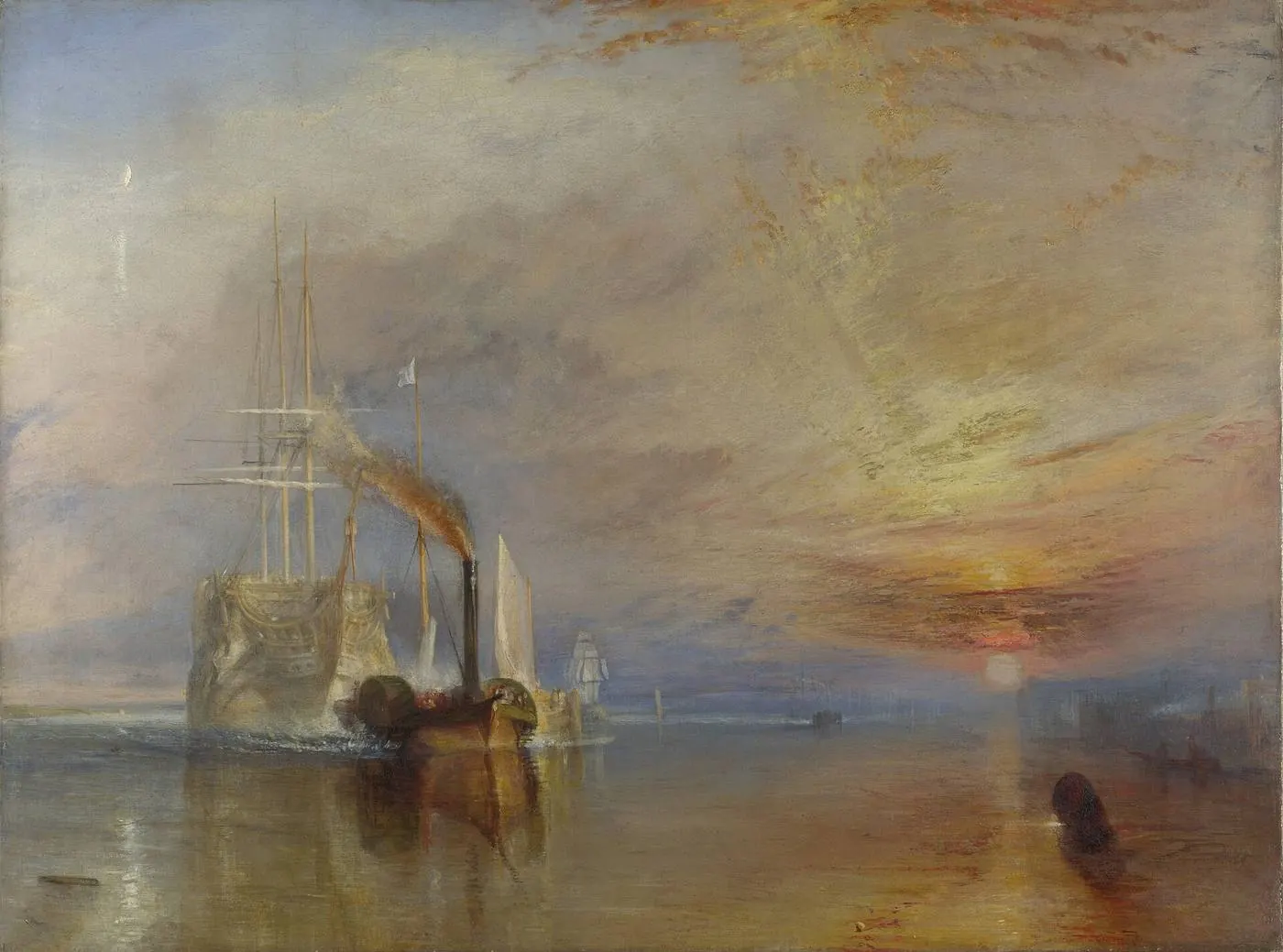
What makes a landscape worth painting by hand is the distance in it — the space between the near ground and the far one.
Depth here is a matter of edges: sharp in front, lost at the back. It is the hardest thing to print and the easiest to paint.
Sunlight and shadow are two different temperatures here, not one colour at two strengths.
We keep the original's palette rather than brightening it, even where a modern eye would.
Where the source has a loaded passage, ours is loaded too — you will feel it from the side.
The difficulty is restraint: leaving out most of what a photograph would show.
Given the subject, this sits naturally in a living room or a study rather than a hallway.
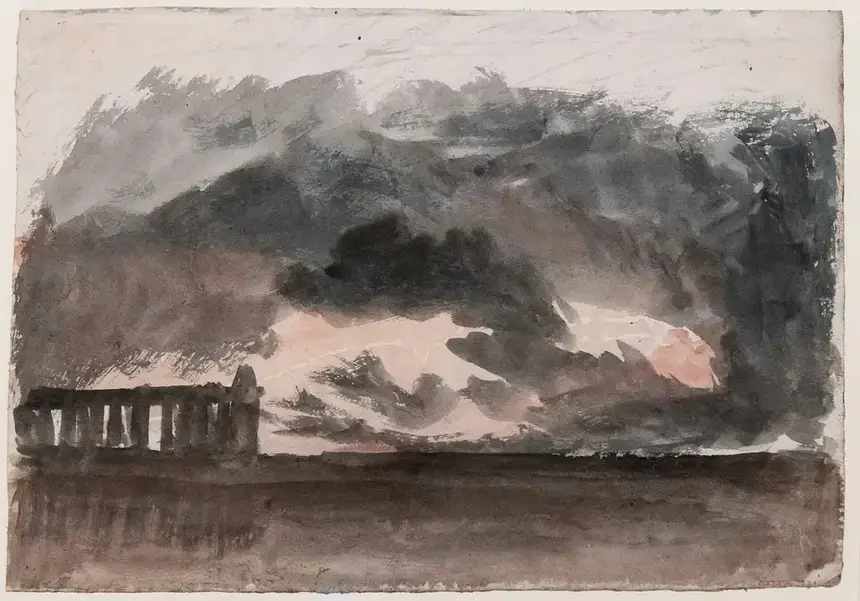
| Artist | J. M. W. Turner |
|---|---|
| Title | Paestum |
| Medium | Oil on canvas, hand-painted to order |
| Our version | Oil on canvas, painted by hand to order |
| Public domain | Yes — the artist died over 70 years ago |
Why hand-painting matters here
What you lose in a print is the air. A press lays ink flat; a painter builds depth in layers, and the depth is what you actually see.
Where the original is loaded, ours is loaded. Where it is thin, ours is thin. Matching the weight of the paint matters more than matching the colour.
| Aspect | Hand-painted oil | Printed canvas |
|---|---|---|
| How it ages | Warms and settles; cleanable by a conservator | Fades, then cracks at the stretcher |
| Size | Any size, painted to your wall | Limited by the printer |
| Texture | Ridges and drag you can see from across a room | None, or a printed imitation of it |
| Surface | Hand-painted oil on canvas | Ink on canvas, flat |
| Colour | Mixed for each passage, warm and cool versions | One flat value per area |
The difficult part is not the detail. It is keeping the whole canvas at the same stage of finish.
Every canvas is painted to order, so the quote follows your size, frame and destination rather than a fixed list. Tell us what you need on WhatsApp and we reply with an exact figure, usually within the hour. No resellers, no drop-shipper. The painter's studio handles your commission from first message to final crate.
How the canvas is built
This is how the painting is built, in the order our painters build it:
- Stretching and priming the support — cotton duck or linen goes onto the bars and gets its ground.
- A loose underdrawing — proportions checked by eye against the source image.
- Blocking the masses — thin paint, working the whole surface rather than one corner at a time.
- The values are established — this is the stage that decides whether the painting works.
- The colour passes — each area gets its own mixture rather than one colour used throughout.
- Finishing passes — the loaded highlights go on at the end and stay there.
- Left to dry before varnish — nothing is photographed or packed until the surface is ready.
This one repaints badly, so our painter gets the values right early and leaves them.
Framing
A frame is a separate line on the quote, not a bundle. You choose it once the painting exists.
Frames are priced once you have chosen them, not estimated in advance.
What it is made of
Nothing is sprayed, sealed or laminated. The surface you see is paint and varnish, and that is all. The paint is built in layers, fat over lean, which is what stops it cracking later.
The ground is a proper acrylic sizing, so the oil does not rot the fabric over time. We use cotton duck for most sizes and linen where the canvas is large or the client asks for it.
Looking after it
Oil paint needs very little: no water, no cleaners, no sprays. A dry brush and a stable room.
What size works
Any size is possible. These are simply the ones that come up most often in quotes:
| Size (inches) | Size (cm) | Best for |
|---|---|---|
| 16 × 12 in | 40 × 30 cm | A shelf, a small wall, a gallery group |
| 64 × 48 in | 163 × 122 cm | Villa scale, lobby, hospitality wall |
| 48 × 36 in | 122 × 91 cm | Large living room, stairwell, loft |
| 40 × 30 in | 102 × 76 cm | Living room focal wall, above a sofa |
| 32 × 24 in | 81 × 61 cm | Living room, above a sideboard |
If your wall is an odd shape, send the measurement and we will work to it. Proportions from the original are kept unless you ask us to change them. Shipments go out DAP. If your customs office charges duty or tax on arrival, that is between you and them — we do not collect it and we do not put a number on it.
In a bedroom it works above a headboard, sized to about two-thirds of the furniture width.
Give us your size and framing preference and you will have a quote shortly.
💬 Get a Quote for (Barcelona) PaestumTimeline and shipping
Painting takes 9–15 days. Freight is quoted as its own line on the quote, agreed before you pay anything, and never added afterwards.
Expect 7–10 business days in transit, with tracking from our door to yours. Rolled in a tube it travels cheaper and safer than framed; most overseas clients take it that way.
You approve the painting from photographs before it is packed — that is the checkpoint. Changes are handled by telling us what to change; we change it and send new photographs.
We quote DAP, so any duty or tax your country charges is settled by you at import. We do not add a tax line of our own.
Work begins on a deposit and ships on the balance. Both figures are on the quote. If a crate arrives damaged, send us photographs within 48 hours and contact us directly — we will sort it out with you.
Before you order
What about duties and import taxes?
Those are the buyer's responsibility (DAP). The amounts are set by your customs authority, not by us.
What if my wall is an unusual shape?
That is normal for us. Send the measurements and we will work out a canvas proportion that suits the space.
How close will it be to the original?
The composition, colour and drawing follow the original closely; the brushwork carries the painter's own hand. The painter works freehand on a blank canvas, following the same logic as the original rather than copying a photograph.
What is the canvas made of?
Cotton duck as standard, linen on request, artist-grade oil paint, and a final varnish once the paint is fully dry.
What if it arrives damaged?
Report damage within 48 hours with photographs. We deal with the carrier rather than leaving you to argue alone.
Do you sell prints?
No. Hand-painted oil on canvas only. No printing, no giclée, no canvas transfer.
Who pays the import duty?
The buyer does. Terms are DAP: duties and taxes, where they apply, are paid on arrival. We never add a tax line of our own.
How do I hang it?
Roughly 145 cm from floor to centre works for most rooms. Tell us your wall and we will give you the measurement.
Do you ship to my country?
We export to more than 20 countries. Tell us where you are and we will quote the freight as a separate line.
What does it cost?
Every canvas is quoted on size, frame and destination rather than a fixed list. Tell us what you need and we reply with an exact figure.
Do you take a deposit?
A deposit starts the canvas and the balance falls due before it ships. Both figures appear on the quote.
Is it really painted by hand?
Yes — oil on canvas, brush and knife. There is no printing, no giclée and no canvas transfer at any stage.