The original, and why we can paint it
Because József Rippl-Rónai died in 1927, this work is in the public domain. We are painting a copy of a painting — we never pass it off as the original, and neither should anyone selling you one.
Ours is a painting made with brushes. There is no giclée, no canvas transfer and no digital underlayer anywhere in the process.
The painting was made in the years before 1927, and what we reproduce is the record of it, not the object.
You are buying a painting, not a file. That distinction is the whole business we are in.
Where the painting lives
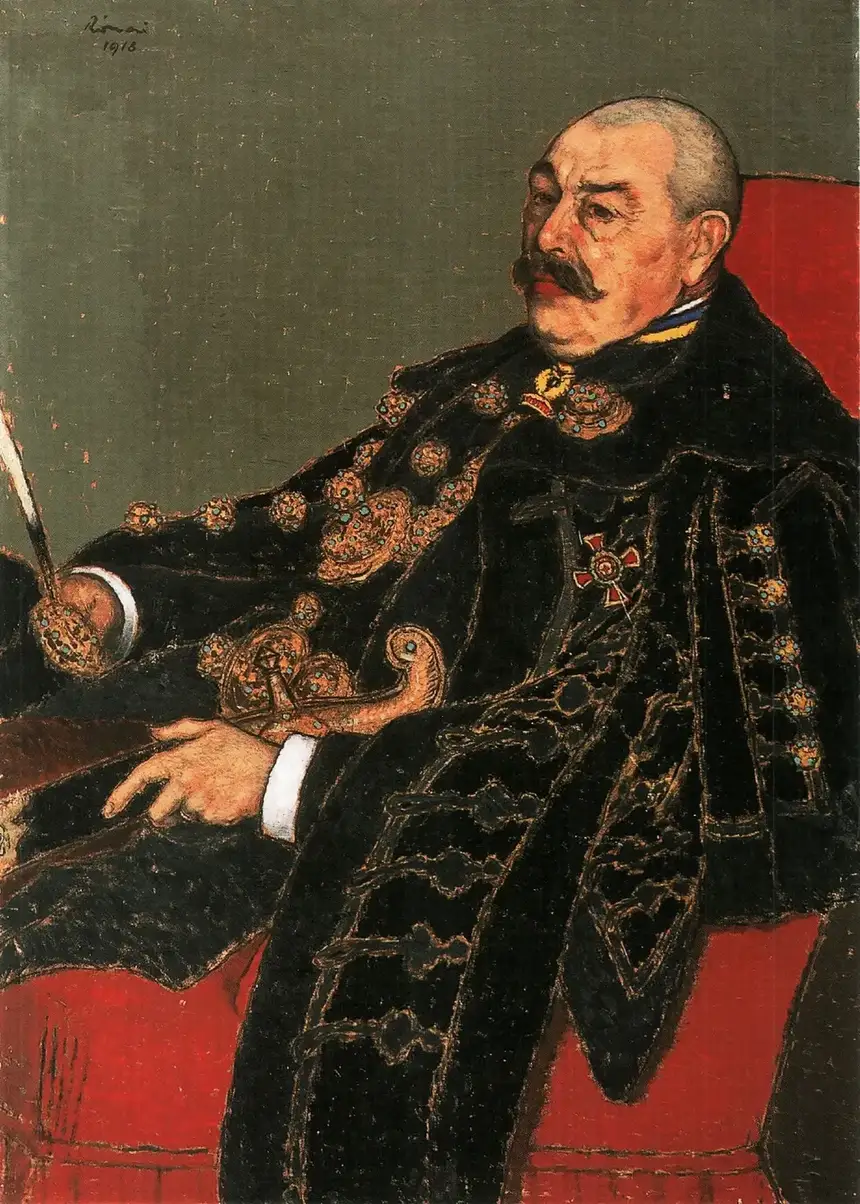
Rippl Portrait of Géza Makfalvay is a portrait you can stand two feet from. That is the test, and it is the test oil passes.
The head sits slightly off centre, as it does in the source, and we keep that.
Eyes are painted as spheres with a shadow, not as shapes with a highlight.
The saturation is deliberately uneven: strongest at the focal point, weaker everywhere else.
The last marks are the ones that are left alone. Overworking is the enemy.
The difficulty is restraint: leaving out most of what a photograph would show.
Hang it at eye level — roughly 145 cm from the floor to the centre — and it will hold the wall.
| Artist | József Rippl-Rónai |
|---|---|
| Title | Rippl Portrait of Géza Makfalvay |
| Created (original) | 1918 |
| Medium | Oil on canvas, hand-painted to order |
| Reproduction | Hand-painted oil on canvas, made to order |
| Original status | Public domain (artist deceased) |
The case for painting it by hand
A print reproduces the shapes and drops the substance. It is the substance you are buying.
Paint goes on in the original's order — thin first, thick last — so the surface behaves the way the painter intended.
| Aspect | Hand-painted oil | Printed canvas |
|---|---|---|
| What it takes | One painter, several days, start to finish | A machine, a few minutes |
| Handling of colour | Mixed on the palette and finished on the canvas | Fixed by the colour profile |
| Value over time | Can be re-stretched, cleaned and re-framed | Little value beyond the print |
| Lifespan | Slow to change; varnish can be refreshed decades later | Fades and cracks sooner |
| The surface | Built up with brushes and knives | Printed flat in one pass |
The passage that will take longest is the one that looks simplest.
Every canvas is painted to order, so the quote follows your size, frame and destination rather than a fixed list. Tell us what you need on WhatsApp and we reply with an exact figure, usually within the hour. You are talking to the people who will actually paint it, not a middleman.
How the canvas is built
The order of work matters as much as the work itself. Ours runs like this:
- The canvas is stretched and primed — cotton or linen, sized and ready before any paint goes near it.
- Laying in the drawing — done by eye from the reference, not traced or projected.
- The big shapes are blocked in — thin paint, one colour at a time, the whole canvas at once.
- Setting the key — how dark the darks go determines everything that follows.
- Building the colour — a warm and a cool version of each passage, put down in order.
- Detail and highlights last — put on thickly and then not touched again.
- It dries, then gets varnished — and only then is it photographed for you.
The hardest passage is the quiet one, where a small mistake has nowhere to hide.
Framing
Most clients wait for the photographs before choosing a frame, which is the sensible order.
If you are shipping, an unframed canvas rolled in a tube is considerably cheaper to move than a framed one.
What it is made of
Nothing is sprayed, sealed or laminated. The surface you see is paint and varnish, and that is all. We use a neutral-sized ground so the whites stay warm rather than going blue over time.
Linen is worth the extra cost above about a metre across, because it holds tension better in humid rooms. The paint is built in layers, fat over lean, which is what stops it cracking later.
Care and cleaning
Oil paint needs very little: no water, no cleaners, no sprays. A dry brush and a stable room.
Choosing a size
Because each piece is painted from scratch, you are not limited to stock dimensions. These are the sizes clients ask for most:
| Size (inches) | Size (cm) | Best for |
|---|---|---|
| 64 × 48 in | 163 × 122 cm | Villa scale, lobby, hospitality wall |
| 48 × 36 in | 122 × 91 cm | Large living room, stairwell, loft |
| 40 × 30 in | 102 × 76 cm | Living room focal wall, above a sofa |
| 32 × 24 in | 81 × 61 cm | Living room, above a sideboard |
Tell us the wall width and we will tell you what looks right rather than what is standard. Shipments go out DAP. If your customs office charges duty or tax on arrival, that is between you and them — we do not collect it and we do not put a number on it.
It works best on a wall you pass rather than one you sit and stare at — the paint rewards a moving eye.
Message us the dimensions you have in mind and we will come back with a figure.
💬 Get a Quote for Rippl Portrait of Géza MakfalvayTimeline and shipping
Allow 9–15 days for the painting itself. Shipping is a separate line on your quote — you see it before payment, not after.
In transit it is typically 7–10 business days by air, tracked door to door. We send photographs of the finished painting before it is packed, and again once it is boxed.
You see photographs of the finished painting before it ships, and you tell us what to adjust. If something is not right, tell us what to adjust and we adjust it.
Duties and import taxes are the buyer's account (DAP). Your customs authority sets them; we do not.
You pay a deposit to start and the remainder before shipping. Nothing is hidden in between. If a crate arrives damaged, send us photographs within 48 hours and contact us directly — we will sort it out with you.
Questions worth asking
Is there a rush option?
It depends on the canvas and what else is in the studio. Ask on WhatsApp with your size and we will tell you straight what is possible.
Why not just print it?
A print flattens the surface into a poster: the distance collapses and the highlights turn to grey. Paint keeps the depth and the texture the original was built from.
Does it come with a certificate of authenticity?
No, and we would be wary of anyone who issues one for a public-domain reproduction. What you receive is a hand-painted canvas and photographs of it before it ships.
Who pays the import duty?
The buyer does. Terms are DAP: duties and taxes, where they apply, are paid on arrival. We never add a tax line of our own.
Is it really painted by hand?
Yes — oil on canvas, brush and knife. There is no printing, no giclée and no canvas transfer at any stage.
What if it arrives damaged?
Report damage within 48 hours with photographs. We deal with the carrier rather than leaving you to argue alone.
Do you take a deposit?
Work begins on a deposit and ships once the balance is paid. Nothing is charged that is not on the quote.
Can you paint a different work by József Rippl-Rónai?
Yes — send us the image, or look through the other József Rippl-Rónai works on the site.
How long does it take?
From order to finished canvas is 9–15 days; delivery adds about 7–10 business days by air.
Can I change the size?
Yes. The canvas is painted to your measurement, not taken from a stock list.
What does it cost?
There is no price list, because the number depends on your size and frame. Message us and we will quote exactly.
Do you sell prints?
No prints at all — no giclée, no canvas transfer, nothing machine-made.