About the original
Because Léon Spilliaert died in 1946, this work is in the public domain. We are painting a copy of a painting — we never pass it off as the original, and neither should anyone selling you one.
Every version we make is oil on canvas, painted by one painter from start to finish. No printing is involved at any stage.
It is an original composition painted before 1946, and our version is painted from the surviving image of it.
What arrives is a canvas with paint on it, made by a person. That is the only thing we sell.
Looking at it properly
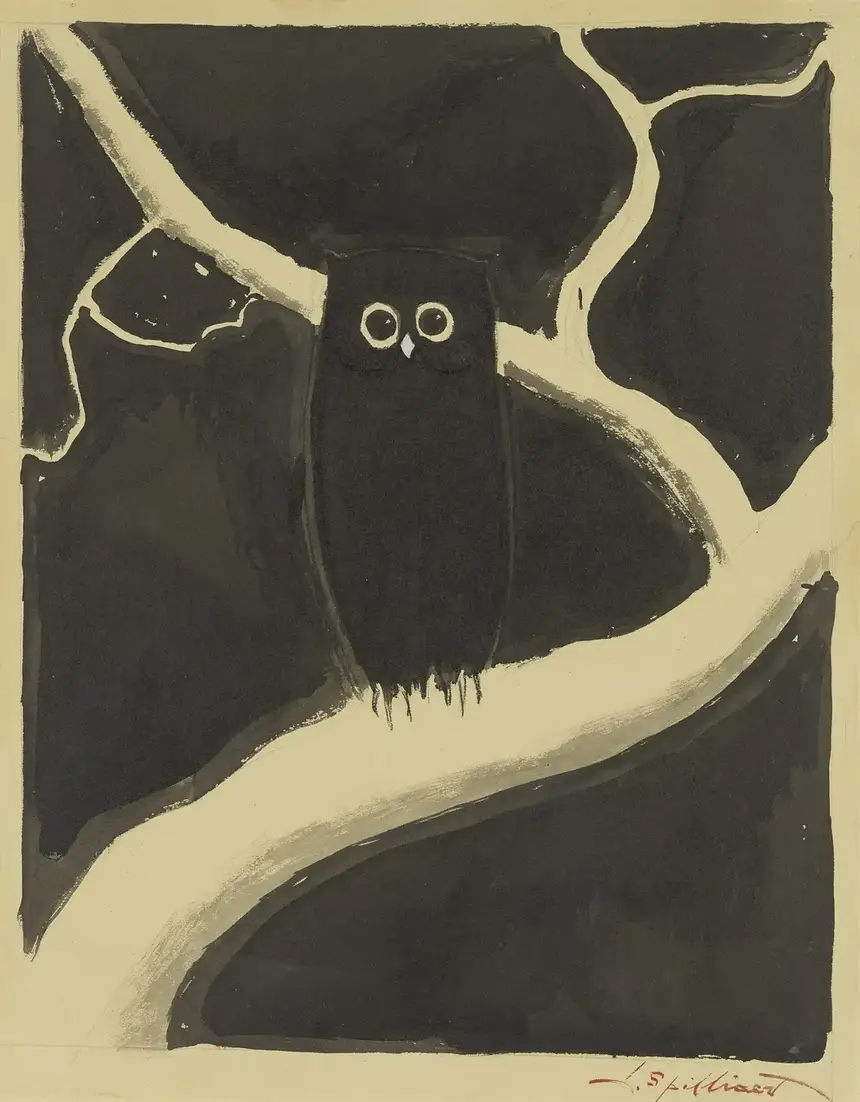
Ours is painted from the source image, stroke by stroke, so De uil, Léon Spilliaert, keeps the order it was originally built in.
Depth here is a matter of edges: sharp in front, lost at the back. It is the hardest thing to print and the easiest to paint.
Dusk and overcast passages are the hardest and the most rewarding — they are all half-tones.
Our painter mixes on the palette but finishes on the canvas, which is where the small variations come from.
The marks have a direction, and the direction follows the form.
The passage that will take longest is the one that looks simplest.
A plain wall is better than a busy one; the painting supplies the interest.
| Artist | Léon Spilliaert |
|---|---|
| Title | De uil, Léon Spilliaert, |
| Created (original) | 1919 |
| Medium | Oil on canvas, hand-painted to order |
| Our version | Oil on canvas, painted by hand to order |
| Public domain | Yes — the artist died over 70 years ago |
Why hand-painting matters here
Prints are good at information and bad at paint. This subject is mostly paint.
Paint goes on in the original's order — thin first, thick last — so the surface behaves the way the painter intended.
| Aspect | Hand-painted oil | Printed canvas |
|---|---|---|
| Later on | Can be restored, re-framed, handed on | Replaceable, and usually replaced |
| Corrections | We adjust it and repaint the passage | The file is reprinted or it is not |
| Edge quality | Soft where the form turns, sharp where it does not | Uniformly sharp or uniformly blurred |
| Sense of depth | Real, created by layers of paint | Simulated by darker ink |
| How it ages | Warms and settles; cleanable by a conservator | Fades, then cracks at the stretcher |
Anyone can copy the shapes. The skill is in the transitions, and that is what takes the days.
Every canvas is painted to order, so the quote follows your size, frame and destination rather than a fixed list. Tell us what you need on WhatsApp and we reply with an exact figure, usually within the hour. No resellers, no drop-shipper. The painter's studio handles your commission from first message to final crate.
The sequence on our floor
Here is what actually happens between your message and the crate:
- Stretching and priming the support — cotton duck or linen goes onto the bars and gets its ground.
- A loose underdrawing — proportions checked by eye against the source image.
- The first colour pass — thin and simple, establishing the main shapes only.
- Getting the values right — the stage that decides whether the finished painting holds together.
- Building the colour — a warm and a cool version of each passage, put down in order.
- The detail and highlights go on — last, loaded, and left alone once they are down.
- It dries, then gets varnished — and only then is it photographed for you.
This one repaints badly, so our painter gets the values right early and leaves them.
Whether to frame it
Most clients wait for the photographs before choosing a frame, which is the sensible order.
If you are shipping, an unframed canvas rolled in a tube is considerably cheaper to move than a framed one.
What goes into it
We do not use a printer at any stage. There is no giclée, no canvas transfer, no digital underlayer. Varnish goes on only once the paint is properly dry, months after the last stroke, not before.
The varnish is removable, so a conservator can clean the painting in fifty years without touching the paint. Nothing is sprayed, sealed or laminated. The surface you see is paint and varnish, and that is all.
Looking after it
Oil paint needs very little: no water, no cleaners, no sprays. A dry brush and a stable room.
Getting the size right
You are not choosing from a list; you are telling us a measurement. These are the common ones:
| Size (inches) | Size (cm) | Best for |
|---|---|---|
| 32 × 24 in | 81 × 61 cm | Living room, above a sideboard |
| 30 × 24 in | 76 × 61 cm | Dining room, bedroom feature wall |
| 24 × 20 in | 60 × 50 cm | Study, home office, above a desk |
| 20 × 16 in | 50 × 40 cm | Bedroom, hallway, above a console |
| 16 × 12 in | 40 × 30 cm | A shelf, a small wall, a gallery group |
Anything outside this table is fine — we paint to the number you give us. We sell DAP: the price covers the painting and the freight, and any import duties or taxes are the buyer's to settle with customs. We do not collect them and we do not estimate them.
It suits a room with warm, low light. Strong downlighting flattens the surface.
Give us your size and framing preference and you will have a quote shortly.
💬 Get a Quote for De uil, Léon Spilliaert, Mu.ZEE Oostende, SM00Getting it to you
Allow 9–15 days for the painting itself. Shipping is a separate line on your quote — you see it before payment, not after.
Air freight runs about 7–10 business days, tracked, to your door. Rolled in a tube it travels cheaper and safer than framed; most overseas clients take it that way.
You approve the painting from photographs before it is packed — that is the checkpoint. Changes are handled by telling us what to change; we change it and send new photographs.
Terms are DAP. Import duties and taxes, where they apply, are paid by the buyer on arrival — we never collect them in advance and never guess at the amount.
Work begins on a deposit and ships on the balance. Both figures are on the quote. Damage in transit should be reported to us within 48 hours, with photographs. We pursue it with the carrier rather than promising a refund.
Before you order
Do you work from my own photograph?
Yes, though that is a separate service. This page is for a hand-painted version of {title}; for a photo-to-painting commission, send the image on WhatsApp.
What if my wall is an unusual shape?
That is normal for us. Send the measurements and we will work out a canvas proportion that suits the space.
How long does a hand-painted version take?
9–15 days of studio time, depending mostly on size and how much impasto the surface carries, then several more days for the oil to set before we photograph, pack and send.
Can you paint a different work by Léon Spilliaert?
Yes. Send the image and we will quote it, or browse the other paintings we have listed.
Is owning a reproduction legal?
Yes. The painting is out of copyright because Léon Spilliaert died more than 70 years ago. We paint copies honestly and never claim they are originals.
Can I change the size?
Yes. The canvas is painted to your measurement, not taken from a stock list.
Do you sell prints?
No. Hand-painted oil on canvas only. No printing, no giclée, no canvas transfer.
Do you ship to my country?
We export to more than 20 countries. Tell us where you are and we will quote the freight as a separate line.
Is it really painted by hand?
Yes — oil on canvas, brush and knife. There is no printing, no giclée and no canvas transfer at any stage.
Do you take a deposit?
A deposit starts the canvas and the balance falls due before it ships. Both figures appear on the quote.
What does it cost?
Every canvas is quoted on size, frame and destination rather than a fixed list. Tell us what you need and we reply with an exact figure.
How do I hang it?
Centre it at about 145 cm from the floor, or two-thirds the width of the furniture below it. We will tell you the exact number for your wall.