What you are buying into
Ohara Koson died in 1945, so the work has been in the public domain for decades. Reproducing it by hand is legal, and so is owning one.
Ours is a painting made with brushes. There is no giclée, no canvas transfer and no digital underlayer anywhere in the process.
The painting was made in the years before 1945, and what we reproduce is the record of it, not the object.
You are buying a painting, not a file. That distinction is the whole business we are in.
How to read it
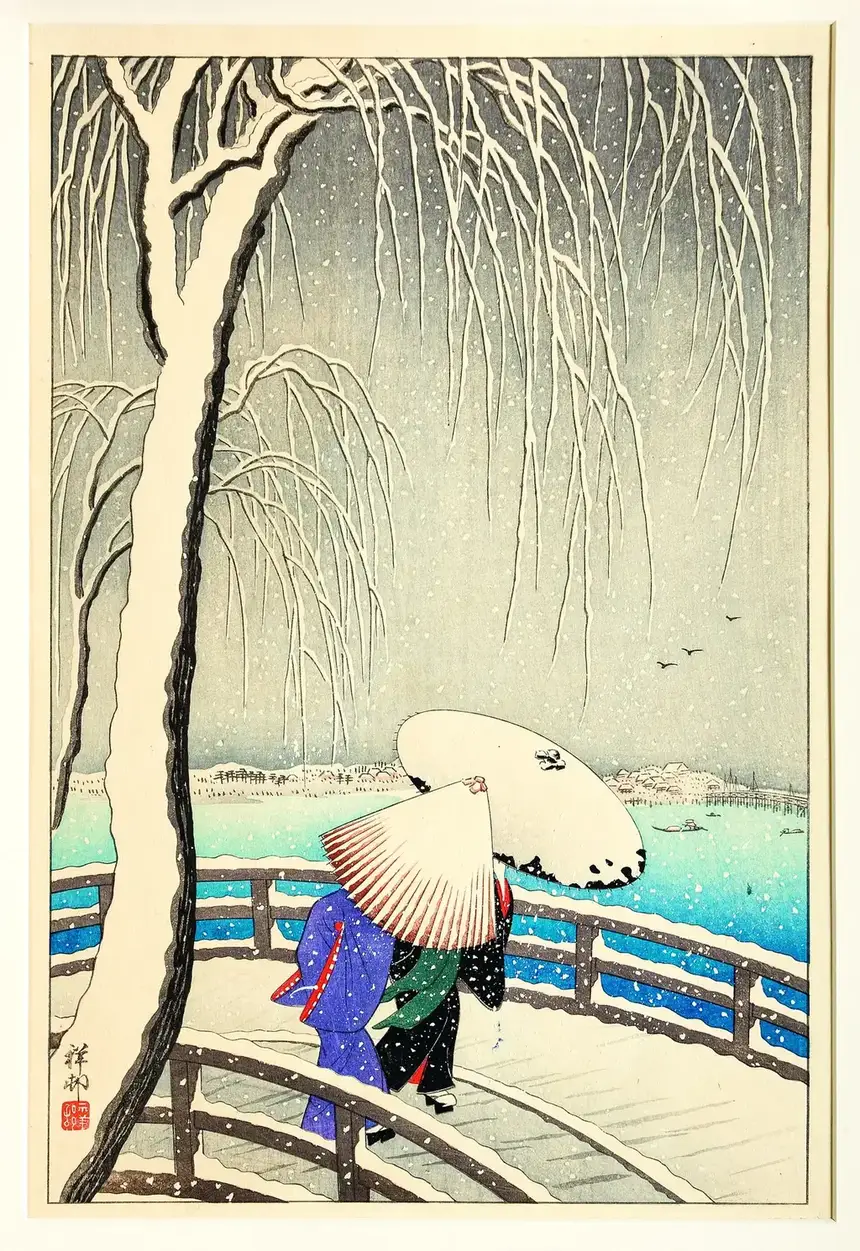
The reason to have Two women in snow on Yanagi Bridge painted rather than printed is the surface: paint standing off canvas, catching light from the side.
Where the source leaves an edge lost, we leave it lost. Sharpening it would be painting a different picture.
Our painter keeps the original's key rather than brightening the picture for reproduction.
Our painter keeps the colour relationships rather than the exact hues, because relationships are what survive.
Paint is laid on, not pushed around. That is what keeps it fresh.
Getting Two women in snow on Yanagi Bridge right means painting it in the right order, and the order is not obvious.
A plain wall is better than a busy one; the painting supplies the interest.
| Artist | Ohara Koson |
|---|---|
| Title | Two women in snow on Yanagi Bridge |
| Medium | Oil on canvas, hand-painted to order |
| How it is made | Painted by hand in oil on canvas, to your size |
| Original status | Public domain (artist deceased) |
Why this one cannot be printed
The difference is not subtle when the two hang side by side. Ink sits on the surface; oil stands off it.
Paint goes on in the original's order — thin first, thick last — so the surface behaves the way the painter intended.
| Aspect | Hand-painted oil | Printed canvas |
|---|---|---|
| Size | Any size, painted to your wall | Limited by the printer |
| Impasto | Real paint standing off the canvas | Flat ink, sometimes embossed to imitate |
| How it ages | Warms and settles; cleanable by a conservator | Fades, then cracks at the stretcher |
| Time to make | Days of one painter's working time | Minutes |
| Value over time | Can be re-stretched, cleaned and re-framed | Little value beyond the print |
The difficulty is restraint: leaving out most of what a photograph would show.
Every canvas is painted to order, so the quote follows your size, frame and destination rather than a fixed list. Tell us what you need on WhatsApp and we reply with an exact figure, usually within the hour. No resellers, no drop-shipper. The painter's studio handles your commission from first message to final crate.
How your painting is made
Here is what actually happens between your message and the crate:
- The canvas is stretched and primed — cotton or linen, sized and ready before any paint goes near it.
- A loose underdrawing — proportions checked by eye against the source image.
- Blocking the masses — thin paint, working the whole surface rather than one corner at a time.
- Setting the key — how dark the darks go determines everything that follows.
- Colour is built up — warmer and cooler versions of each passage, laid over the underpainting.
- Finishing passes — the loaded highlights go on at the end and stay there.
- It dries, then gets varnished — and only then is it photographed for you.
Matching the original's degree of finish is harder than matching its colours.
Keeping it
Once the varnish has cured the surface can be cleaned by a conservator, but in a normal house it will not need it for decades.
What it is made of
Linen is worth the extra cost above about a metre across, because it holds tension better in humid rooms. Varnish goes on only once the paint is properly dry, months after the last stroke, not before.
We buy pigment in tubes from the same suppliers the village has used for years, not in bulk drums. The ground is a proper acrylic sizing, so the oil does not rot the fabric over time.
Frames
Frames are priced once you have chosen them, not estimated in advance.
Most clients wait for the photographs before choosing a frame, which is the sensible order.
Sizing it
The canvas is cut to your wall, not the other way round. For reference, these are the dimensions most often requested:
| Size (inches) | Size (cm) | Best for |
|---|---|---|
| 20 × 16 in | 50 × 40 cm | Bedroom, hallway, above a console |
| 16 × 12 in | 40 × 30 cm | A shelf, a small wall, a gallery group |
| 64 × 48 in | 163 × 122 cm | Villa scale, lobby, hospitality wall |
| 48 × 36 in | 122 × 91 cm | Large living room, stairwell, loft |
We will size the canvas to the room, not to a stock list. Send us the measurement. Duties and import taxes are the buyer's account (DAP). Your customs authority sets them; we do not.
This reads well above a sofa or a sideboard, where it will be seen from two to three metres.
Give us your size and framing preference and you will have a quote shortly.
💬 Get a Quote for Two women in snow on Yanagi BridgeGetting it to you
Painting takes 9–15 days. Freight is quoted as its own line on the quote, agreed before you pay anything, and never added afterwards.
Transit is usually 7–10 business days, tracked all the way. Every shipment goes out with tracking. We do not send anything untracked.
You approve the painting from photographs before it is packed — that is the checkpoint. Adjustments are part of the process. Say what you want different and it gets done.
We sell DAP: the price covers the painting and the freight, and any import duties or taxes are the buyer's to settle with customs. We do not collect them and we do not estimate them.
Work begins on a deposit and ships on the balance. Both figures are on the quote. If a crate arrives damaged, send us photographs within 48 hours and contact us directly — we will sort it out with you.
The practical questions
How do you handle the sky?
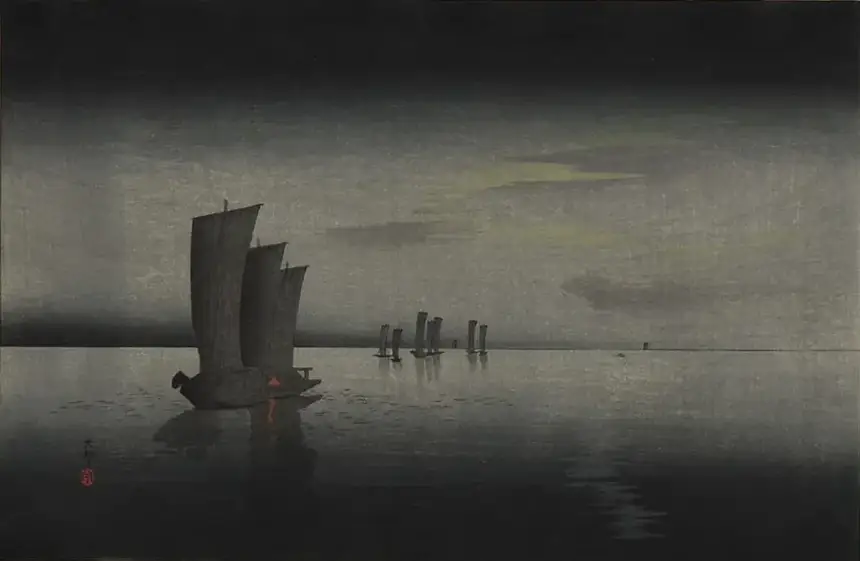
The sky is worked wet into wet so the cloud edges stay soft where they should be. A print flattens a storm into a poster; paint keeps the movement in it.
Can I resell the reproduction?
Yes. Because the underlying work is in the public domain, the hand-painted canvas is yours to sell, gift or install commercially.
Can I change something in the composition?
Often yes — background, cropping, or adapting the proportions to your wall. Tell us what you have in mind and we will say honestly whether it will work.
What does it cost?
Every canvas is quoted on size, frame and destination rather than a fixed list. Tell us what you need and we reply with an exact figure.
Do you take a deposit?
Work begins on a deposit and ships once the balance is paid. Nothing is charged that is not on the quote.
Will I see it before it ships?
Yes — photographs of the actual painting go to you first, and nothing is packed until you have seen them.
Can you paint it from a different photograph of the same work?
Yes. If you have a better reference, send it on WhatsApp and we will work from yours.
What is the canvas made of?
Cotton duck as standard, linen on request, artist-grade oil paint, and a final varnish once the paint is fully dry.
What if it arrives damaged?
send us photographs within 48 hours and contact us directly — we will sort it out with you.
Do you sell prints?
No prints at all — no giclée, no canvas transfer, nothing machine-made.
Is owning a reproduction legal?
Yes. Ohara Koson died more than 70 years ago, so the work is in the public domain and owning a hand-painted version is legal anywhere. We never pass ours off as the original.
Can I change the size?
Any size you like. We paint to the number you give us rather than to a standard range.