What you are buying into
Paul Gauguin died in 1903. That puts the painting well outside copyright, which is why we can paint it and you can own it anywhere in the world.
Ours is a painting made with brushes. There is no giclée, no canvas transfer and no digital underlayer anywhere in the process.
It is an original composition painted before 1903, and our version is painted from the surviving image of it.
You are buying a painting, not a file. That distinction is the whole business we are in.
Looking at it properly
Abstract work is the clearest case for hand-painting: the surface is the subject.
Our painter keeps the original's scale relationships when enlarging, so the gestures stay the same size relative to the canvas.
Ridges and valleys in the surface do the work that shading would do elsewhere.
We keep the original's palette rather than brightening it, even where a modern eye would.
Edges are made by the brush, not by an outline, and they are the hardest thing to copy.
The difficult part is not the detail. It is keeping the whole canvas at the same stage of finish.
Hang it at eye level — roughly 145 cm from the floor to the centre — and it will hold the wall.
| Artist | Paul Gauguin |
|---|---|
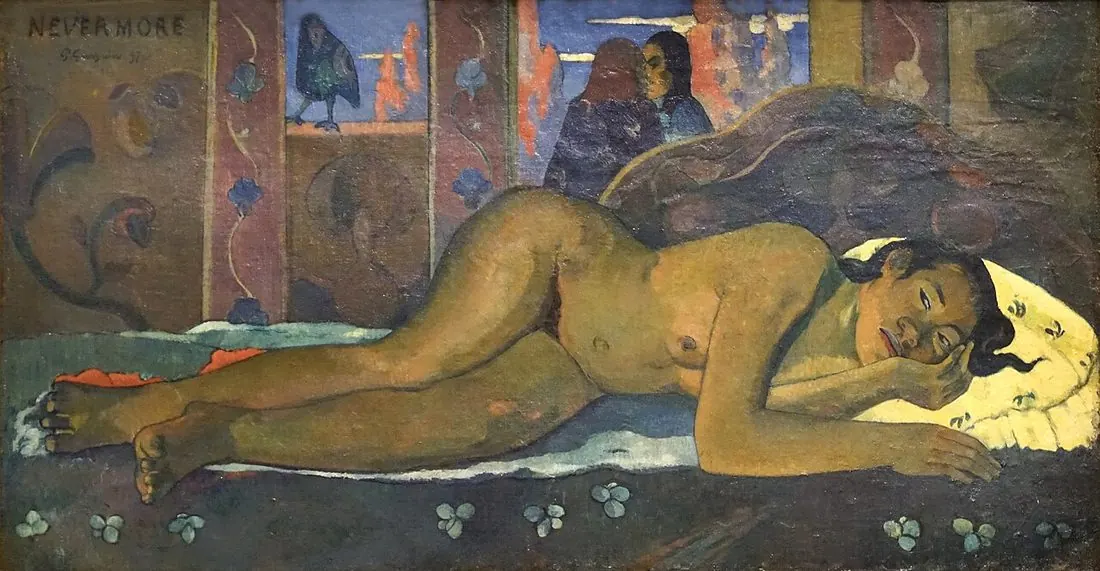
| Title | Nevermore Hand-Painted Oil Reproduction |
| Created (original) | 1897 |
| Medium | Oil on canvas, hand-painted to order |
| What you receive | A hand-painted oil painting on canvas |
| Public domain | Yes — the artist died over 70 years ago |
What a print loses
Prints are good at information and bad at paint. This subject is mostly paint.
Edges are left soft where the form turns away and sharp where it does not. That single habit is what separates a painting from a copy.
| Aspect | Hand-painted oil | Printed canvas |
|---|---|---|
| Value over time | Can be re-stretched, cleaned and re-framed | Little value beyond the print |
| Lifespan | Slow to change; varnish can be refreshed decades later | Fades and cracks sooner |
| Edge quality | Soft where the form turns, sharp where it does not | Uniformly sharp or uniformly blurred |
| What it takes | One painter, several days, start to finish | A machine, a few minutes |
| Texture | Ridges and drag you can see from across a room | None, or a printed imitation of it |
Getting Nevermore Hand-Painted Oil Reproduction right means painting it in the right order, and the order is not obvious.
Every canvas is painted to order, so the quote follows your size, frame and destination rather than a fixed list. Tell us what you need on WhatsApp and we reply with an exact figure, usually within the hour. You are talking to the people who will actually paint it, not a middleman.
From blank canvas to finished painting
This is how the painting is built, in the order our painters build it:
- Stretching and priming the support — cotton duck or linen goes onto the bars and gets its ground.
- The drawing goes down — charcoal or thin paint, done by eye rather than traced from a printout.
- The big shapes are blocked in — thin paint, one colour at a time, the whole canvas at once.
- The values are established — this is the stage that decides whether the painting works.
- Colour is built up — warmer and cooler versions of each passage, laid over the underpainting.
- The detail and highlights go on — last, loaded, and left alone once they are down.
- Left to dry before varnish — nothing is photographed or packed until the surface is ready.
The hardest passage is the quiet one, where a small mistake has nowhere to hide.
Canvas, paint and varnish
The varnish is removable, so a conservator can clean the painting in fifty years without touching the paint. Brushes, knives and rags. That is the equipment list; there is no machine in the process.
Oil paint dries by oxidation, not evaporation, which is why a finished canvas needs weeks before it travels. Large canvases get a cross-brace; anything over about a metre and a half needs one.
Frames
A frame is a separate line on the quote, not a bundle. You choose it once the painting exists.
We can supply a simple floater frame, a traditional gilt, or nothing at all. It is your call.
Living with it
Once the varnish has cured the surface can be cleaned by a conservator, but in a normal house it will not need it for decades.
Choosing a size
Because each piece is painted from scratch, you are not limited to stock dimensions. These are the sizes clients ask for most:
| Size (inches) | Size (cm) | Best for |
|---|---|---|
| 48 × 18 in | 122 × 46 cm | Panoramic wall, open-plan living area |
| 60 × 20 in | 152 × 51 cm | Lobby, hospitality corridor, large loft |
| 72 × 24 in | 183 × 61 cm | Villa scale, double-height wall |
| 30 × 12 in | 76 × 30 cm | A long wall that would swallow a normal canvas |
Anything outside this table is fine — we paint to the number you give us. We quote DAP, so any duty or tax your country charges is settled by you at import. We do not add a tax line of our own.
It is a picture for a room you use, not a corridor you walk through.
Tell us your size and frame — we reply with an exact quote, usually within the hour.
💬 Get a Nevermore Quote on WhatsAppGetting it to you
Painting takes 9–15 days. Freight is quoted as its own line on the quote, agreed before you pay anything, and never added afterwards.
In transit it is typically 7–10 business days by air, tracked door to door. Every shipment goes out with tracking. We do not send anything untracked.
Nothing ships before you have seen it. Photographs of the finished painting go to you first. If something is not right, tell us what to adjust and we adjust it.
DAP terms: we pay the freight, you settle any duty or tax your country applies. We do not collect taxes on anyone's behalf.
You pay a deposit to start and the remainder before shipping. Nothing is hidden in between. Report any transit damage within 48 hours with photographs and we will deal with the carrier. We will not promise a payout, but we will not leave you to argue alone either.
Before you order
Will it look exactly like the image?
Not exactly, and that is the point — it is a painting, not a scan. Composition, colour and drawing follow the original closely; the surface is where a painter's own decisions show.
Can I resell the reproduction?
Yes. Because the underlying work is in the public domain, the hand-painted canvas is yours to sell, gift or install commercially.
Will I see it before it ships?
Yes — photographs of the actual painting go to you first, and nothing is packed until you have seen them.
What if it arrives damaged?
send us photographs within 48 hours and contact us directly — we will sort it out with you.
Do you take a deposit?
A deposit starts the canvas and the balance falls due before it ships. Both figures appear on the quote.
Do you sell prints?
No. Hand-painted oil on canvas only. No printing, no giclée, no canvas transfer.
Does it come framed?
Frames are priced on their own line. Most clients choose after seeing the photographs.
Who pays the import duty?
You do. We sell DAP, so any duty or tax your customs authority charges is settled by you at import. We do not collect it and we do not estimate it.
Can you change the colours to suit my room?
Sometimes. We will adjust the palette if it can be done without ruining the picture, and say so if it cannot.
What does it cost?
Every canvas is quoted on size, frame and destination rather than a fixed list. Tell us what you need and we reply with an exact figure.
Is it really painted by hand?
Yes. One painter, oil paint, brushes. We do not own a printer that touches canvas.
Brushwork details
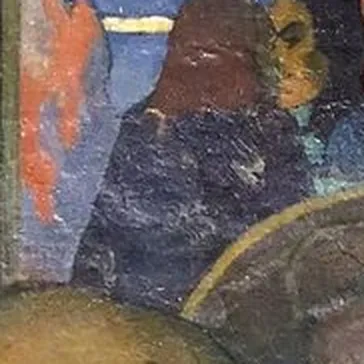
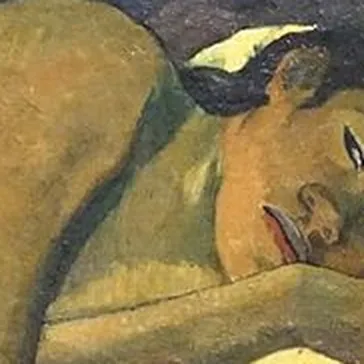
Close-up crops of this 100% hand-painted oil reproduction — real oil texture, never a print.