The original, and why we can paint it
Pierre Auguste Renoir died in 1919, so the work has been in the public domain for decades. Reproducing it by hand is legal, and so is owning one.
Every version we make is oil on canvas, painted by one painter from start to finish. No printing is involved at any stage.
The painting was made in the years before 1919, and what we reproduce is the record of it, not the object.
If you want something printed, we are the wrong workshop. We do not own a printer that touches canvas.
Looking at it properly
A hand-painted portrait ages differently. A Girl with a Watering Can will look warmer in twenty years, not flatter.
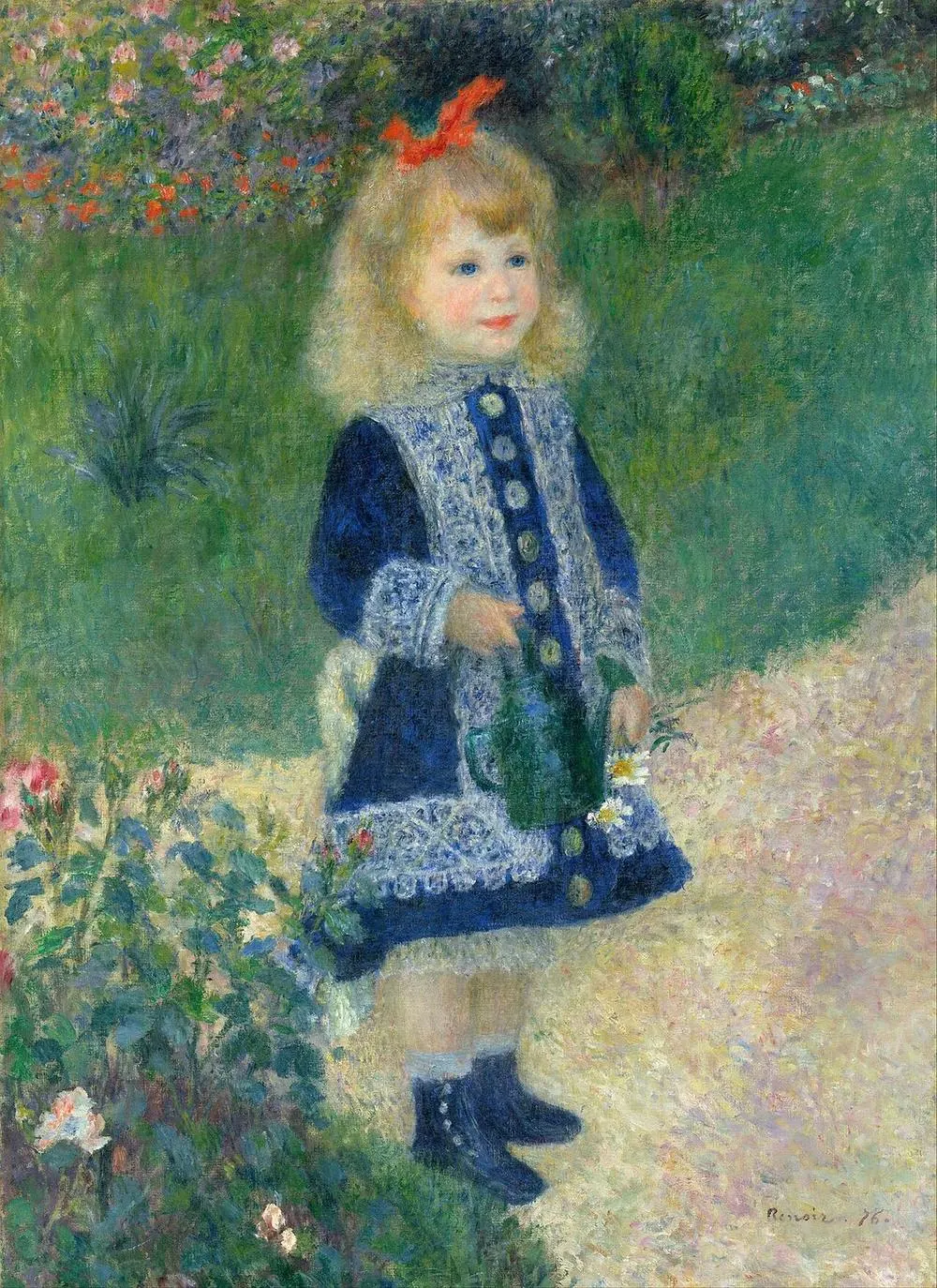
The background is painted thin and quiet so the head comes forward without being outlined.
The highlight on the forehead and nose is put on last and left alone.
Our painter mixes on the palette but finishes on the canvas, which is where the small variations come from.
The last marks are the ones that are left alone. Overworking is the enemy.
Getting A Girl with a Watering Can right means painting it in the right order, and the order is not obvious.
In a bedroom it works above a headboard, sized to about two-thirds of the furniture width.
| Artist | Pierre Auguste Renoir |
|---|---|
| Title | A Girl with a Watering Can |
| Created (original) | 1876 |
| Medium | Oil on canvas, hand-painted to order |
| What you receive | A hand-painted oil painting on canvas |
| Public domain | Yes — the artist died over 70 years ago |
Why hand-painting matters here
The difference is not subtle when the two hang side by side. Ink sits on the surface; oil stands off it.
Edges are left soft where the form turns away and sharp where it does not. That single habit is what separates a painting from a copy.
| Aspect | Hand-painted oil | Printed canvas |
|---|---|---|
| Changing something | Tell us and the passage gets repainted | Usually means starting the file again |
| Edge quality | Soft where the form turns, sharp where it does not | Uniformly sharp or uniformly blurred |
| Later on | Can be restored, re-framed, handed on | Replaceable, and usually replaced |
| Colour | Mixed for each passage, warm and cool versions | One flat value per area |
| Size | Any size, painted to your wall | Limited by the printer |
This one repaints badly, so our painter gets the values right early and leaves them.
Every canvas is painted to order, so the quote follows your size, frame and destination rather than a fixed list. Tell us what you need on WhatsApp and we reply with an exact figure, usually within the hour. You are buying from the workshop, not a catalogue.
How your painting is made
Here is what actually happens between your message and the crate:
- We start with the canvas itself — stretched, sized and left to settle before any colour is mixed.
- The drawing goes down — charcoal or thin paint, done by eye rather than traced from a printout.
- The first colour pass — thin and simple, establishing the main shapes only.
- Setting the key — how dark the darks go determines everything that follows.
- The colour passes — each area gets its own mixture rather than one colour used throughout.
- The detail and highlights go on — last, loaded, and left alone once they are down.
- Left to dry before varnish — nothing is photographed or packed until the surface is ready.
The hardest passage is the quiet one, where a small mistake has nowhere to hide.
Whether to frame it
We can supply a simple floater frame, a traditional gilt, or nothing at all. It is your call.
Most clients wait for the photographs before choosing a frame, which is the sensible order.
What it is made of
Pigment is artist-grade oil colour, not acrylic and not house paint. It behaves differently and it lasts. Large canvases get a cross-brace; anything over about a metre and a half needs one.
Oil paint dries by oxidation, not evaporation, which is why a finished canvas needs weeks before it travels. We buy pigment in tubes from the same suppliers the village has used for years, not in bulk drums.
Living with it
Once the varnish has cured the surface can be cleaned by a conservator, but in a normal house it will not need it for decades.
Choosing a size
You are not choosing from a list; you are telling us a measurement. These are the common ones:
| Size (inches) | Size (cm) | Best for |
|---|---|---|
| 36 × 54 in | 91 × 137 cm | Lobby, chapel-like corner, tall foyer |
| 12 × 16 in | 30 × 40 cm | A narrow wall between two openings |
| 16 × 24 in | 41 × 61 cm | Hallway end, beside a door |
| 20 × 30 in | 51 × 76 cm | A tight wall that needs height, not width |
| 24 × 36 in | 61 × 91 cm | Stairwell, tall entrance, gallery group |
| 30 × 45 in | 76 × 114 cm | Double-height space, narrow feature wall |
Tell us the wall width and we will tell you what looks right rather than what is standard. Duties and import taxes are the buyer's account (DAP). Your customs authority sets them; we do not.
It works best on a wall you pass rather than one you sit and stare at — the paint rewards a moving eye.
Tell us your size and frame — we reply with an exact quote, usually within the hour.
💬 Get a A Girl with a Watering Can Quote on WhatsAppHow it reaches you
Allow 9–15 days for the painting itself. Shipping is a separate line on your quote — you see it before payment, not after.
Transit is usually 7–10 business days, tracked all the way. Rolled in a tube it travels cheaper and safer than framed; most overseas clients take it that way.
You see photographs of the finished painting before it ships, and you tell us what to adjust. Changes are handled by telling us what to change; we change it and send new photographs.
We quote DAP, so any duty or tax your country charges is settled by you at import. We do not add a tax line of our own.
A deposit starts the canvas and books the painter's time; the balance is due before the crate leaves. If a crate arrives damaged, send us photographs within 48 hours and contact us directly — we will sort it out with you.
The practical questions
Can I change something in the composition?
Often yes — background, cropping, or adapting the proportions to your wall. Tell us what you have in mind and we will say honestly whether it will work.
Is it really painted by hand?
Yes. We hand-paint from public-domain source images, do not sell prints, and never claim the original.
Can I resell the reproduction?
Yes. Because the underlying work is in the public domain, the hand-painted canvas is yours to sell, gift or install commercially.
What is the canvas made of?
Cotton or linen, oil colour, and varnish. Stretcher bars are wedged so the canvas can be re-tensioned later.
What does it cost?
There is no price list, because the number depends on your size and frame. Message us and we will quote exactly.
Who pays the import duty?
The buyer does. Terms are DAP: duties and taxes, where they apply, are paid on arrival. We never add a tax line of our own.
Is owning a reproduction legal?
Yes. Pierre Auguste Renoir died more than 70 years ago, so the work is in the public domain and owning a hand-painted version is legal anywhere. We never pass ours off as the original.
Can you paint a different work by Pierre Auguste Renoir?
Yes. Send the image and we will quote it, or browse the other paintings we have listed.
Can I change the size?
Any size you like. We paint to the number you give us rather than to a standard range.
What if it arrives damaged?
send us photographs within 48 hours and contact us directly — we will sort it out with you.
Can you paint it from a different photograph of the same work?
Send your own reference image and we will paint from that instead.
Do you ship to my country?
We ship to over 20 countries. Give us your city and the freight appears as its own line on the quote.
See it on a real wall
Scale reference — pick the room that feels closest to yours.
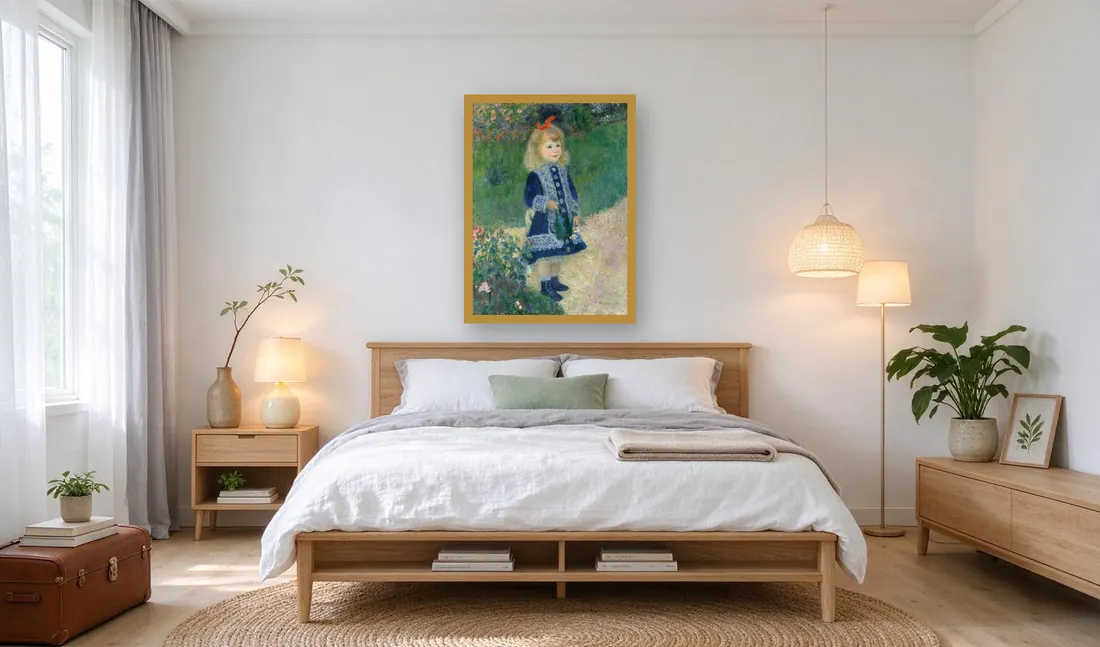
Room scenes shown are digital illustrations for reference. Every painting is 100% hand-painted.
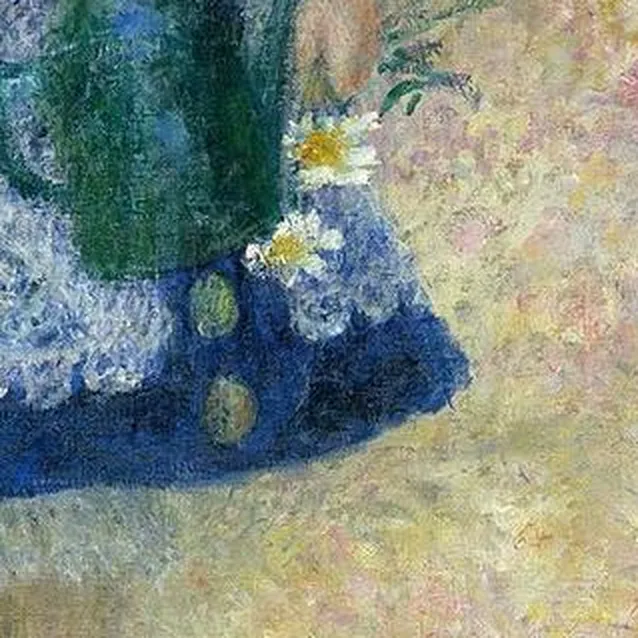
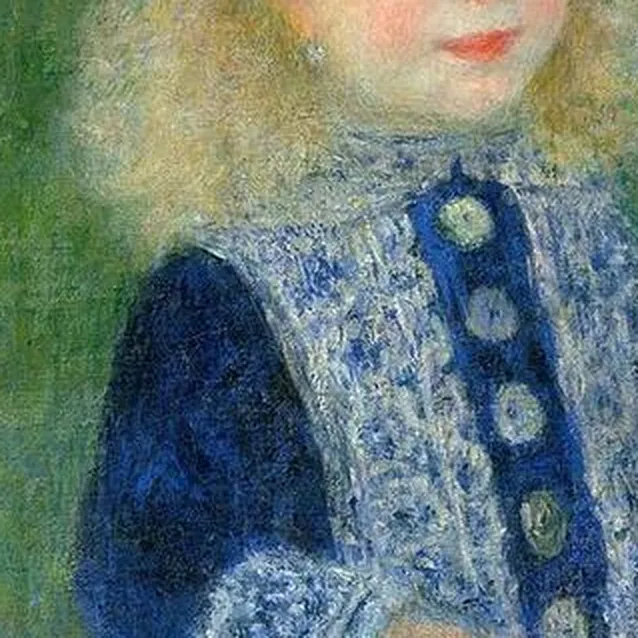
Brushwork details
Close-up crops of this 100% hand-painted oil reproduction — real oil texture, never a print.