What Botticelli actually painted, and why he was forgotten for three centuries
Botticelli (Alessandro di Mariano Filipepi, about 1445 to 1510) belongs to the Florence of Lorenzo de' Medici — the circle of the Neo-Platonists, where pagan myth was read as Christian philosophy and a painting of Venus could be argued to be a sermon. He was the most fashionable painter in Florence, then essentially vanished from the record. His reputation was not properly restored until the nineteenth century.
His medium is part of the reason his pictures look unlike anything else. Most of his best-known works are tempera on panel — pigment bound with egg, laid thin, dried fast, impossible to correct. There is no impasto anywhere on a Botticelli and virtually no glazing depth. What you get instead is light itself: the panels have the brightness of a drawing that has been tinted rather than painted.
The line is the subject
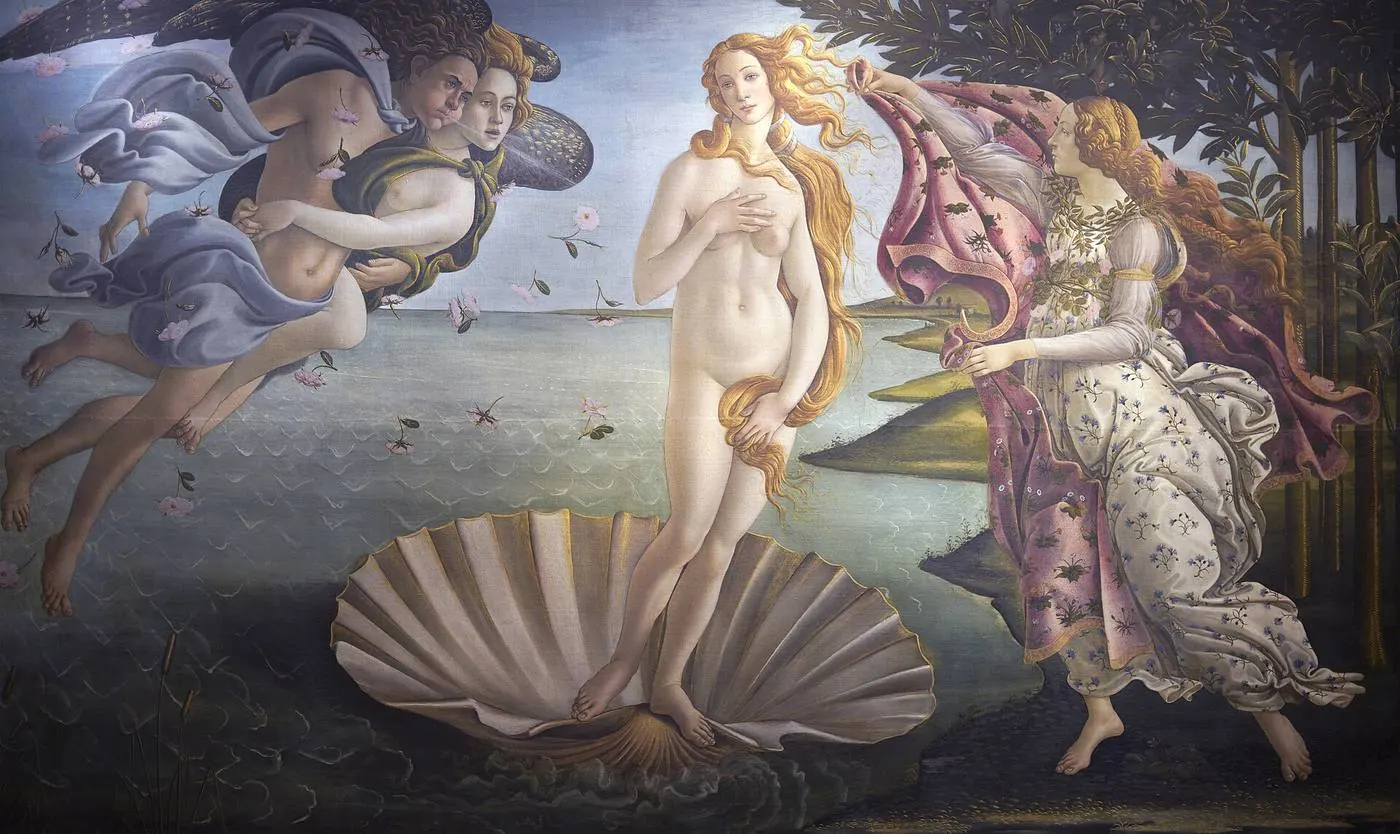
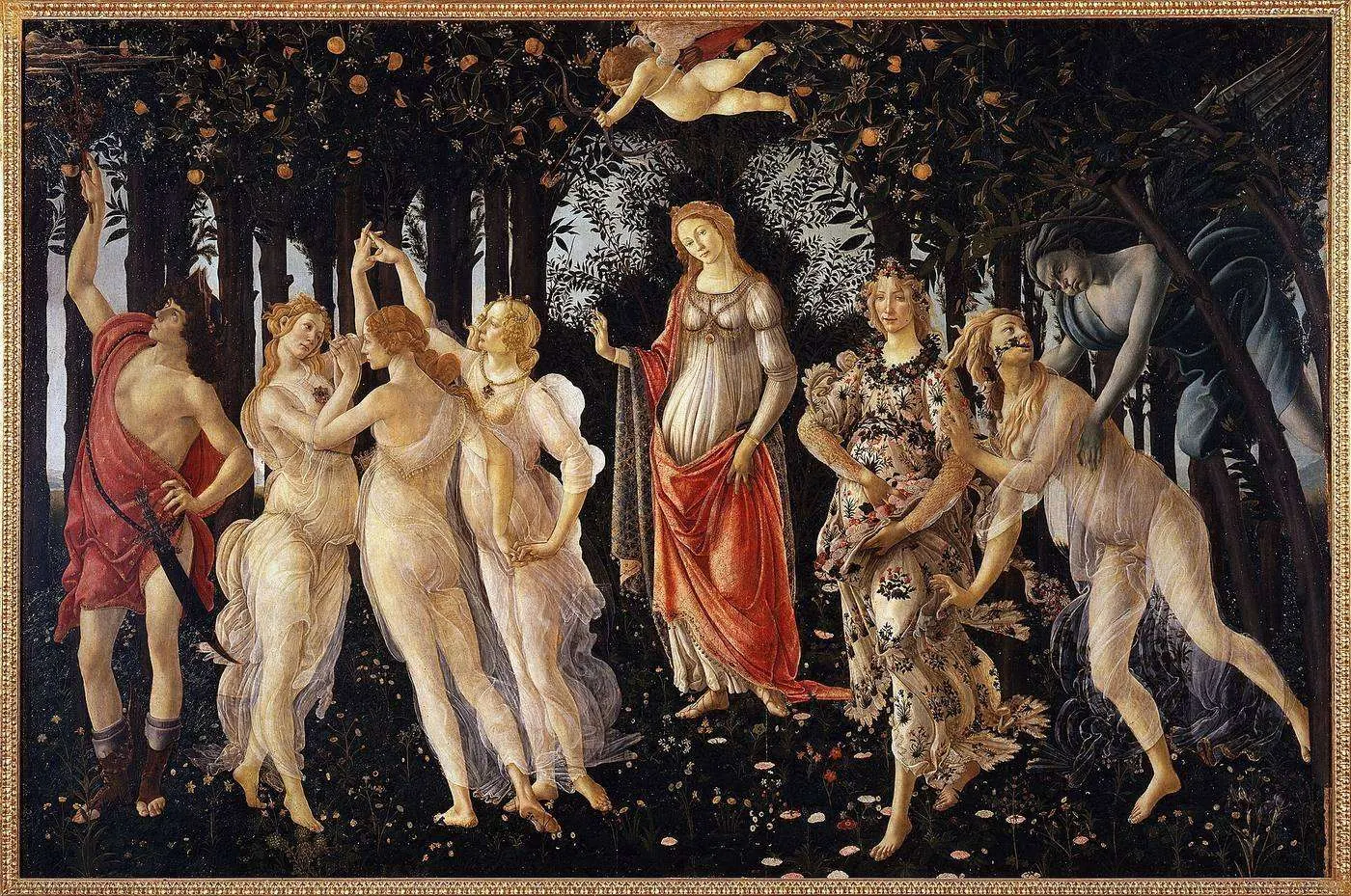
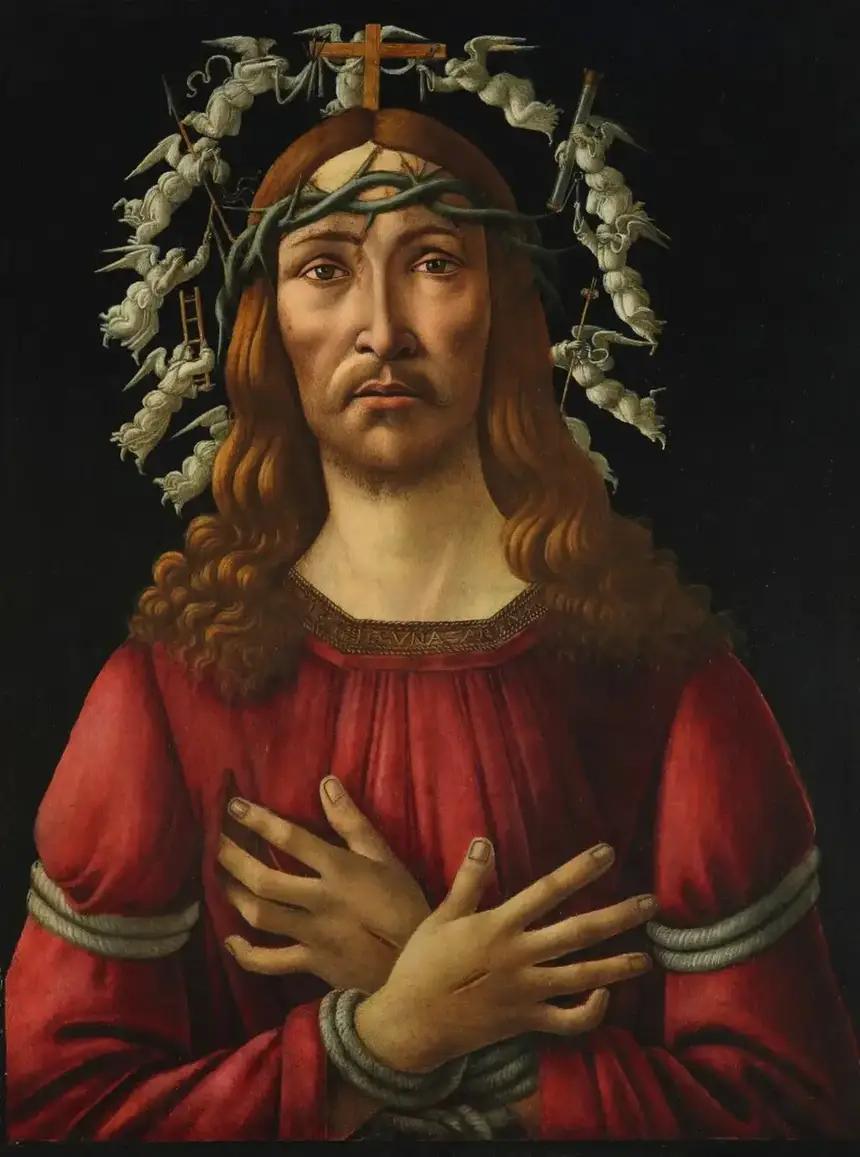
Every Botticelli starts from a flowing contour of extraordinary delicacy, and it is that line — not the colour — that gives his figures their peculiar, weightless quality. Venus does not stand on ground; the draperies do not hang so much as billow against gravity; hair is not modelled but drawn strand by strand. Lose that line and you have lost the painter entirely.
- Primavera. Nine figures across a dark orange grove, with a weightless Venus slightly off-centre. The foliage is painted with almost archaeological attention to each leaf.
- The Birth of Venus. Done in tempera on canvas rather than panel, which is why it survives in a paler, cooler state than the rest. The gold in Venus's hair is real gold highlight, painted on rather than mixed.
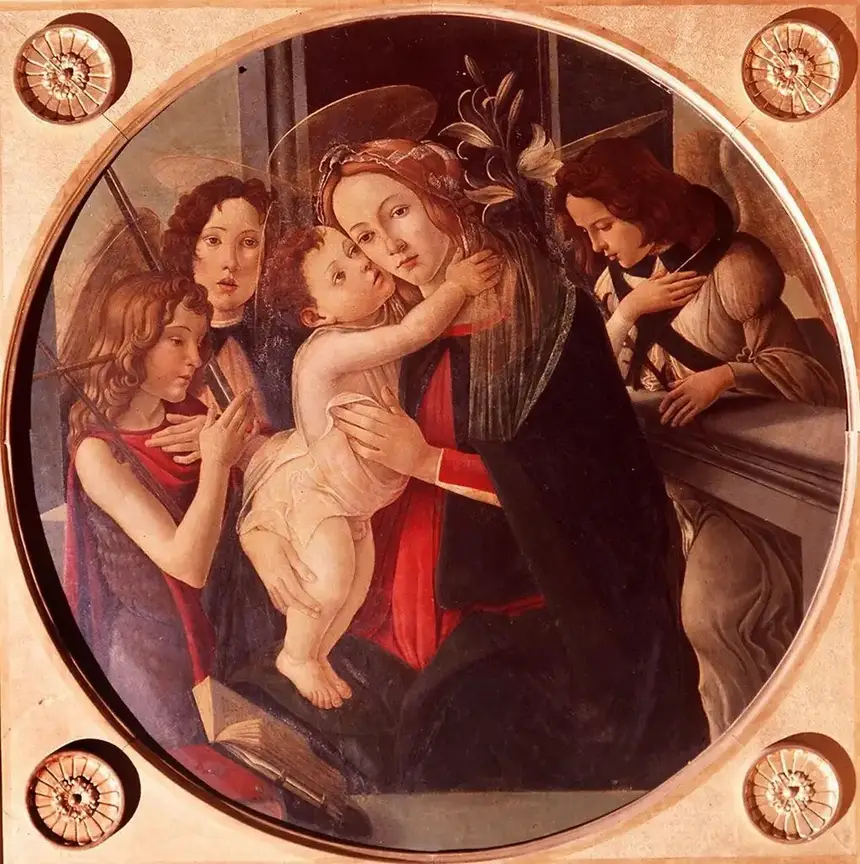
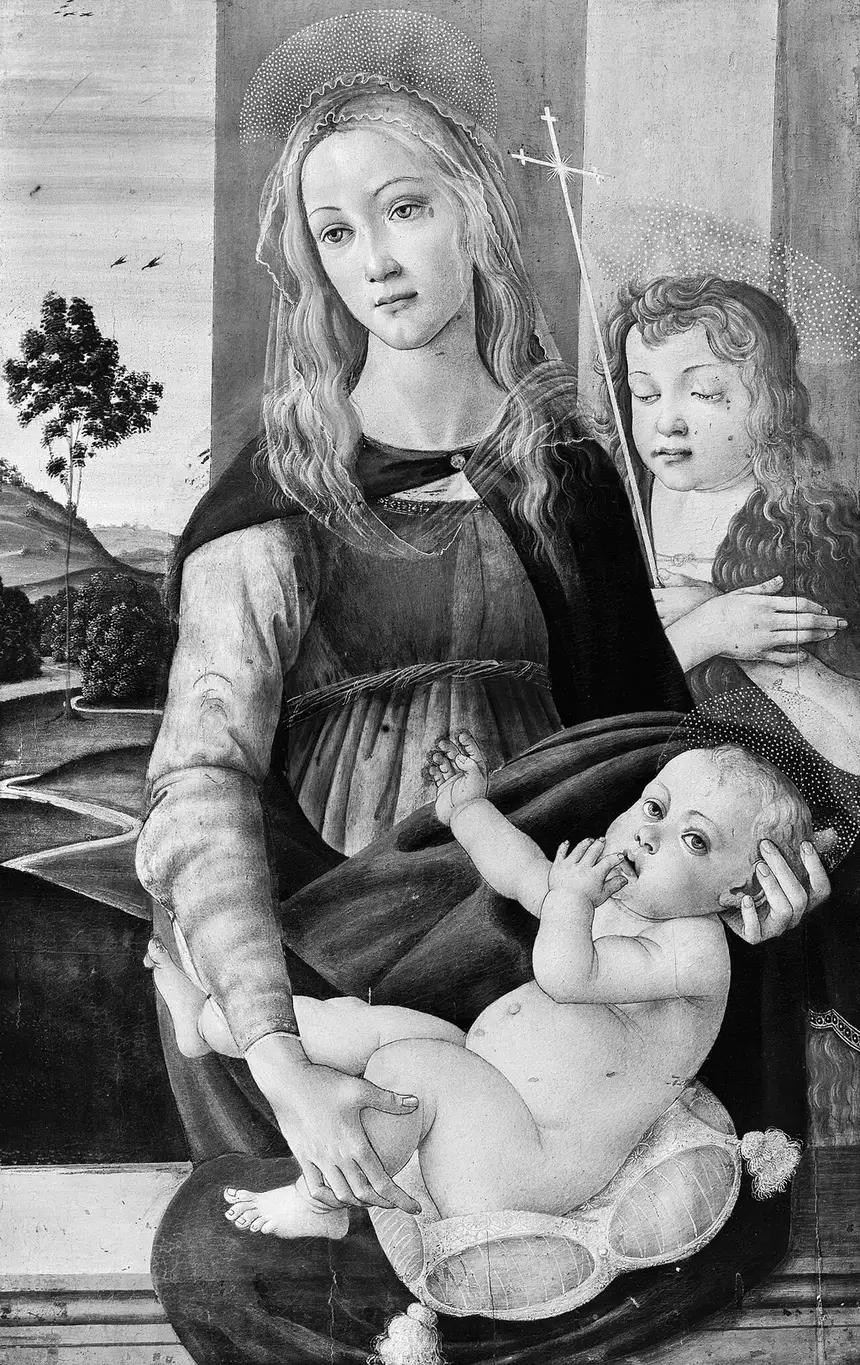
- Madonna of the Magnificat. The circular format does the composing; angels crowd the edge and the Virgin writes with her head tilted.
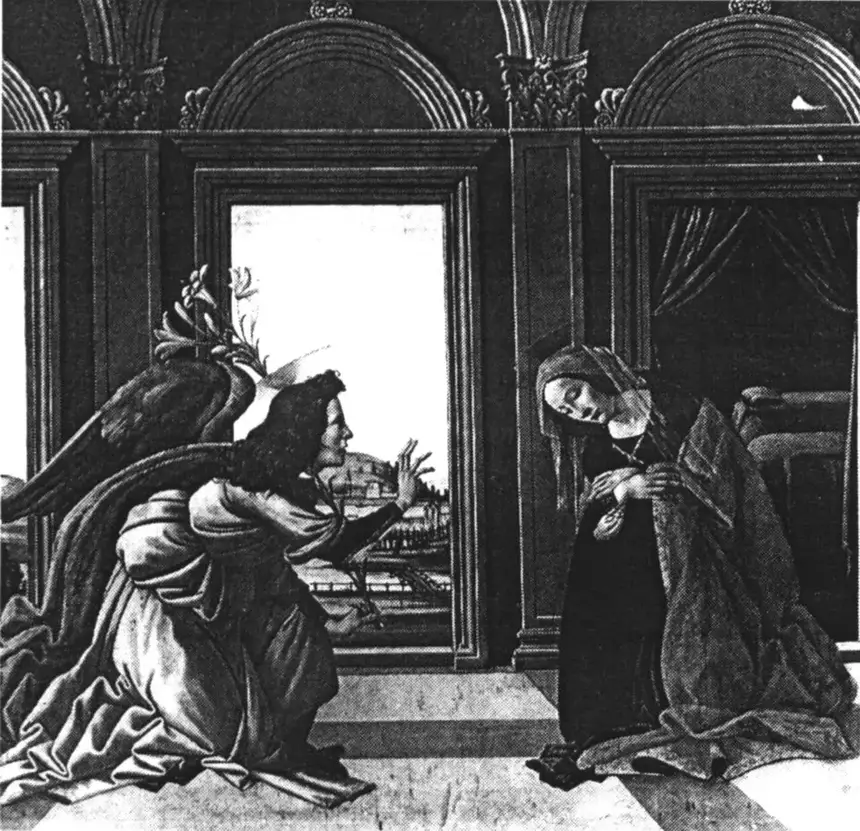
- The Annunciation. Architecture is used like a ruler — every vertical reinforces the division between Mary and the angel.
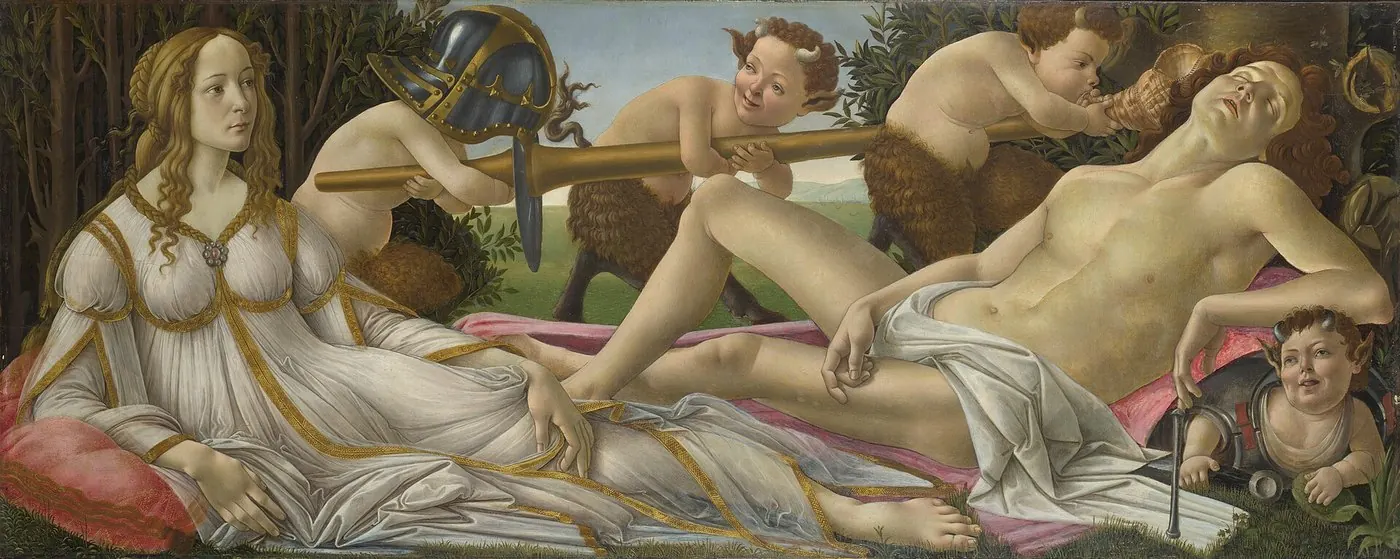
- Venus and Mars. The only one of the set with a relaxed, humorous tone: Mars asleep, fully undressed, while satyrs play with his armour.
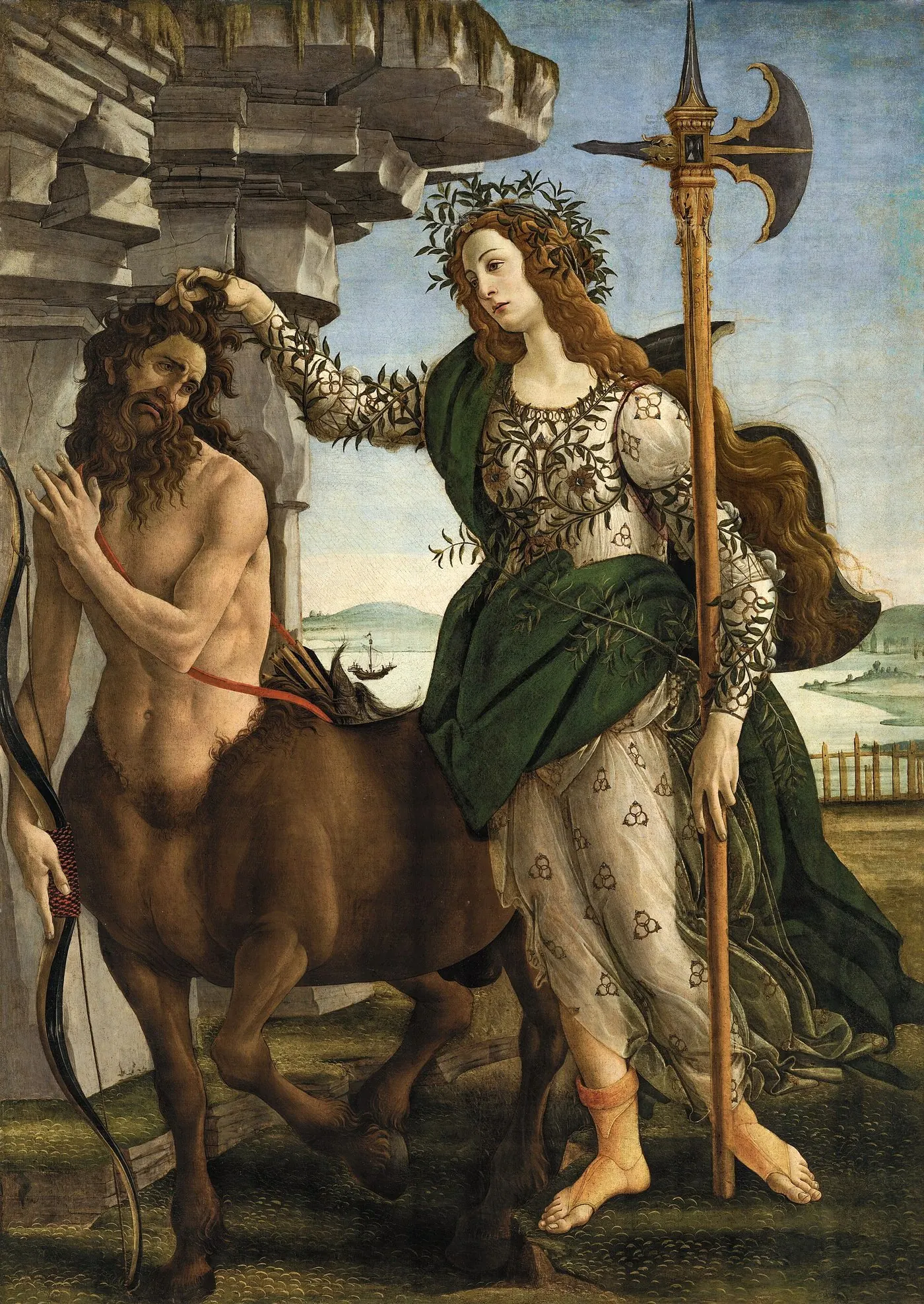
- Pallas and the Centaur. The gentlest of his serious mythologies; the gesture reads as restraint rather than violence.
Why copying Botticelli is harder than it looks
Three things defeat most copies. The first is thin: because nothing is built up, any attempt to thicken the paint or add depth destroys the transparency that makes the panel luminous. The second is the gold: Botticelli used it as a highlight for hair, hems and haloes, and gold does not behave like any mixture — it has to be laid last and left alone. The third is the outlines themselves. You cannot fix them afterwards, because tempera and thin oil show every correction.
So our painters work differently for Botticelli than they do for a Rembrandt or a Caravaggio. The underdrawing is transferred with total accuracy, the colour is then laid as thin glazes so it stays translucent, and the gold and the final contour are the last things to go on. There is no going back once the line is down.
Hanging Botticelli today
Because his panels are pale and line-dominant rather than dark and tonal, they suit rooms with real daylight better than most Old Master subjects — famously well above a sofa or a long sideboard, where they read as pattern rather than as depicted depth. They also frame particularly well: a slim gold or dark-stained profile, without too much ornament.
FAQ
What size is right for Primavera or the Birth of Venus?
Both are long horizontals — Primavera is more than three metres wide in the original. Most apartments suit a reduced but proportional version, and because our painters work freehand we can keep any horizontal proportion you need rather than forcing it into a stock canvas.
Will the colours look brighter than the museum reproduction I have?
Probably, yes. Botticelli's panels have aged and his varnish has darkened; the Birth of Venus in particular is known to have been altered by cleaning and later treatment. We paint to the reference you specify, so tell us if you want the aged gallery tone or something closer to how it left his workshop.
Can you paint his other Madonnas and mythologies?
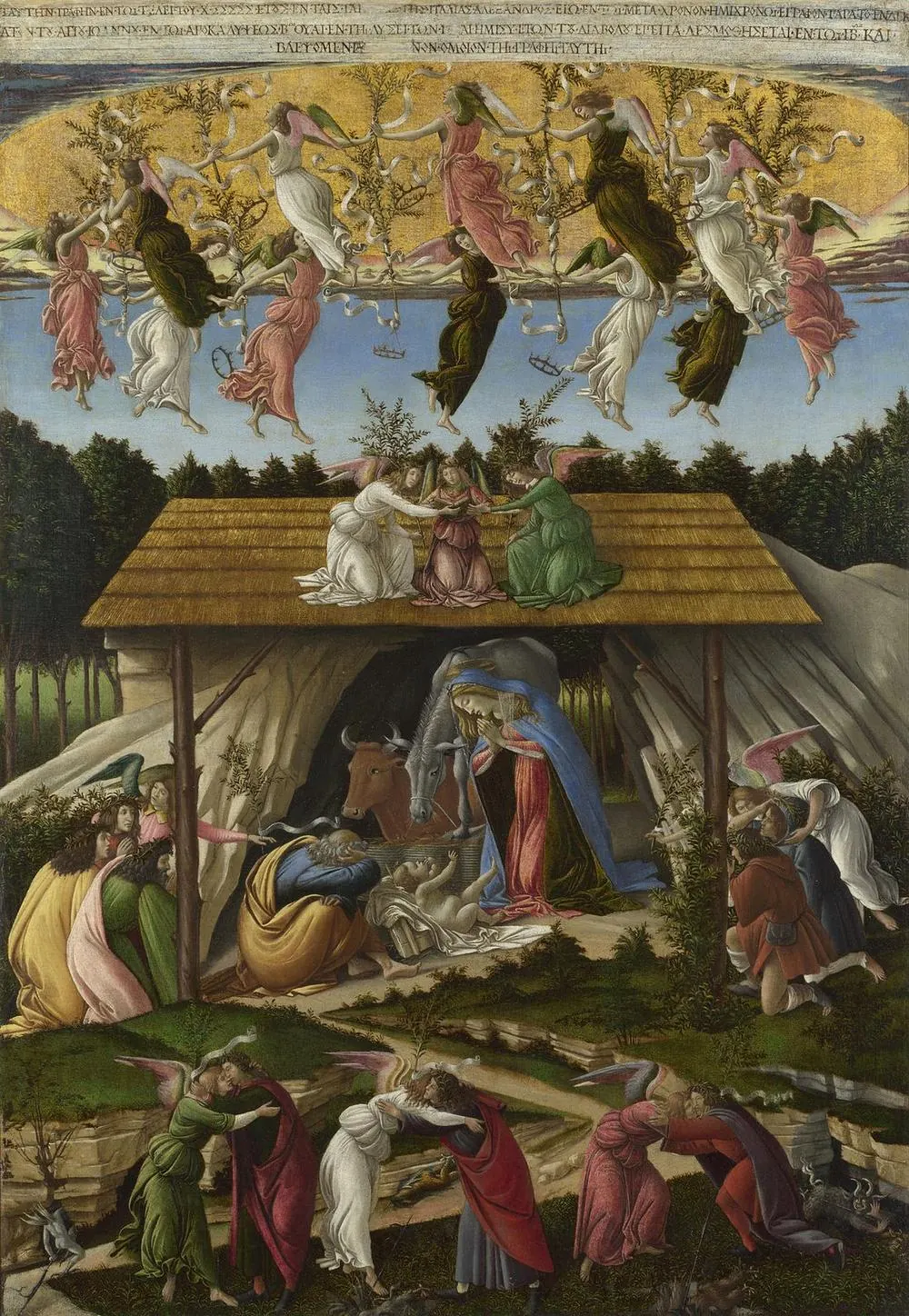
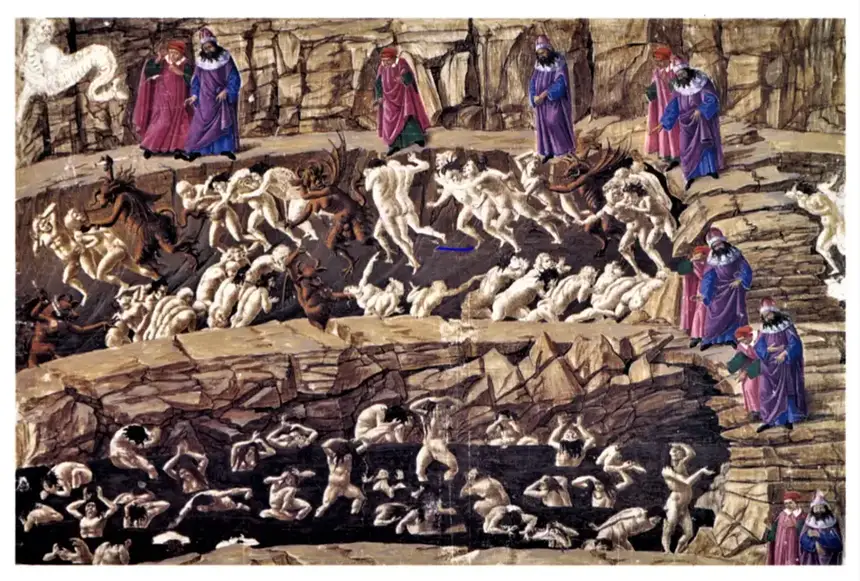
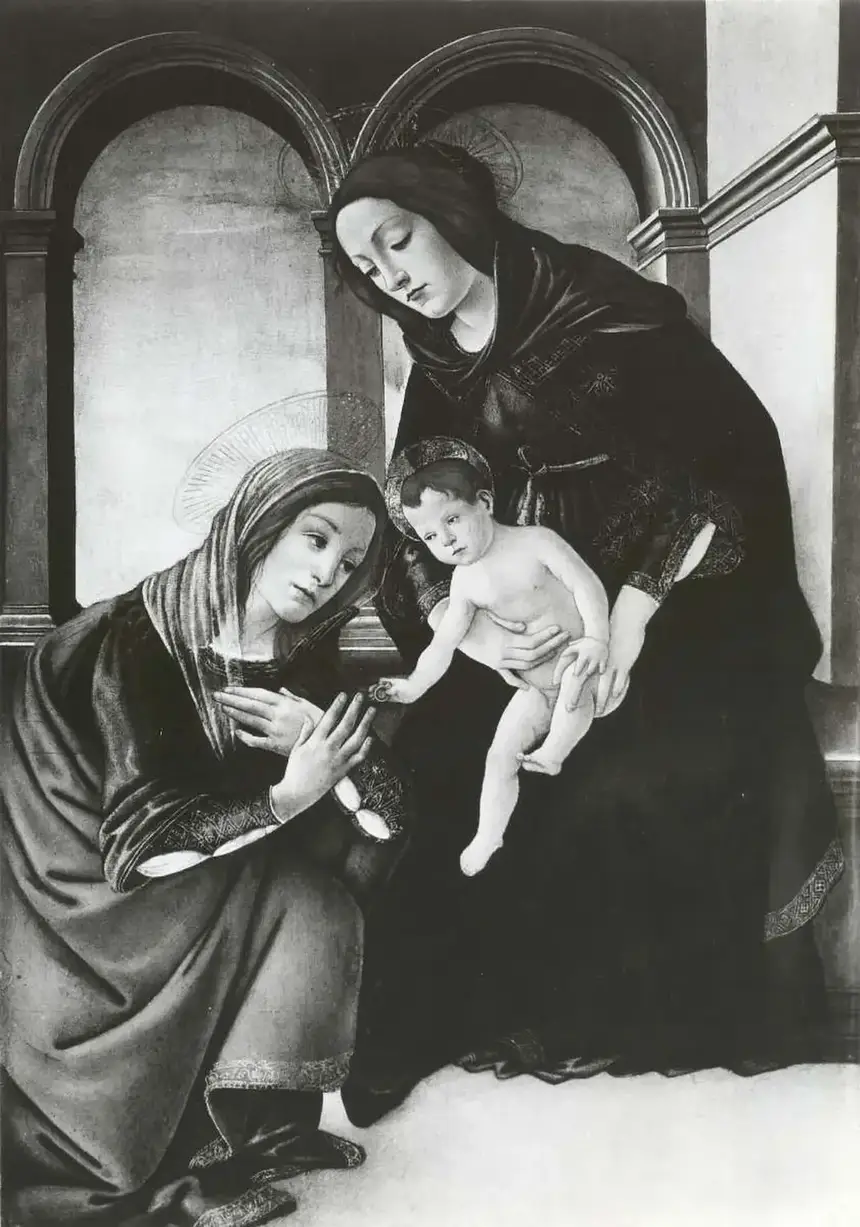
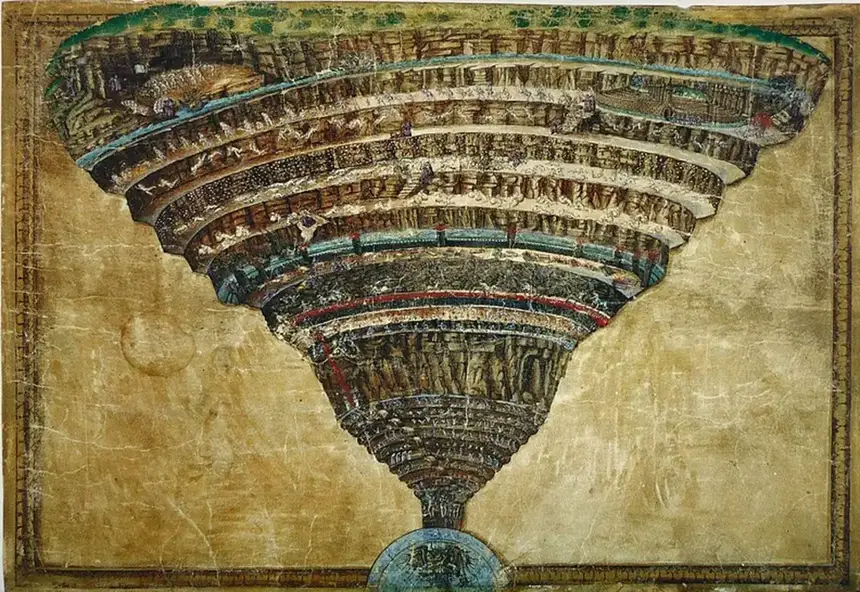
Yes. Any Botticelli is public domain. The Madonna of the Pomegranate, the Mystical Nativity, La Derelitta and the Dante illustrations are all reproducible — send the title and we will quote it.