About the original
Because Théodore Chassériau died in 1856, this work is in the public domain. We are painting a copy of a painting — we never pass it off as the original, and neither should anyone selling you one.
Every version we make is oil on canvas, painted by one painter from start to finish. No printing is involved at any stage.
It is an original composition painted before 1856, and our version is painted from the surviving image of it.
You are buying a painting, not a file. That distinction is the whole business we are in.
Looking at it properly
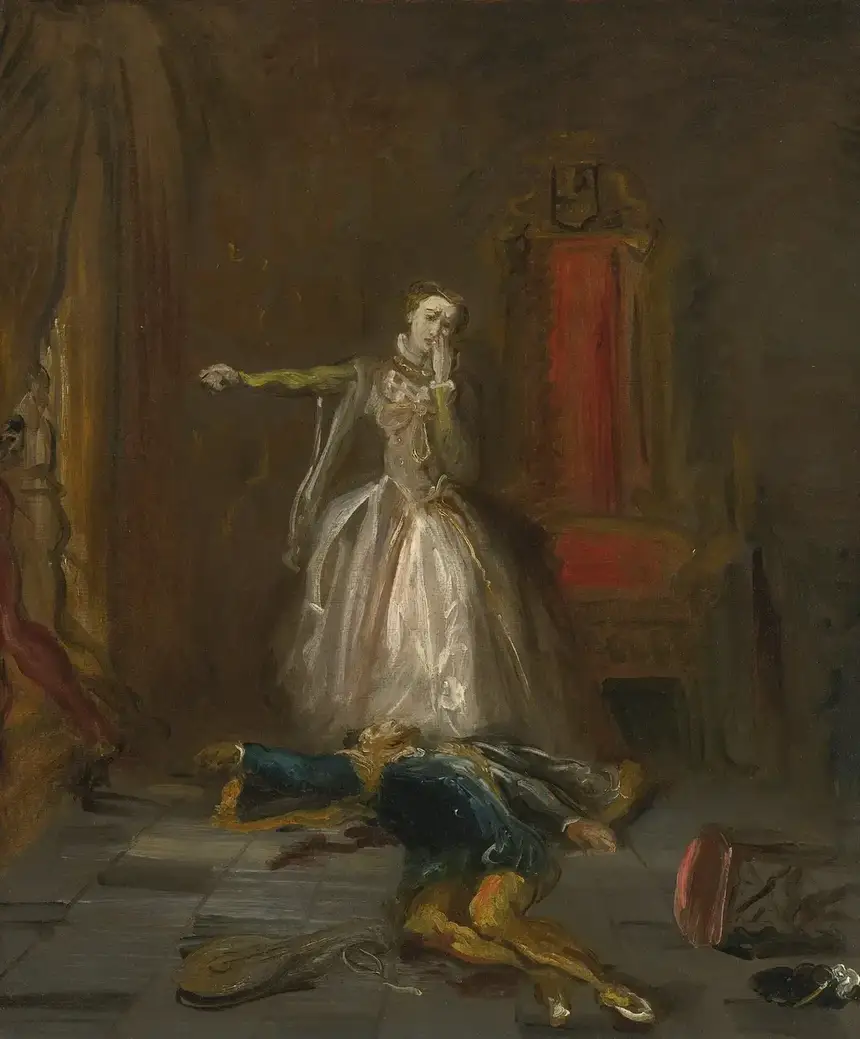
The reason Mary Stuart Swearing still works as a painting is that it was built as paint, not as a picture of a place.
Depth here is a matter of edges: sharp in front, lost at the back. It is the hardest thing to print and the easiest to paint.
Where the source has light coming through the paint, we glaze rather than paint opaque white.
Our painter mixes on the palette but finishes on the canvas, which is where the small variations come from.
Paint is laid on, not pushed around. That is what keeps it fresh.
Getting Mary Stuart Swearing right means painting it in the right order, and the order is not obvious.
A plain wall is better than a busy one; the painting supplies the interest.
| Artist | Théodore Chassériau |
|---|---|
| Title | Mary Stuart Swearing |
| Created (original) | 1849 |
| Medium | Oil on canvas, hand-painted to order |
| How it is made | Painted by hand in oil on canvas, to your size |
| Copyright | Public domain; the original is out of copyright |
Why hand-painting matters here
The difference is not subtle when the two hang side by side. Ink sits on the surface; oil stands off it.
Where the original is loaded, ours is loaded. Where it is thin, ours is thin. Matching the weight of the paint matters more than matching the colour.
| Aspect | Hand-painted oil | Printed canvas |
|---|---|---|
| The surface | Built up with brushes and knives | Printed flat in one pass |
| Texture | Ridges and drag you can see from across a room | None, or a printed imitation of it |
| How it ages | Warms and settles; cleanable by a conservator | Fades, then cracks at the stretcher |
| Colour | Mixed for each passage, warm and cool versions | One flat value per area |
| What it takes | One painter, several days, start to finish | A machine, a few minutes |
The difficulty is restraint: leaving out most of what a photograph would show.
Every canvas is painted to order, so the quote follows your size, frame and destination rather than a fixed list. Tell us what you need on WhatsApp and we reply with an exact figure, usually within the hour. There is no agency in between; the studio that paints your canvas is the one answering your messages.
How the canvas is built
No two canvases are painted the same way, but the sequence is always this:
- The canvas is stretched and primed — cotton or linen, sized and ready before any paint goes near it.
- A loose underdrawing — proportions checked by eye against the source image.
- The big shapes are blocked in — thin paint, one colour at a time, the whole canvas at once.
- The values are established — this is the stage that decides whether the painting works.
- Building the colour — a warm and a cool version of each passage, put down in order.
- The detail and highlights go on — last, loaded, and left alone once they are down.
- It dries, then gets varnished — and only then is it photographed for you.
Matching the original's degree of finish is harder than matching its colours.
Framing
We can supply a simple floater frame, a traditional gilt, or nothing at all. It is your call.
Most clients wait for the photographs before choosing a frame, which is the sensible order.
Care and cleaning
Dust it with a dry, soft brush. Keep it out of direct sun and away from radiators, and it will outlive you.
What it is made of
We buy pigment in tubes from the same suppliers the village has used for years, not in bulk drums. Pigment is artist-grade oil colour, not acrylic and not house paint. It behaves differently and it lasts.
The ground is a proper acrylic sizing, so the oil does not rot the fabric over time. Linen is worth the extra cost above about a metre across, because it holds tension better in humid rooms.
Choosing a size
The canvas is cut to your wall, not the other way round. For reference, these are the dimensions most often requested:
| Size (inches) | Size (cm) | Best for |
|---|---|---|
| 20 × 16 in | 50 × 40 cm | Bedroom, hallway, above a console |
| 16 × 12 in | 40 × 30 cm | A shelf, a small wall, a gallery group |
| 64 × 48 in | 163 × 122 cm | Villa scale, lobby, hospitality wall |
| 48 × 36 in | 122 × 91 cm | Large living room, stairwell, loft |
| 40 × 30 in | 102 × 76 cm | Living room focal wall, above a sofa |
| 32 × 24 in | 81 × 61 cm | Living room, above a sideboard |
Anything outside this table is fine — we paint to the number you give us. Our terms are DAP, meaning the freight is paid by us and any import charges are yours to settle. We will not estimate them, because the figure is your customs authority's to set.
It is a picture for a room you use, not a corridor you walk through.
Tell us where it will hang and how big it needs to be — we will price it properly.
💬 Get a Quote for Mary Stuart Swearing Revenge, lot.562, SandozHow it reaches you
Painting takes 9–15 days. Freight is quoted as its own line on the quote, agreed before you pay anything, and never added afterwards.
Air freight runs about 7–10 business days, tracked, to your door. Every shipment goes out with tracking. We do not send anything untracked.
You approve the painting from photographs before it is packed — that is the checkpoint. If something is not right, tell us what to adjust and we adjust it.
Shipments go out DAP. If your customs office charges duty or tax on arrival, that is between you and them — we do not collect it and we do not put a number on it.
You pay a deposit to start and the remainder before shipping. Nothing is hidden in between. Damage in transit should be reported to us within 48 hours, with photographs. We pursue it with the carrier rather than promising a refund.
Questions worth asking
Will it look exactly like the image?
Not exactly, and that is the point — it is a painting, not a scan. Composition, colour and drawing follow the original closely; the surface is where a painter's own decisions show.
Can I resell the reproduction?
Yes. Because the underlying work is in the public domain, the hand-painted canvas is yours to sell, gift or install commercially.
Can I change something in the composition?
Often yes — background, cropping, or adapting the proportions to your wall. Tell us what you have in mind and we will say honestly whether it will work.
What is the canvas made of?
Cotton duck as standard, linen on request, artist-grade oil paint, and a final varnish once the paint is fully dry.
What does it cost?
Every canvas is quoted on size, frame and destination rather than a fixed list. Tell us what you need and we reply with an exact figure.
Can I change the size?
Any size you like. We paint to the number you give us rather than to a standard range.
How long does it take?
From order to finished canvas is 9–15 days; delivery adds about 7–10 business days by air.
Do you sell prints?
No prints at all — no giclée, no canvas transfer, nothing machine-made.
Is it really painted by hand?
Yes — oil on canvas, brush and knife. There is no printing, no giclée and no canvas transfer at any stage.
What if it arrives damaged?
send us photographs within 48 hours and contact us directly — we will sort it out with you.
Does it come framed?
Frames are priced on their own line. Most clients choose after seeing the photographs.
Do you take a deposit?
A deposit starts the canvas and the balance falls due before it ships. Both figures appear on the quote.