The original, and why we can paint it
Thomas Dewing died in 1938, so the work has been in the public domain for decades. Reproducing it by hand is legal, and so is owning one.
We paint it in oil on canvas, one at a time, in Dafen Village. Nothing is printed, scanned or transferred.
It is an original composition painted before 1938, and our version is painted from the surviving image of it.
What arrives is a canvas with paint on it, made by a person. That is the only thing we sell.
What the painting is doing
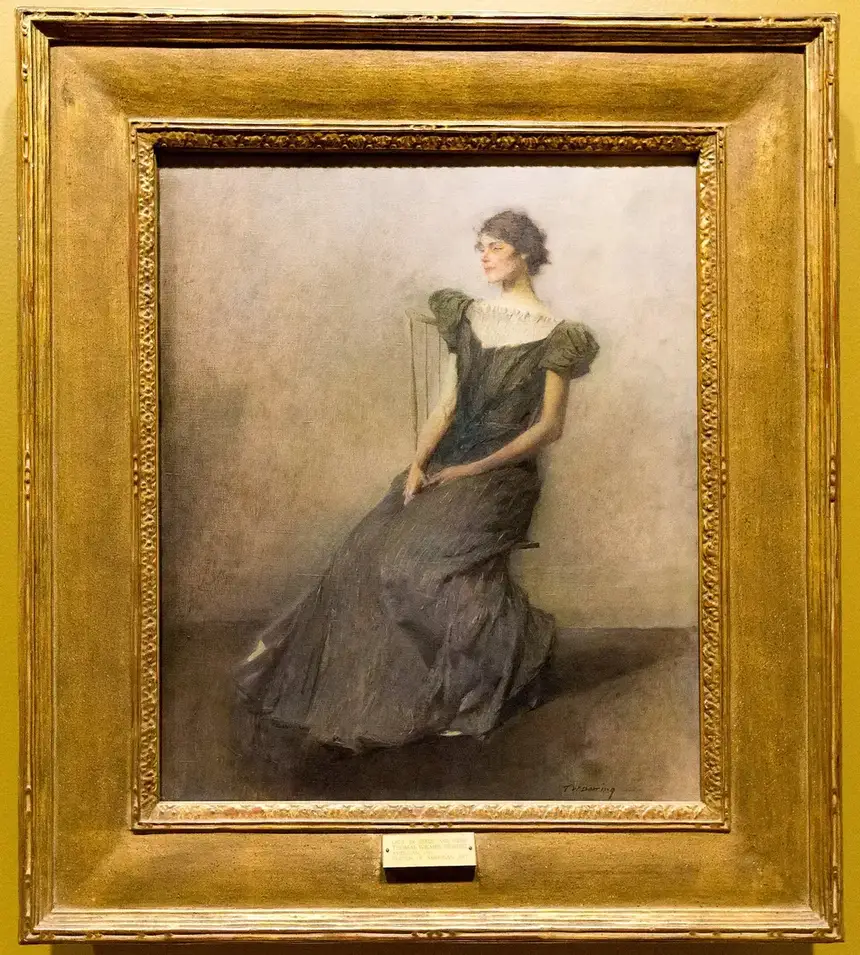
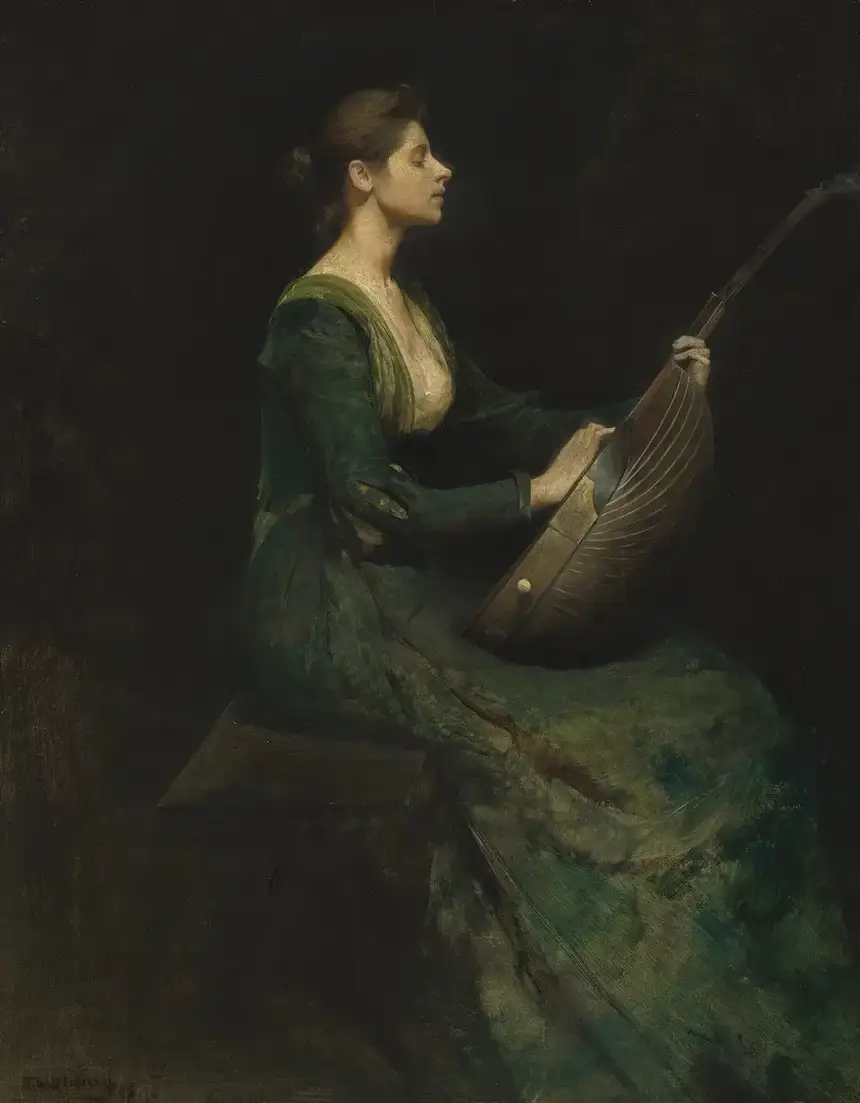
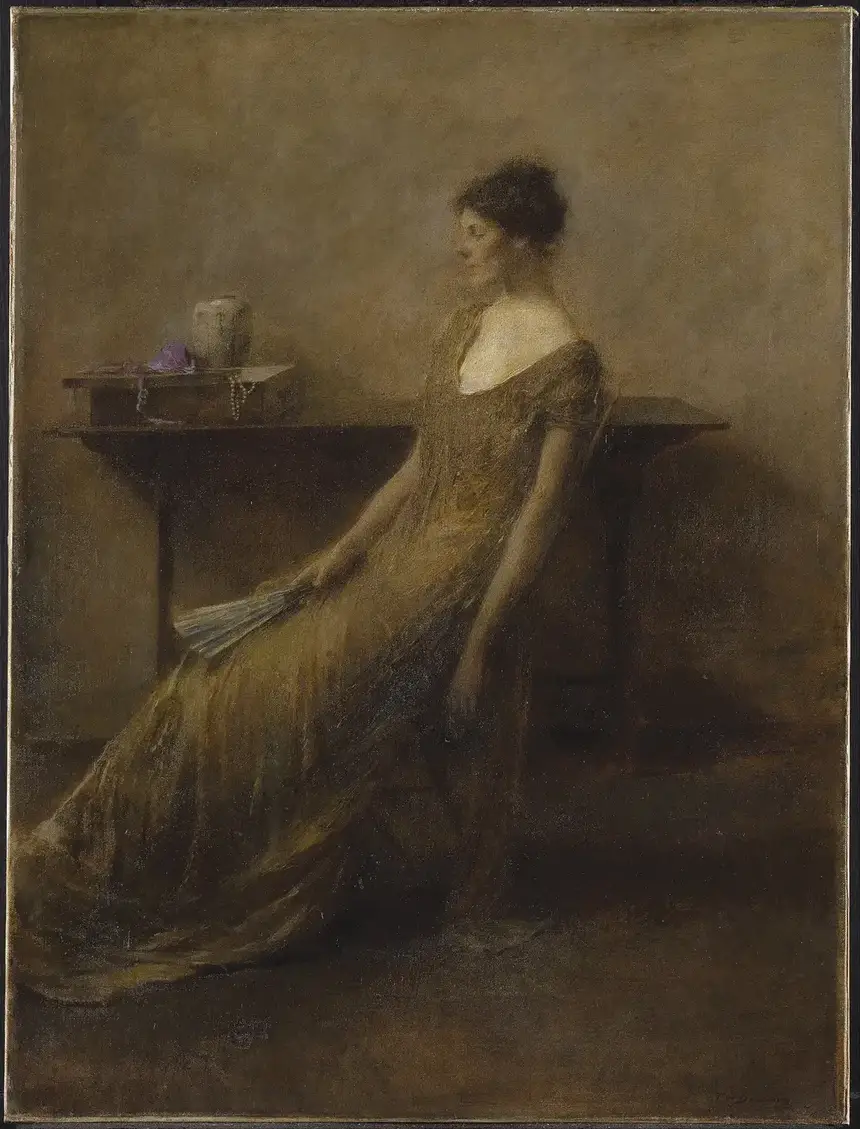
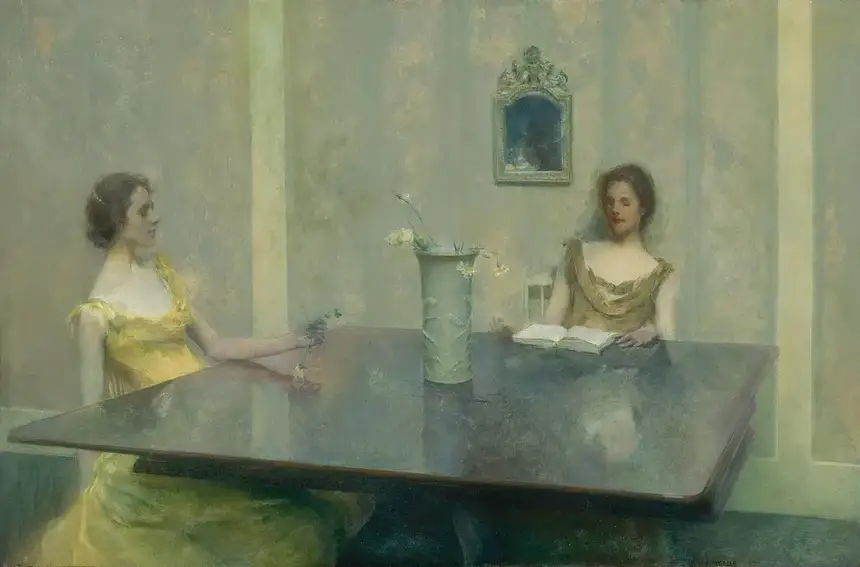
A Reading, 1897 by Thomas Wilmer Dewing depends on warm and cool shifting across the same surface. Ink cannot do that; oil can.
Our painter works from the large masses — torso, hip, shoulder — and lets the detail arrive late.
Our painter works the light across the whole figure at once rather than finishing one limb at a time.
Our painter keeps the colour relationships rather than the exact hues, because relationships are what survive.
The brushwork is left visible, which is the whole argument for painting it by hand.
The passage that will take longest is the one that looks simplest.
Hang it at eye level — roughly 145 cm from the floor to the centre — and it will hold the wall.
| Artist | Thomas Dewing |
|---|---|
| Title | A Reading, 1897 by Thomas Wilmer Dewing |
| Created (original) | 2022 |
| Medium | Oil on canvas, hand-painted to order |
| Year | 1897 |
| Reproduction | Hand-painted oil on canvas, made to order |
| Public domain | Yes — the artist died over 70 years ago |
The case for painting it by hand
The difference is not subtle when the two hang side by side. Ink sits on the surface; oil stands off it.
Paint goes on in the original's order — thin first, thick last — so the surface behaves the way the painter intended.
| Aspect | Hand-painted oil | Printed canvas |
|---|---|---|
| Surface | Hand-painted oil on canvas | Ink on canvas, flat |
| Colour | Mixed for each passage, warm and cool versions | One flat value per area |
| Edge quality | Soft where the form turns, sharp where it does not | Uniformly sharp or uniformly blurred |
| What it takes | One painter, several days, start to finish | A machine, a few minutes |
| Texture | Ridges and drag you can see from across a room | None, or a printed imitation of it |
The hardest passage is the quiet one, where a small mistake has nowhere to hide.
Every canvas is painted to order, so the quote follows your size, frame and destination rather than a fixed list. Tell us what you need on WhatsApp and we reply with an exact figure, usually within the hour. No resellers, no drop-shipper. The painter's studio handles your commission from first message to final crate.
From blank canvas to finished painting
Here is what actually happens between your message and the crate:
- We start with the canvas itself — stretched, sized and left to settle before any colour is mixed.
- Laying in the drawing — done by eye from the reference, not traced or projected.
- The big shapes are blocked in — thin paint, one colour at a time, the whole canvas at once.
- The values are established — this is the stage that decides whether the painting works.
- Building the colour — a warm and a cool version of each passage, put down in order.
- Detail and highlights last — put on thickly and then not touched again.
- Drying and varnishing — the final varnish goes on once the paint has set, before we photograph it.
What takes time here is the number of separate decisions, not the size of the canvas.
Care and cleaning
Do not wipe it with anything wet. Dust lightly, hang it somewhere stable, and forget about it.
Frames
Most clients wait for the photographs before choosing a frame, which is the sensible order.
Most clients wait for the photographs before choosing a frame, which is the sensible order.
Materials
Varnish goes on only once the paint is properly dry, months after the last stroke, not before. We buy pigment in tubes from the same suppliers the village has used for years, not in bulk drums.
Each painter works on one canvas at a time — the painting you ordered is not shared with another order. We use cotton duck for most sizes and linen where the canvas is large or the client asks for it.
What size works
Because each piece is painted from scratch, you are not limited to stock dimensions. These are the sizes clients ask for most:
| Size (inches) | Size (cm) | Best for |
|---|---|---|
| 30 × 24 in | 76 × 61 cm | Dining room, bedroom feature wall |
| 24 × 20 in | 60 × 50 cm | Study, home office, above a desk |
| 20 × 16 in | 50 × 40 cm | Bedroom, hallway, above a console |
| 16 × 12 in | 40 × 30 cm | A shelf, a small wall, a gallery group |
| 64 × 48 in | 163 × 122 cm | Villa scale, lobby, hospitality wall |
We will size the canvas to the room, not to a stock list. Send us the measurement. Our terms are DAP, meaning the freight is paid by us and any import charges are yours to settle. We will not estimate them, because the figure is your customs authority's to set.
This reads well above a sofa or a sideboard, where it will be seen from two to three metres.
Give us your size and framing preference and you will have a quote shortly.
💬 Get a Quote for A Reading, 1897 by Thomas Wilmer DewingOrder, painting, shipping
The painting takes 9–15 days, and delivery is priced separately on the quote so there is no surprise later.
In transit it is typically 7–10 business days by air, tracked door to door. Rolled in a tube it travels cheaper and safer than framed; most overseas clients take it that way.
Before anything is packed, you get photographs of the actual canvas and a chance to ask for changes. Adjustments are part of the process. Say what you want different and it gets done.
Shipments go out DAP. If your customs office charges duty or tax on arrival, that is between you and them — we do not collect it and we do not put a number on it.
A deposit starts the canvas and books the painter's time; the balance is due before the crate leaves. Report any transit damage within 48 hours with photographs and we will deal with the carrier. We will not promise a payout, but we will not leave you to argue alone either.
Questions worth asking
Can I get this in a size that is not listed?
Yes — the listed sizes are the common requests, not a limit. Very wide or unusually tall proportions are routine for us.
Does it come with a certificate of authenticity?
No, and we would be wary of anyone who issues one for a public-domain reproduction. What you receive is a hand-painted canvas and photographs of it before it ships.
Can I see progress photos while it is being painted?
We send photographs of the finished painting for approval before it ships. Mid-process images are not part of the standard workflow.
Is it really painted by hand?
Yes. One painter, oil paint, brushes. We do not own a printer that touches canvas.
What if it arrives damaged?
Report damage within 48 hours with photographs. We deal with the carrier rather than leaving you to argue alone.
Who pays the import duty?
The buyer does. Terms are DAP: duties and taxes, where they apply, are paid on arrival. We never add a tax line of our own.
Do you ship to my country?
We export to more than 20 countries. Tell us where you are and we will quote the freight as a separate line.
Do you sell prints?
No prints at all — no giclée, no canvas transfer, nothing machine-made.
Will I see it before it ships?
Yes — photographs of the actual painting go to you first, and nothing is packed until you have seen them.
What is the canvas made of?
Cotton duck as standard, linen on request, artist-grade oil paint, and a final varnish once the paint is fully dry.
What does it cost?
Every canvas is quoted on size, frame and destination rather than a fixed list. Tell us what you need and we reply with an exact figure.
Can you paint it from a different photograph of the same work?
Send your own reference image and we will paint from that instead.