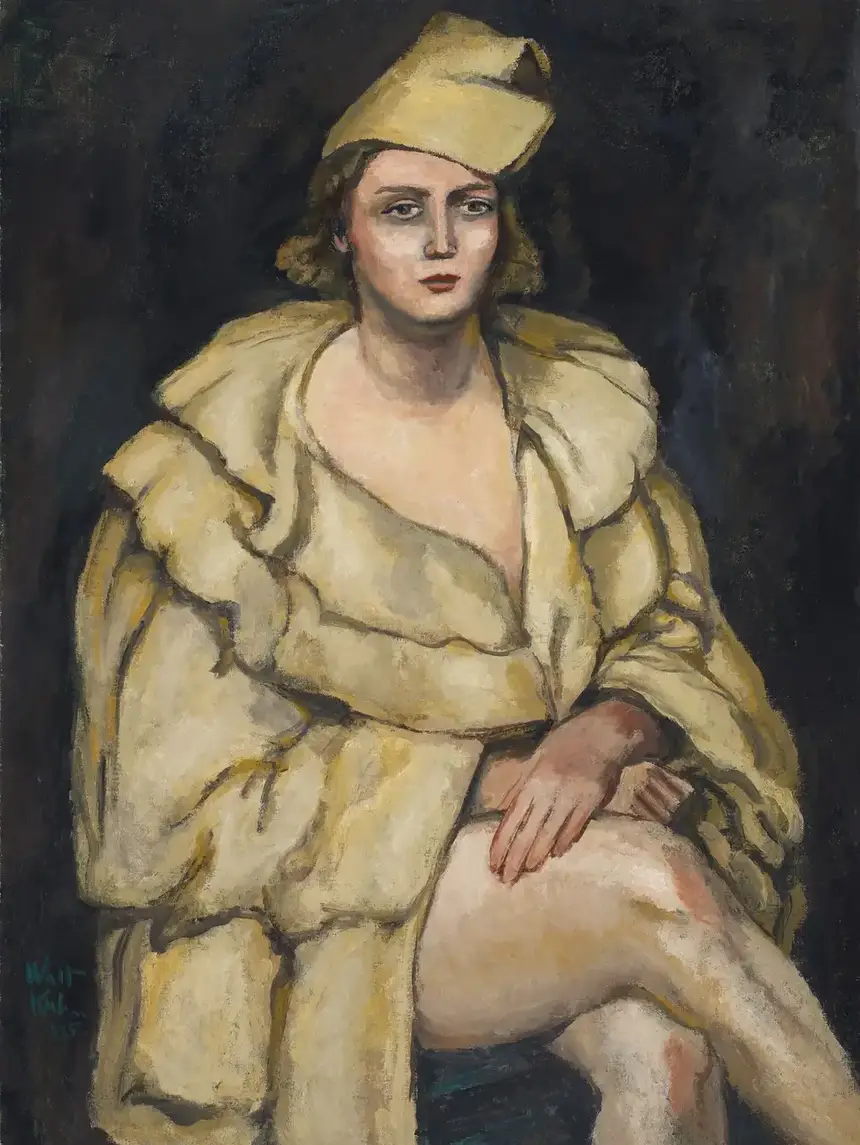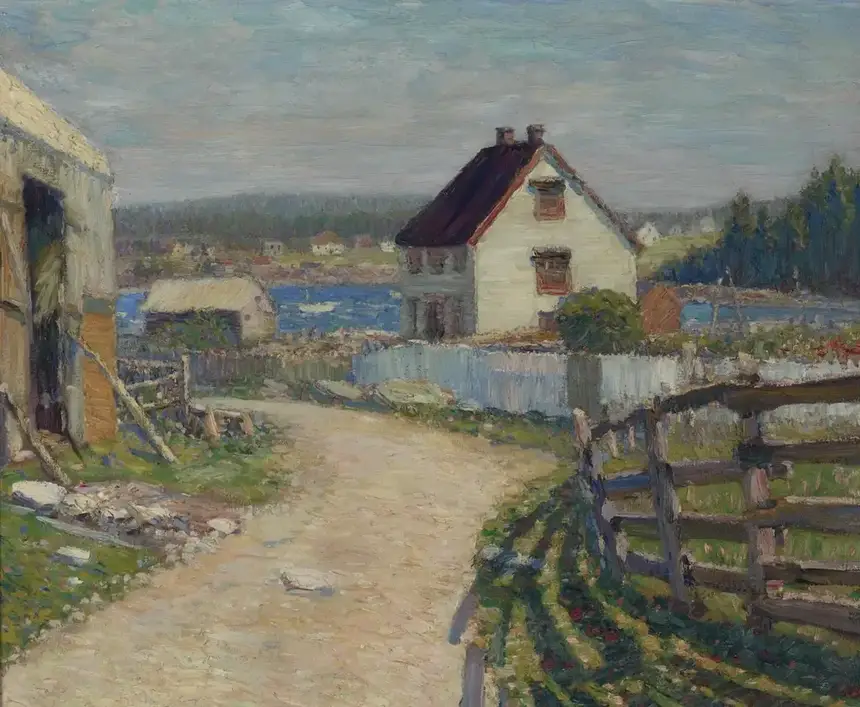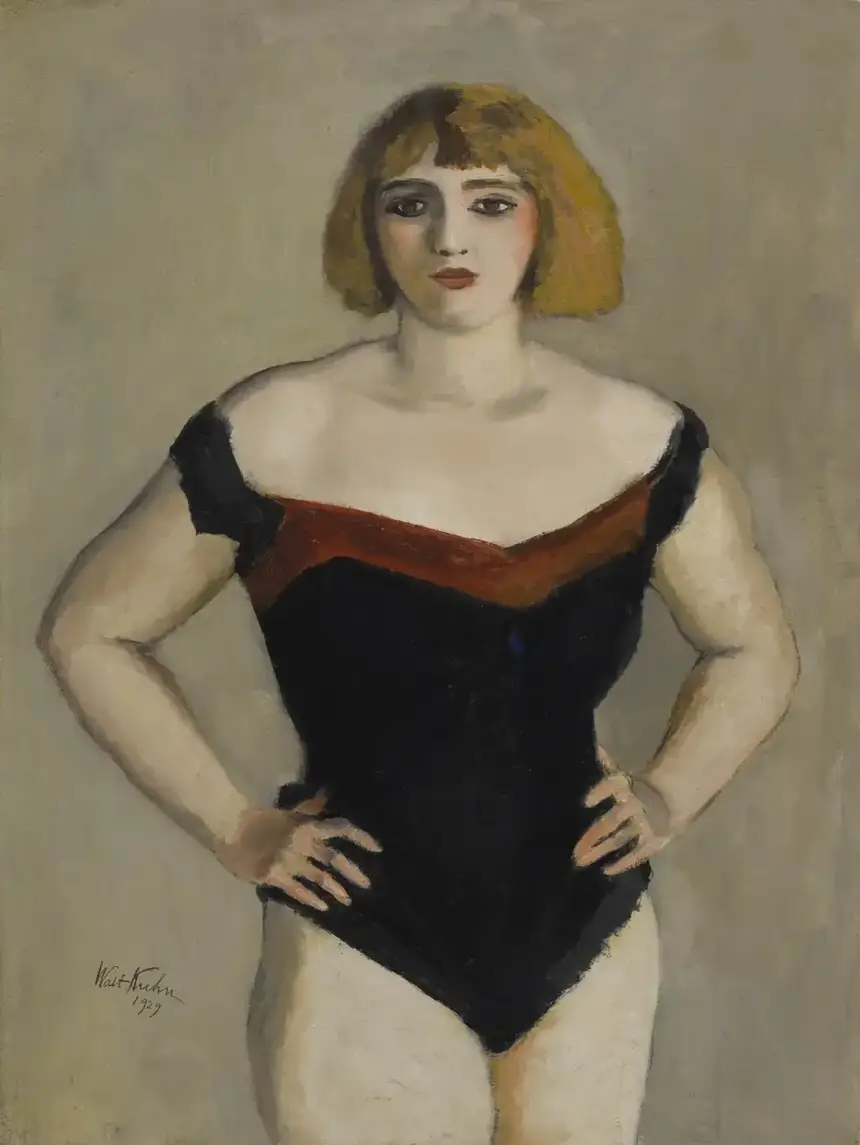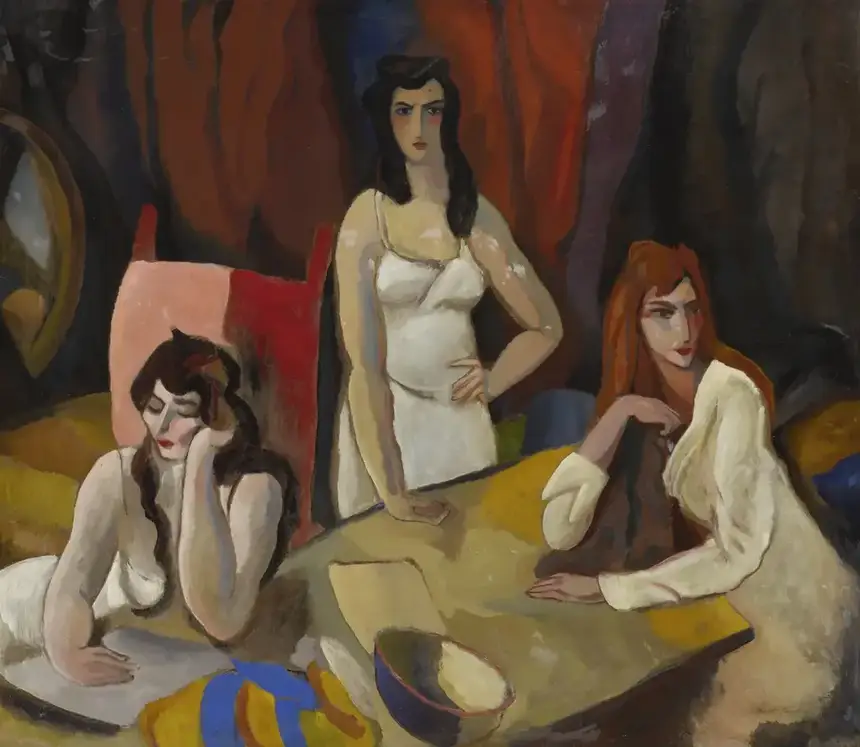
About Caucas
Walt Kuhn died in 1949. That puts the painting well outside copyright, which is why we can paint it and you can own it anywhere in the world.
We paint it in oil on canvas, one at a time, in Dafen Village. Nothing is printed, scanned or transferred.
The painting was made in the years before 1949, and what we reproduce is the record of it, not the object.
If you want something printed, we are the wrong workshop. We do not own a printer that touches canvas.
How to read it
The reason Caucas still works as a painting is that it was built as paint, not as a picture of a place.
Space in a landscape is made with value, not perspective: things that are further away are painted cooler and weaker.
Where the source has light coming through the paint, we glaze rather than paint opaque white.
Temperature does the work of contrast in the quiet areas, where value differences are small.
Edges are made by the brush, not by an outline, and they are the hardest thing to copy.
The difficult part is not the detail. It is keeping the whole canvas at the same stage of finish.
It works best on a wall you pass rather than one you sit and stare at — the paint rewards a moving eye.
| Artist | Walt Kuhn |
|---|---|
| Title | Caucas |
| Created (original) | 1918 |
| Medium | Oil on canvas, hand-painted to order |
| How it is made | Painted by hand in oil on canvas, to your size |
| Copyright | Public domain; the original is out of copyright |
Why hand-painting matters here
A print reproduces the shapes and drops the substance. It is the substance you are buying.
Edges are left soft where the form turns away and sharp where it does not. That single habit is what separates a painting from a copy.
| Aspect | Hand-painted oil | Printed canvas |
|---|---|---|
| Colour | Mixed for each passage, warm and cool versions | One flat value per area |
| Later on | Can be restored, re-framed, handed on | Replaceable, and usually replaced |
| Edges | Chosen by the painter, passage by passage | Whatever the file happens to contain |
| Sense of depth | Real, created by layers of paint | Simulated by darker ink |
| Corrections | We adjust it and repaint the passage | The file is reprinted or it is not |
The passage that will take longest is the one that looks simplest.
Every canvas is painted to order, so the quote follows your size, frame and destination rather than a fixed list. Tell us what you need on WhatsApp and we reply with an exact figure, usually within the hour. You deal directly with the studio that paints it — no reseller layer.
How it gets painted
Here is what actually happens between your message and the crate:
- Stretching and priming the support — cotton duck or linen goes onto the bars and gets its ground.
- A loose underdrawing — proportions checked by eye against the source image.
- Blocking the masses — thin paint, working the whole surface rather than one corner at a time.
- Getting the values right — the stage that decides whether the finished painting holds together.
- Colour is built up — warmer and cooler versions of each passage, laid over the underpainting.
- The detail and highlights go on — last, loaded, and left alone once they are down.
- Left to dry before varnish — nothing is photographed or packed until the surface is ready.
Anyone can copy the shapes. The skill is in the transitions, and that is what takes the days.
Frames
We can supply a simple floater frame, a traditional gilt, or nothing at all. It is your call.
Framing is quoted separately, so you can decide after you have seen the finished canvas in photographs.
Materials
We use a neutral-sized ground so the whites stay warm rather than going blue over time. Varnish goes on only once the paint is properly dry, months after the last stroke, not before.
The ground is a proper acrylic sizing, so the oil does not rot the fabric over time. We use cotton duck for most sizes and linen where the canvas is large or the client asks for it.
Care and cleaning
Dust it with a dry, soft brush. Keep it out of direct sun and away from radiators, and it will outlive you.
What size works
You are not choosing from a list; you are telling us a measurement. These are the common ones:
| Size (inches) | Size (cm) | Best for |
|---|---|---|
| 20 × 16 in | 50 × 40 cm | Bedroom, hallway, above a console |
| 16 × 12 in | 40 × 30 cm | A shelf, a small wall, a gallery group |
| 64 × 48 in | 163 × 122 cm | Villa scale, lobby, hospitality wall |
| 48 × 36 in | 122 × 91 cm | Large living room, stairwell, loft |
| 40 × 30 in | 102 × 76 cm | Living room focal wall, above a sofa |
| 32 × 24 in | 81 × 61 cm | Living room, above a sideboard |
We will size the canvas to the room, not to a stock list. Send us the measurement. Terms are DAP. Import duties and taxes, where they apply, are paid by the buyer on arrival — we never collect them in advance and never guess at the amount.
Given the subject, this sits naturally in a living room or a study rather than a hallway.
Send the wall, the size and whether you want a frame, and we will quote.
💬 Get a Quote for CaucasOrder, painting, shipping
Allow 9–15 days for the painting itself. Shipping is a separate line on your quote — you see it before payment, not after.
Air freight runs about 7–10 business days, tracked, to your door. Unframed canvases are rolled face-out on a tube; framed ones are corner-protected and crated.
Nothing ships before you have seen it. Photographs of the finished painting go to you first. Changes are handled by telling us what to change; we change it and send new photographs.
Import charges, where they exist, are the buyer's responsibility (DAP). We never add them to the quote and never guess what they will be.
A deposit starts the canvas and books the painter's time; the balance is due before the crate leaves. If a crate arrives damaged, send us photographs within 48 hours and contact us directly — we will sort it out with you.
The practical questions
Will it look exactly like the image?
Not exactly, and that is the point — it is a painting, not a scan. Composition, colour and drawing follow the original closely; the surface is where a painter's own decisions show.
Is it really painted by hand?
Yes. We hand-paint from public-domain source images, do not sell prints, and never claim the original.
Can I change something in the composition?
Often yes — background, cropping, or adapting the proportions to your wall. Tell us what you have in mind and we will say honestly whether it will work.
Can you change the colours to suit my room?
We can shift the palette, but we will tell you honestly when a change would spoil the painting.
Can you paint a different work by Walt Kuhn?
Yes. Send the image and we will quote it, or browse the other paintings we have listed.
How do I hang it?
Centre it at about 145 cm from the floor, or two-thirds the width of the furniture below it. We will tell you the exact number for your wall.
Do you sell prints?
No. Hand-painted oil on canvas only. No printing, no giclée, no canvas transfer.
Is owning a reproduction legal?
Yes. The painting is out of copyright because Walt Kuhn died more than 70 years ago. We paint copies honestly and never claim they are originals.
Can you paint it from a different photograph of the same work?
Send your own reference image and we will paint from that instead.
Does it come framed?
Framing is quoted separately, so you can decide once you have seen the finished painting in photographs.
What if it arrives damaged?
Report damage within 48 hours with photographs. We deal with the carrier rather than leaving you to argue alone.
Who pays the import duty?
You do. We sell DAP, so any duty or tax your customs authority charges is settled by you at import. We do not collect it and we do not estimate it.