The original, and why we can paint it
Because Wassily Kandinsky died in 1944, this work is in the public domain. We are painting a copy of a painting — we never pass it off as the original, and neither should anyone selling you one.
Ours is a painting made with brushes. There is no giclée, no canvas transfer and no digital underlayer anywhere in the process.
The painting was made in the years before 1944, and what we reproduce is the record of it, not the object.
You are buying a painting, not a file. That distinction is the whole business we are in.
Where the painting lives
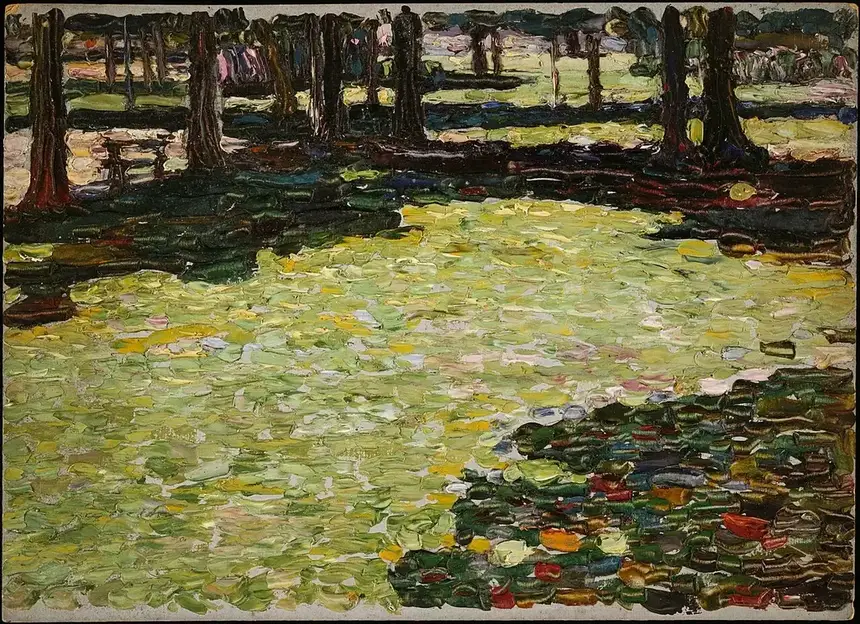
The subject is ordinary. What is not ordinary is how the paint is loaded — that is the part a press cannot reproduce.
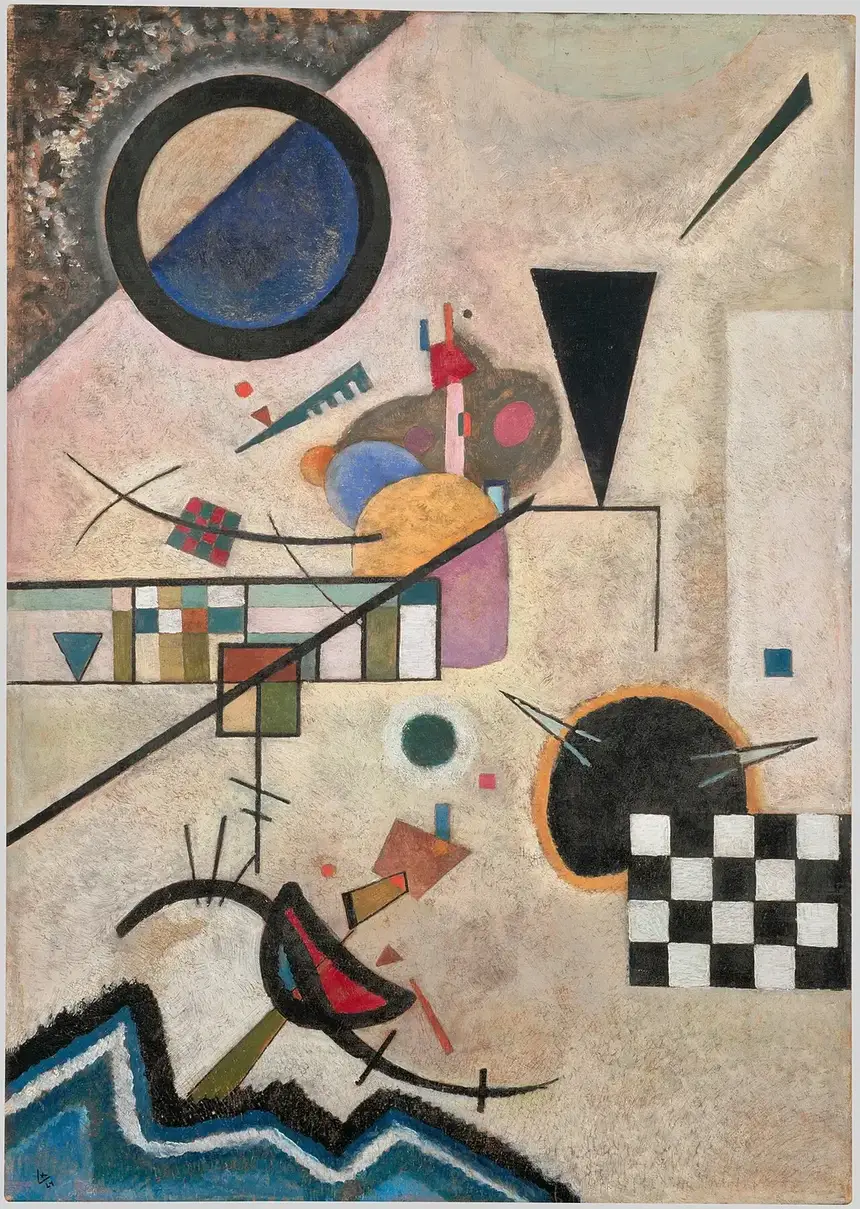
Nothing in Opposing Accords is centred for the sake of being centred; the weight sits where the painter wanted it.
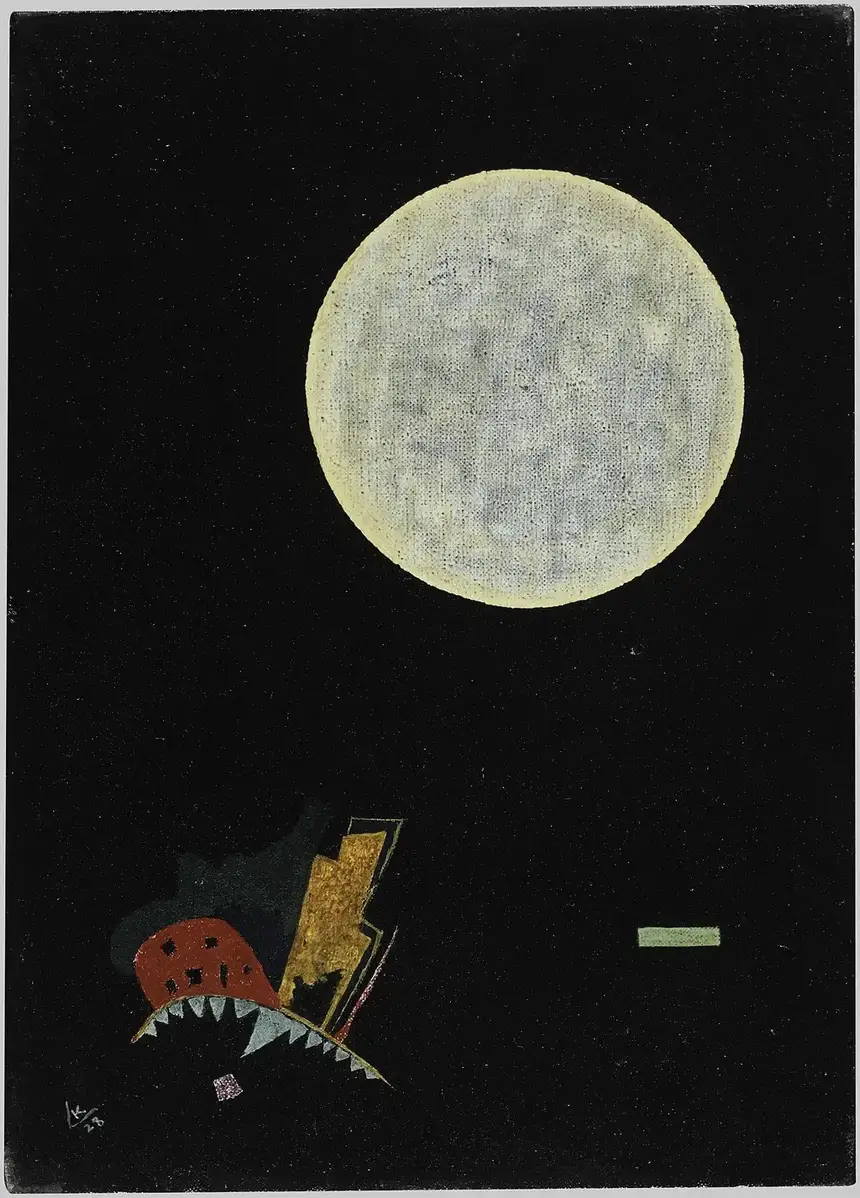
Dusk and overcast passages are the hardest and the most rewarding — they are all half-tones.
Our painter mixes on the palette but finishes on the canvas, which is where the small variations come from.
Nothing here is blended flat. Blending is what makes a painting look printed.
Matching the original's degree of finish is harder than matching its colours.
This reads well above a sofa or a sideboard, where it will be seen from two to three metres.
| Artist | Wassily Kandinsky |
|---|---|
| Title | Opposing Accords |
| Created (original) | 1924 |
| Medium | Oil on canvas, hand-painted to order |
| What you receive | A hand-painted oil painting on canvas |
| Original status | Public domain (artist deceased) |
What a print loses
What you lose in a print is the air. A press lays ink flat; a painter builds depth in layers, and the depth is what you actually see.
Our painter follows the same logic rather than copying a photograph of it: the far distances go down cool and weak, the near ground stays loaded, and nothing is blended flat.
| Aspect | Hand-painted oil | Printed canvas |
|---|---|---|
| Texture | Ridges and drag you can see from across a room | None, or a printed imitation of it |
| Colour | Mixed for each passage, warm and cool versions | One flat value per area |
| Depth | Built in layers, catches light from the side | Flat; highlights are printed as pale ink |
| Available sizes | Whatever you need, painted to order | What the printer can output |
| Later on | Can be restored, re-framed, handed on | Replaceable, and usually replaced |
The passage that will take longest is the one that looks simplest.
Every canvas is painted to order, so the quote follows your size, frame and destination rather than a fixed list. Tell us what you need on WhatsApp and we reply with an exact figure, usually within the hour. No resellers, no drop-shipper. The painter's studio handles your commission from first message to final crate.
The sequence on our floor
Every canvas is painted to order, so nothing is pulled off a shelf. This is the sequence:
- Stretching and priming the support — cotton duck or linen goes onto the bars and gets its ground.
- The drawing goes down — charcoal or thin paint, done by eye rather than traced from a printout.
- Blocking the masses — thin paint, working the whole surface rather than one corner at a time.
- Setting the key — how dark the darks go determines everything that follows.
- The colour passes — each area gets its own mixture rather than one colour used throughout.
- Detail and highlights last — put on thickly and then not touched again.
- Left to dry before varnish — nothing is photographed or packed until the surface is ready.
This one repaints badly, so our painter gets the values right early and leaves them.
Keeping it
Oil paint needs very little: no water, no cleaners, no sprays. A dry brush and a stable room.
What it is made of
Oil paint dries by oxidation, not evaporation, which is why a finished canvas needs weeks before it travels. Varnish goes on only once the paint is properly dry, months after the last stroke, not before.
We use a neutral-sized ground so the whites stay warm rather than going blue over time. The varnish is removable, so a conservator can clean the painting in fifty years without touching the paint.
On framing
Framing is quoted separately, so you can decide after you have seen the finished canvas in photographs.
Most clients wait for the photographs before choosing a frame, which is the sensible order.
Getting the size right
Because each piece is painted from scratch, you are not limited to stock dimensions. These are the sizes clients ask for most:
| Size (inches) | Size (cm) | Best for |
|---|---|---|
| 24 × 20 in | 60 × 50 cm | Study, home office, above a desk |
| 20 × 16 in | 50 × 40 cm | Bedroom, hallway, above a console |
| 16 × 12 in | 40 × 30 cm | A shelf, a small wall, a gallery group |
| 64 × 48 in | 163 × 122 cm | Villa scale, lobby, hospitality wall |
We will size the canvas to the room, not to a stock list. Send us the measurement. DAP terms: we pay the freight, you settle any duty or tax your country applies. We do not collect taxes on anyone's behalf.
It works best on a wall you pass rather than one you sit and stare at — the paint rewards a moving eye.
Give us your size and framing preference and you will have a quote shortly.
💬 Get a Quote for Opposing AccordsOrder, painting, shipping
Painting takes 9–15 days. Freight is quoted as its own line on the quote, agreed before you pay anything, and never added afterwards.
Transit is usually 7–10 business days, tracked all the way. Every shipment goes out with tracking. We do not send anything untracked.
Before anything is packed, you get photographs of the actual canvas and a chance to ask for changes. Changes are handled by telling us what to change; we change it and send new photographs.
Duties and import taxes are the buyer's account (DAP). Your customs authority sets them; we do not.
Work begins on a deposit and ships on the balance. Both figures are on the quote. Damage in transit should be reported to us within 48 hours, with photographs. We pursue it with the carrier rather than promising a refund.
The practical questions
What size should I order?
You choose the size. Each canvas is cut to your measurements rather than pulled from stock, so tell us the wall dimensions and we will tell you what proportion works.
What if it does not look right to me?
We send photographs of the actual painting for your approval before anything ships. That is the moment to tell us what to adjust.
What does it cost?
There is no price list, because the number depends on your size and frame. Message us and we will quote exactly.
Do you ship to my country?
We export to more than 20 countries. Tell us where you are and we will quote the freight as a separate line.
Can you change the colours to suit my room?
We can shift the palette, but we will tell you honestly when a change would spoil the painting.
Is owning a reproduction legal?
Yes. The painting is out of copyright because Wassily Kandinsky died more than 70 years ago. We paint copies honestly and never claim they are originals.
Is it really painted by hand?
Yes. One painter, oil paint, brushes. We do not own a printer that touches canvas.
Do you take a deposit?
A deposit starts the canvas and the balance falls due before it ships. Both figures appear on the quote.
Do you sell prints?
No prints at all — no giclée, no canvas transfer, nothing machine-made.
Will I see it before it ships?
Yes. We send photographs of the finished canvas and wait for your reply before packing.
Can you paint a different work by Wassily Kandinsky?
Yes — send us the image, or look through the other Wassily Kandinsky works on the site.