The original, and why we can paint it
William Merritt Chase died in 1916, so the work has been in the public domain for decades. Reproducing it by hand is legal, and so is owning one.
We paint it in oil on canvas, one at a time, in Dafen Village. Nothing is printed, scanned or transferred.
It is an original composition painted before 1916, and our version is painted from the surviving image of it.
If you want something printed, we are the wrong workshop. We do not own a printer that touches canvas.
What the painting is doing
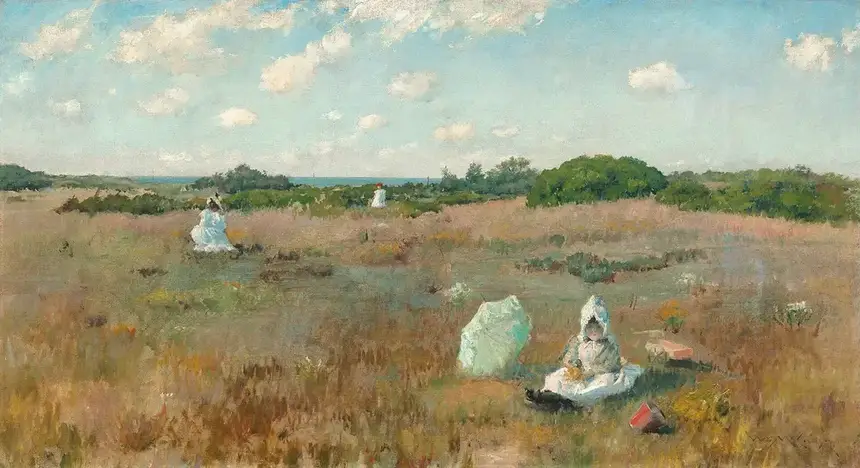
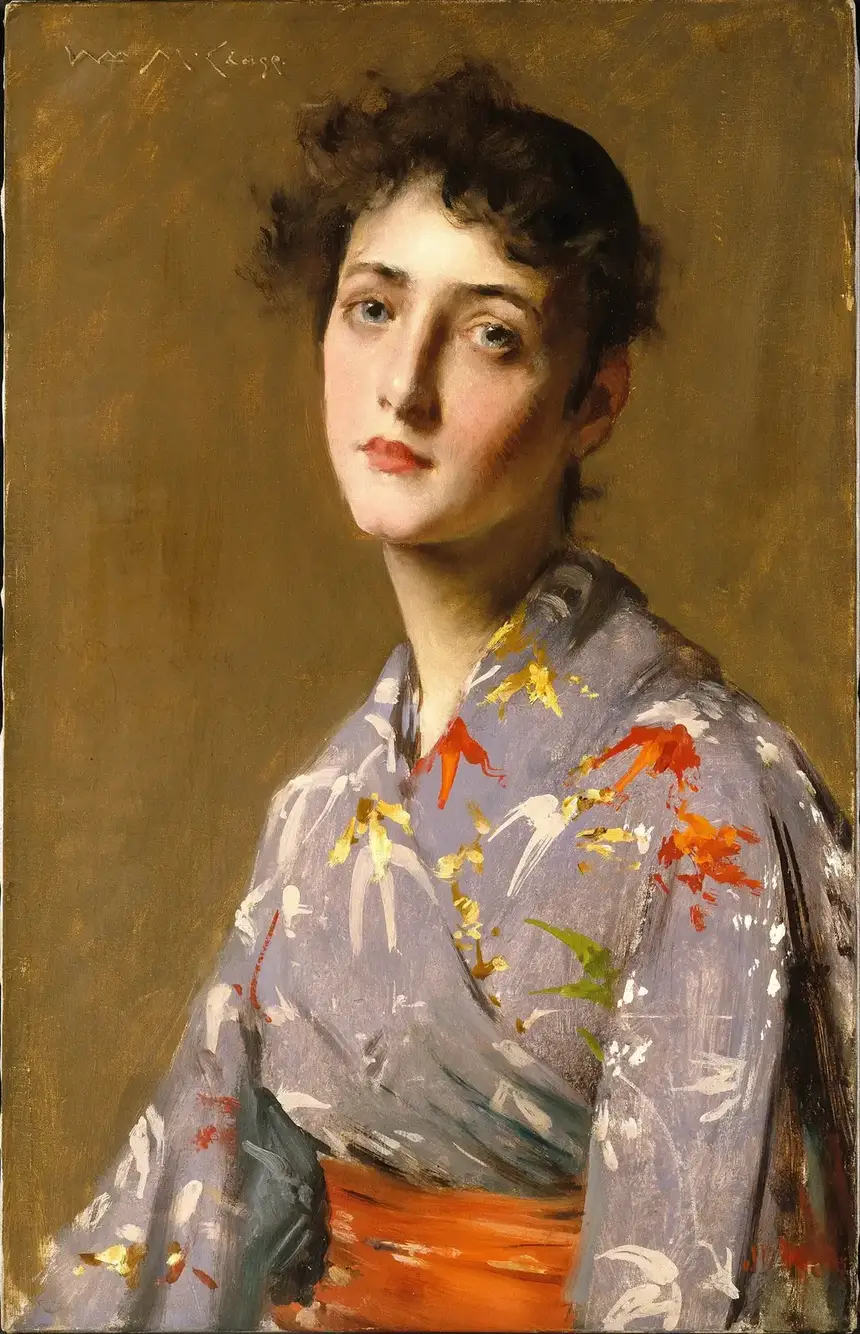
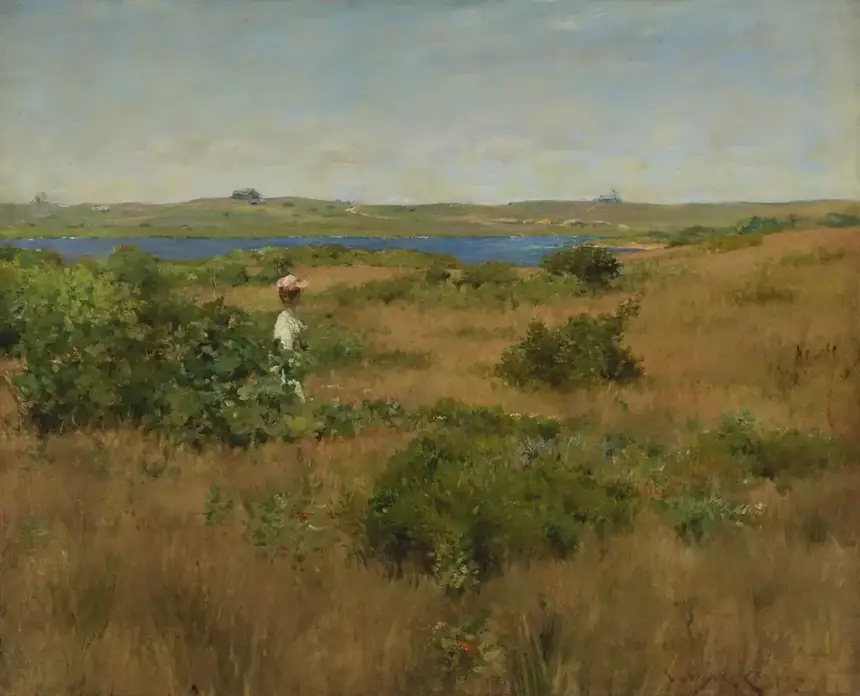
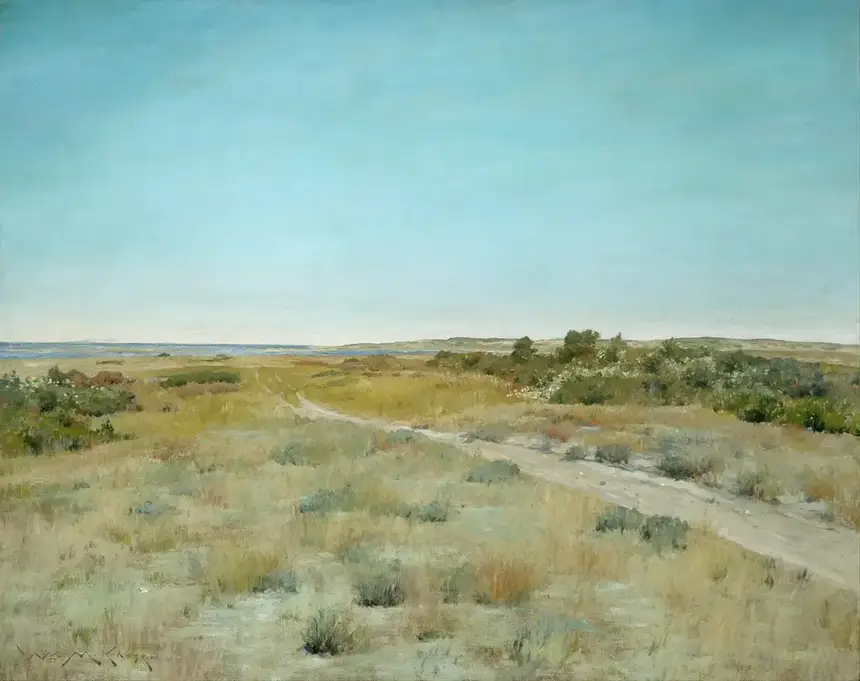
The reason First Touch of Autumn still works as a painting is that it was built as paint, not as a picture of a place.
The near ground is painted loaded and the far ground thin. That single decision creates the whole space.
Our painter leaves the highlights until last and puts them on thickly, so they stand off the surface.
Every colour in First Touch of Autumn has a warm version and a cool version, and the painter chooses between them passage by passage.
The marks have a direction, and the direction follows the form.
Getting First Touch of Autumn right means painting it in the right order, and the order is not obvious.
In a bedroom it works above a headboard, sized to about two-thirds of the furniture width.
| Artist | William Merritt Chase |
|---|---|
| Title | First Touch of Autumn |
| Medium | Oil on canvas, hand-painted to order |
| How it is made | Painted by hand in oil on canvas, to your size |
| Public domain | Yes — the artist died over 70 years ago |
Why this one cannot be printed
Prints are good at information and bad at paint. This subject is mostly paint.
Our painter follows the same logic rather than copying a photograph of it: the far distances go down cool and weak, the near ground stays loaded, and nothing is blended flat.
| Aspect | Hand-painted oil | Printed canvas |
|---|---|---|
| Corrections | We adjust it and repaint the passage | The file is reprinted or it is not |
| The surface | Built up with brushes and knives | Printed flat in one pass |
| Later on | Can be restored, re-framed, handed on | Replaceable, and usually replaced |
| Lifespan | Slow to change; varnish can be refreshed decades later | Fades and cracks sooner |
| Size | Any size, painted to your wall | Limited by the printer |
Anyone can copy the shapes. The skill is in the transitions, and that is what takes the days.
Every canvas is painted to order, so the quote follows your size, frame and destination rather than a fixed list. Tell us what you need on WhatsApp and we reply with an exact figure, usually within the hour. There is no agency in between; the studio that paints your canvas is the one answering your messages.
How the canvas is built
No two canvases are painted the same way, but the sequence is always this:
- Stretching and priming the support — cotton duck or linen goes onto the bars and gets its ground.
- Laying in the drawing — done by eye from the reference, not traced or projected.
- The first colour pass — thin and simple, establishing the main shapes only.
- Getting the values right — the stage that decides whether the finished painting holds together.
- Building the colour — a warm and a cool version of each passage, put down in order.
- Finishing passes — the loaded highlights go on at the end and stay there.
- It dries, then gets varnished — and only then is it photographed for you.
Matching the original's degree of finish is harder than matching its colours.
What goes into it
Varnish goes on only once the paint is properly dry, months after the last stroke, not before. We use a neutral-sized ground so the whites stay warm rather than going blue over time.
We buy pigment in tubes from the same suppliers the village has used for years, not in bulk drums. The paint is built in layers, fat over lean, which is what stops it cracking later.
Care and cleaning
Do not wipe it with anything wet. Dust lightly, hang it somewhere stable, and forget about it.
Framing
If you are shipping, an unframed canvas rolled in a tube is considerably cheaper to move than a framed one.
We can supply a simple floater frame, a traditional gilt, or nothing at all. It is your call.
Canvas sizes
You are not choosing from a list; you are telling us a measurement. These are the common ones:
| Size (inches) | Size (cm) | Best for |
|---|---|---|
| 40 × 30 in | 102 × 76 cm | Living room focal wall, above a sofa |
| 32 × 24 in | 81 × 61 cm | Living room, above a sideboard |
| 30 × 24 in | 76 × 61 cm | Dining room, bedroom feature wall |
| 24 × 20 in | 60 × 50 cm | Study, home office, above a desk |
| 20 × 16 in | 50 × 40 cm | Bedroom, hallway, above a console |
Anything outside this table is fine — we paint to the number you give us. Import charges, where they exist, are the buyer's responsibility (DAP). We never add them to the quote and never guess what they will be.
Given the subject, this sits naturally in a living room or a study rather than a hallway.
Tell us where it will hang and how big it needs to be — we will price it properly.
💬 Get a Quote for First Touch of AutumnTimeline and shipping
The painting takes 9–15 days, and delivery is priced separately on the quote so there is no surprise later.
Air freight runs about 7–10 business days, tracked, to your door. Unframed canvases are rolled face-out on a tube; framed ones are corner-protected and crated.
You see photographs of the finished painting before it ships, and you tell us what to adjust. Changes are handled by telling us what to change; we change it and send new photographs.
Terms are DAP. Import duties and taxes, where they apply, are paid by the buyer on arrival — we never collect them in advance and never guess at the amount.
Work begins on a deposit and ships on the balance. Both figures are on the quote. Damage in transit should be reported to us within 48 hours, with photographs. We pursue it with the carrier rather than promising a refund.
The practical questions
Will it look exactly like the image?
Not exactly, and that is the point — it is a painting, not a scan. Composition, colour and drawing follow the original closely; the surface is where a painter's own decisions show.
Does changing the size change the composition?
No — we keep the original's proportions and scale from there, rather than cropping the image to fit a standard frame.
How long does a hand-painted version take?
9–15 days of studio time, depending mostly on size and how much impasto the surface carries, then several more days for the oil to set before we photograph, pack and send.
Can you change the colours to suit my room?
Sometimes. We will adjust the palette if it can be done without ruining the picture, and say so if it cannot.
Can you paint a different work by William Merritt Chase?
Yes — send us the image, or look through the other William Merritt Chase works on the site.
Do you take a deposit?
Work begins on a deposit and ships once the balance is paid. Nothing is charged that is not on the quote.
Will I see it before it ships?
Yes. We send photographs of the finished canvas and wait for your reply before packing.
What if it arrives damaged?
Report damage within 48 hours with photographs. We deal with the carrier rather than leaving you to argue alone.
What does it cost?
There is no price list, because the number depends on your size and frame. Message us and we will quote exactly.
Is owning a reproduction legal?
Yes. The painting is out of copyright because William Merritt Chase died more than 70 years ago. We paint copies honestly and never claim they are originals.
Does it come framed?
Framing is quoted separately, so you can decide once you have seen the finished painting in photographs.
Is it really painted by hand?
Yes — oil on canvas, brush and knife. There is no printing, no giclée and no canvas transfer at any stage.