About the original
Charles-François Daubigny died in 1878, so the work has been in the public domain for decades. Reproducing it by hand is legal, and so is owning one.
We paint it in oil on canvas, one at a time, in Dafen Village. Nothing is printed, scanned or transferred.
It is an original composition painted before 1878, and our version is painted from the surviving image of it.
You are buying a painting, not a file. That distinction is the whole business we are in.
Looking at it properly
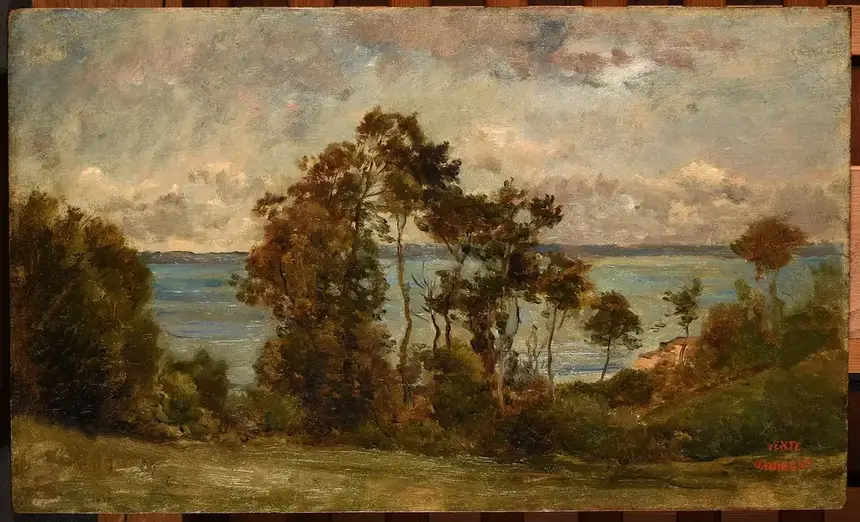
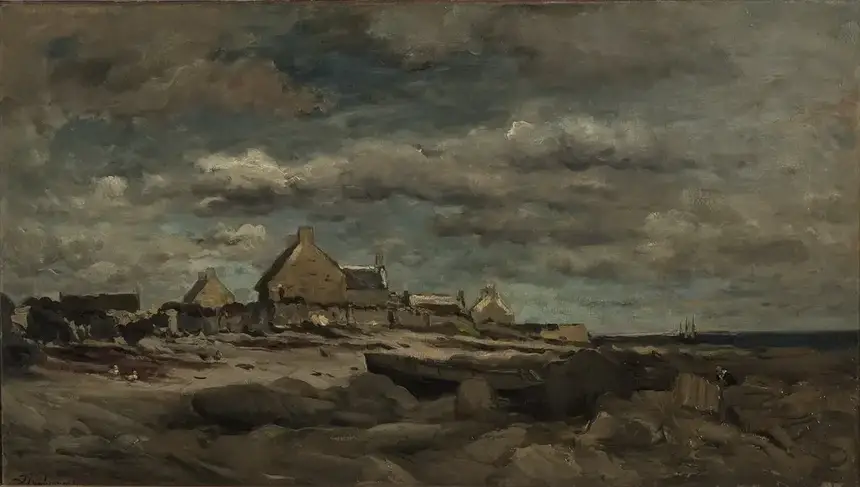
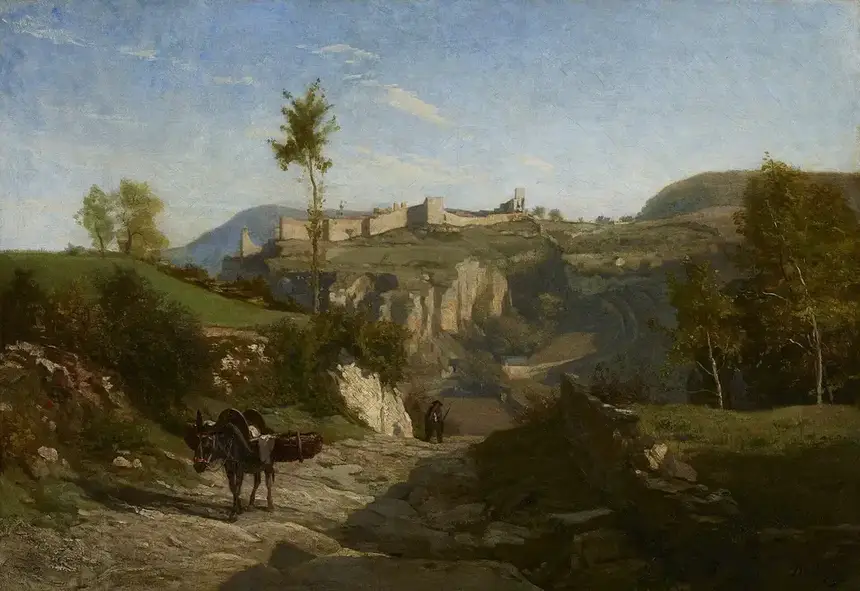
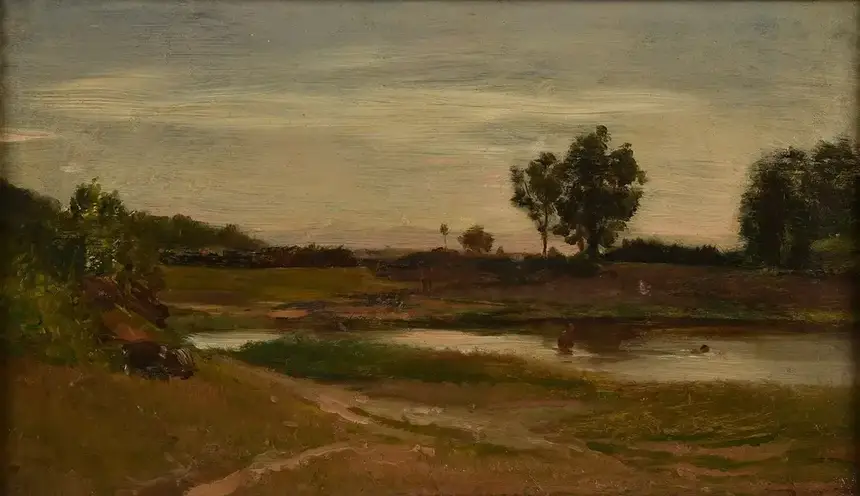
Ours is painted from the source image, stroke by stroke, so Charles-François keeps the order it was originally built in.
Space in a landscape is made with value, not perspective: things that are further away are painted cooler and weaker.
Our painter keeps the shadows transparent, because a shadow in a landscape is lit by the sky, not by nothing.
Temperature does the work of contrast in the quiet areas, where value differences are small.
Edges are made by the brush, not by an outline, and they are the hardest thing to copy.
The risk with a landscape is overworking, and the way to avoid it is knowing when to stop.
Hang it at eye level — roughly 145 cm from the floor to the centre — and it will hold the wall.
| Artist | Charles-François Daubigny |
|---|---|
| Title | Charles-François |
| Medium | Oil on canvas, hand-painted to order |
| Reproduction | Hand-painted oil on canvas, made to order |
| Public domain | Yes — the artist died over 70 years ago |
What a print loses
The difference is not subtle when the two hang side by side. Ink sits on the surface; oil stands off it.
Our painter follows the same logic rather than copying a photograph of it: the far distances go down cool and weak, the near ground stays loaded, and nothing is blended flat.
| Aspect | Hand-painted oil | Printed canvas |
|---|---|---|
| Colour | Mixed for each passage, warm and cool versions | One flat value per area |
| What it takes | One painter, several days, start to finish | A machine, a few minutes |
| Value over time | Can be re-stretched, cleaned and re-framed | Little value beyond the print |
| Sense of depth | Real, created by layers of paint | Simulated by darker ink |
| Changing something | Tell us and the passage gets repainted | Usually means starting the file again |
The passage that will take longest is the one that looks simplest.
Every canvas is painted to order, so the quote follows your size, frame and destination rather than a fixed list. Tell us what you need on WhatsApp and we reply with an exact figure, usually within the hour. No resellers, no drop-shipper. The painter's studio handles your commission from first message to final crate.
How your painting is made
The order of work matters as much as the work itself. Ours runs like this:
- We start with the canvas itself — stretched, sized and left to settle before any colour is mixed.
- Laying in the drawing — done by eye from the reference, not traced or projected.
- Blocking the masses — thin paint, working the whole surface rather than one corner at a time.
- Setting the key — how dark the darks go determines everything that follows.
- Building the colour — a warm and a cool version of each passage, put down in order.
- The detail and highlights go on — last, loaded, and left alone once they are down.
- Left to dry before varnish — nothing is photographed or packed until the surface is ready.
Getting Charles-François right means painting it in the right order, and the order is not obvious.
Canvas, paint and varnish
We use a neutral-sized ground so the whites stay warm rather than going blue over time. Pigment is artist-grade oil colour, not acrylic and not house paint. It behaves differently and it lasts.
Stretcher bars are kiln-dried and wedged, so the canvas can be re-tensioned years later. We use cotton duck for most sizes and linen where the canvas is large or the client asks for it.
Looking after it
Dust it with a dry, soft brush. Keep it out of direct sun and away from radiators, and it will outlive you.
Whether to frame it
Frames are priced once you have chosen them, not estimated in advance.
If you are shipping, an unframed canvas rolled in a tube is considerably cheaper to move than a framed one.
Canvas sizes
Because each piece is painted from scratch, you are not limited to stock dimensions. These are the sizes clients ask for most:
| Size (inches) | Size (cm) | Best for |
|---|---|---|
| 30 × 24 in | 76 × 61 cm | Dining room, bedroom feature wall |
| 24 × 20 in | 60 × 50 cm | Study, home office, above a desk |
| 20 × 16 in | 50 × 40 cm | Bedroom, hallway, above a console |
| 16 × 12 in | 40 × 30 cm | A shelf, a small wall, a gallery group |
| 64 × 48 in | 163 × 122 cm | Villa scale, lobby, hospitality wall |
If your wall is an odd shape, send the measurement and we will work to it. Proportions from the original are kept unless you ask us to change them. Terms are DAP. Import duties and taxes, where they apply, are paid by the buyer on arrival — we never collect them in advance and never guess at the amount.
In a bedroom it works above a headboard, sized to about two-thirds of the furniture width.
Give us your size and framing preference and you will have a quote shortly.
💬 Get a Quote for Charles-FrançoisGetting it to you
Painting takes 9–15 days. Freight is quoted as its own line on the quote, agreed before you pay anything, and never added afterwards.
In transit it is typically 7–10 business days by air, tracked door to door. Rolled in a tube it travels cheaper and safer than framed; most overseas clients take it that way.
You see photographs of the finished painting before it ships, and you tell us what to adjust. If something is not right, tell us what to adjust and we adjust it.
We quote DAP, so any duty or tax your country charges is settled by you at import. We do not add a tax line of our own.
You pay a deposit to start and the remainder before shipping. Nothing is hidden in between. If a crate arrives damaged, send us photographs within 48 hours and contact us directly — we will sort it out with you.
Questions worth asking
What happens after I message you?
You tell us the painting, size and whether you want a frame. We quote, a painter starts on your canvas, and you get photographs before it ships.
Can I get this in a size that is not listed?
Yes — the listed sizes are the common requests, not a limit. Very wide or unusually tall proportions are routine for us.
How long does a hand-painted version take?
9–15 days of studio time, depending mostly on size and how much impasto the surface carries, then several more days for the oil to set before we photograph, pack and send.
Do you sell prints?
No prints at all — no giclée, no canvas transfer, nothing machine-made.
Can I change the size?
Yes. The canvas is painted to your measurement, not taken from a stock list.
How do I hang it?
Roughly 145 cm from floor to centre works for most rooms. Tell us your wall and we will give you the measurement.
Is owning a reproduction legal?
Yes. Charles-François Daubigny died more than 70 years ago, so the work is in the public domain and owning a hand-painted version is legal anywhere. We never pass ours off as the original.
Can you change the colours to suit my room?
Sometimes. We will adjust the palette if it can be done without ruining the picture, and say so if it cannot.
What does it cost?
Every canvas is quoted on size, frame and destination rather than a fixed list. Tell us what you need and we reply with an exact figure.
What if it arrives damaged?
send us photographs within 48 hours and contact us directly — we will sort it out with you.
Will I see it before it ships?
Yes. We send photographs of the finished canvas and wait for your reply before packing.
Can you paint a different work by Charles-François Daubigny?
Yes — send us the image, or look through the other Charles-François Daubigny works on the site.