Where this painting comes from
Thomas Eakins died in 1916, so the work has been in the public domain for decades. Reproducing it by hand is legal, and so is owning one.
Ours is a painting made with brushes. There is no giclée, no canvas transfer and no digital underlayer anywhere in the process.
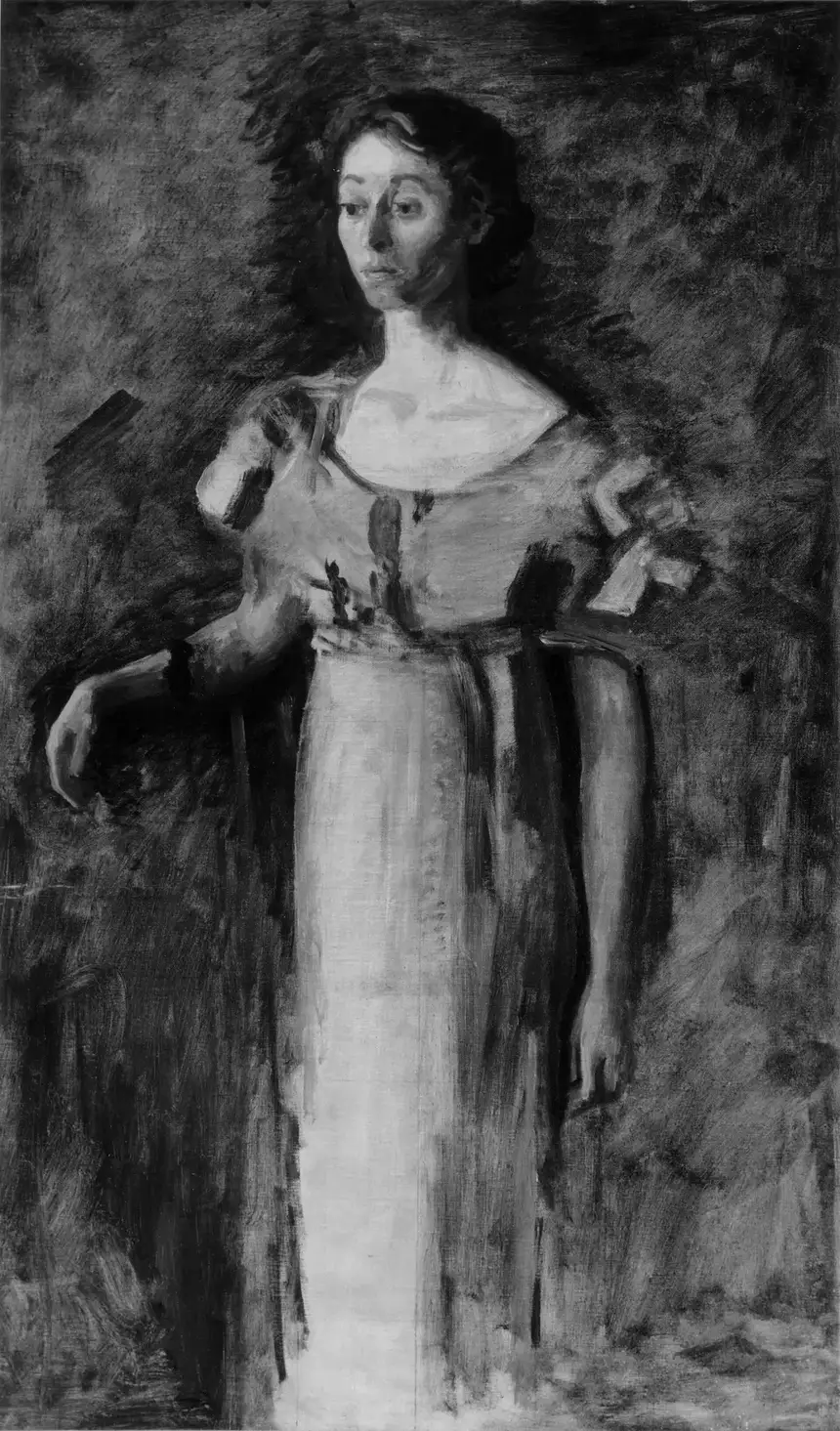
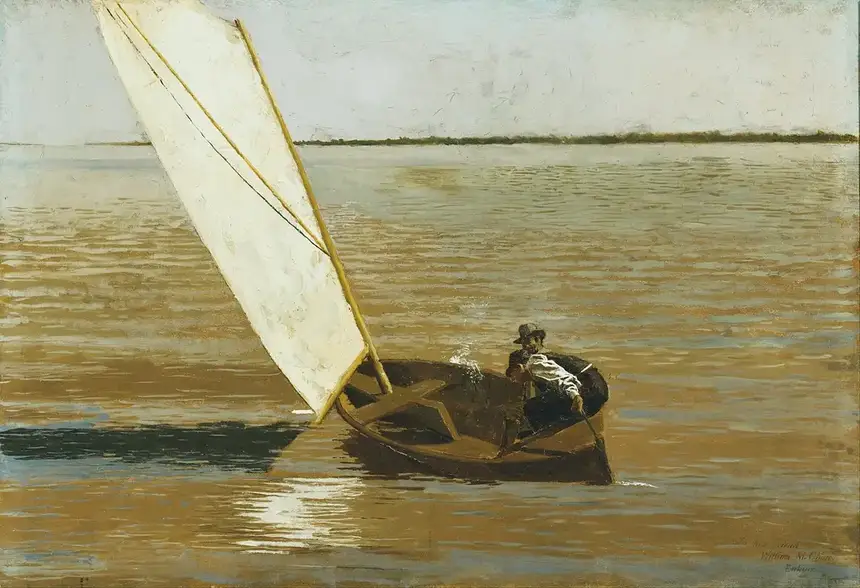
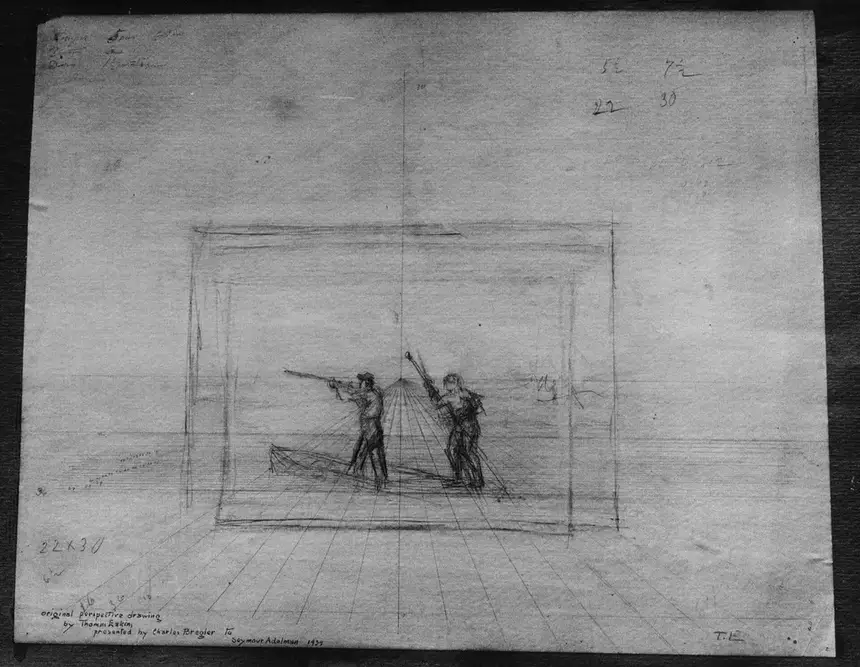
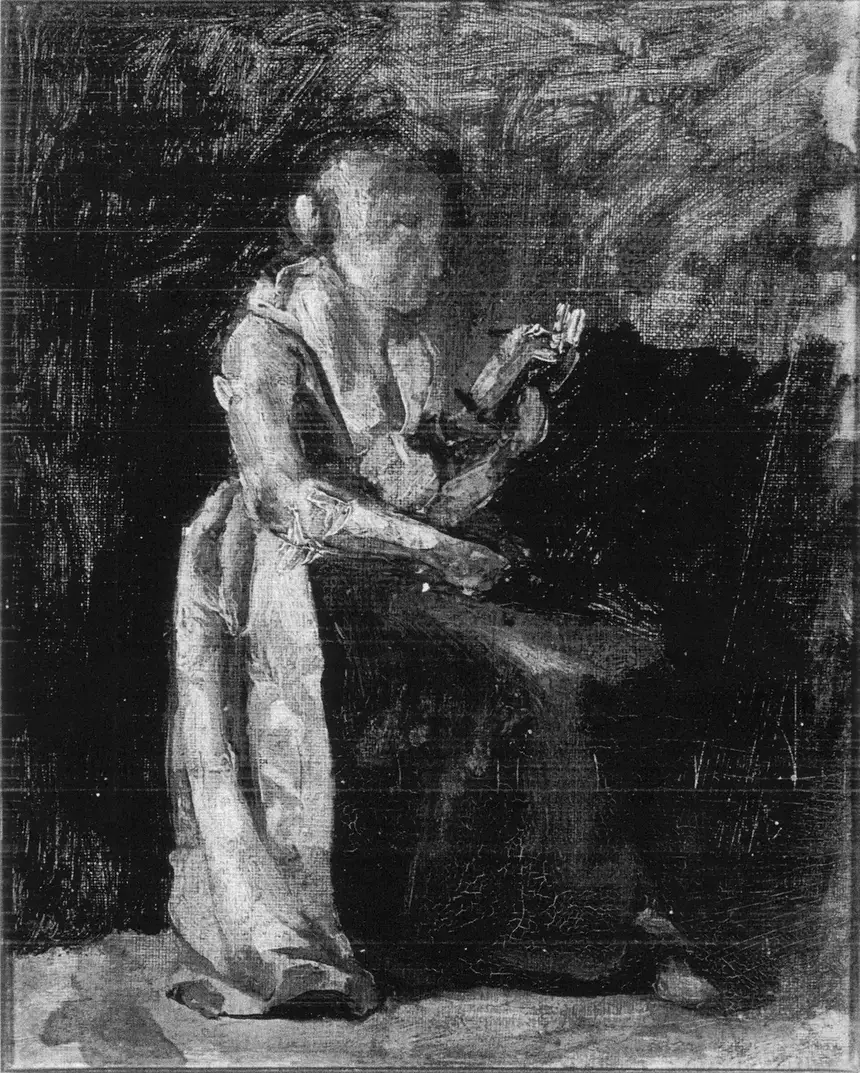
It is an original composition painted before 1916, and our version is painted from the surviving image of it.
If you want something printed, we are the wrong workshop. We do not own a printer that touches canvas.
How to read it
Interiors are difficult because there is no single light source, and oil is the only medium that handles that well.
We keep the softness at the edges of the room, where the source loses it.
The window is the light source and everything in the room obeys it.
Our painter mixes on the palette but finishes on the canvas, which is where the small variations come from.
The thick paint is kept for the light and the thin paint for the dark, which is the traditional way round.
The hardest passage is the quiet one, where a small mistake has nowhere to hide.
A plain wall is better than a busy one; the painting supplies the interest.
| Artist | Thomas Eakins |
|---|---|
| Title | Study for Anna Williams G123B |
| Medium | Oil on canvas, hand-painted to order |
| Our version | Oil on canvas, painted by hand to order |
| Public domain | Yes — the artist died over 70 years ago |
Why this one cannot be printed
What you lose in a print is the air. A press lays ink flat; a painter builds depth in layers, and the depth is what you actually see.
Where the original is loaded, ours is loaded. Where it is thin, ours is thin. Matching the weight of the paint matters more than matching the colour.
| Aspect | Hand-painted oil | Printed canvas |
|---|---|---|
| Edges | Chosen by the painter, passage by passage | Whatever the file happens to contain |
| Changing something | Tell us and the passage gets repainted | Usually means starting the file again |
| Lifespan | Slow to change; varnish can be refreshed decades later | Fades and cracks sooner |
| Value over time | Can be re-stretched, cleaned and re-framed | Little value beyond the print |
| Texture | Ridges and drag you can see from across a room | None, or a printed imitation of it |
What takes time here is the number of separate decisions, not the size of the canvas.
Every canvas is painted to order, so the quote follows your size, frame and destination rather than a fixed list. Tell us what you need on WhatsApp and we reply with an exact figure, usually within the hour. No resellers, no drop-shipper. The painter's studio handles your commission from first message to final crate.
How it gets painted
Every canvas is painted to order, so nothing is pulled off a shelf. This is the sequence:
- We start with the canvas itself — stretched, sized and left to settle before any colour is mixed.
- A loose underdrawing — proportions checked by eye against the source image.
- The big shapes are blocked in — thin paint, one colour at a time, the whole canvas at once.
- Setting the key — how dark the darks go determines everything that follows.
- Colour is built up — warmer and cooler versions of each passage, laid over the underpainting.
- Detail and highlights last — put on thickly and then not touched again.
- Left to dry before varnish — nothing is photographed or packed until the surface is ready.
This one repaints badly, so our painter gets the values right early and leaves them.
On framing
Framing is quoted separately, so you can decide after you have seen the finished canvas in photographs.
Framing is quoted separately, so you can decide after you have seen the finished canvas in photographs.
Materials
We buy pigment in tubes from the same suppliers the village has used for years, not in bulk drums. The varnish is removable, so a conservator can clean the painting in fifty years without touching the paint.
The paint is built in layers, fat over lean, which is what stops it cracking later. Each painter works on one canvas at a time — the painting you ordered is not shared with another order.
Living with it
Do not wipe it with anything wet. Dust lightly, hang it somewhere stable, and forget about it.
Getting the size right
Any size is possible. These are simply the ones that come up most often in quotes:
| Size (inches) | Size (cm) | Best for |
|---|---|---|
| 16 × 12 in | 40 × 30 cm | A shelf, a small wall, a gallery group |
| 64 × 48 in | 163 × 122 cm | Villa scale, lobby, hospitality wall |
| 48 × 36 in | 122 × 91 cm | Large living room, stairwell, loft |
| 40 × 30 in | 102 × 76 cm | Living room focal wall, above a sofa |
| 32 × 24 in | 81 × 61 cm | Living room, above a sideboard |
If your wall is an odd shape, send the measurement and we will work to it. Proportions from the original are kept unless you ask us to change them. Import charges, where they exist, are the buyer's responsibility (DAP). We never add them to the quote and never guess what they will be.
It wants a wall where the light rakes across it, because the surface is part of the picture.
Give us your size and framing preference and you will have a quote shortly.
💬 Get a Quote for Study for Anna Williams G123BOrder, painting, shipping
Allow 9–15 days for the painting itself. Shipping is a separate line on your quote — you see it before payment, not after.
In transit it is typically 7–10 business days by air, tracked door to door. Rolled in a tube it travels cheaper and safer than framed; most overseas clients take it that way.
Before anything is packed, you get photographs of the actual canvas and a chance to ask for changes. Changes are handled by telling us what to change; we change it and send new photographs.
Duties and import taxes are the buyer's account (DAP). Your customs authority sets them; we do not.
A deposit starts the canvas and books the painter's time; the balance is due before the crate leaves. Report any transit damage within 48 hours with photographs and we will deal with the carrier. We will not promise a payout, but we will not leave you to argue alone either.
Questions worth asking
What about duties and import taxes?
Those are the buyer's responsibility (DAP). The amounts are set by your customs authority, not by us.
How do I know what size will look right?
Measure the wall and send a photograph. We will say honestly if the canvas you have in mind is too small for the space, which is the most common mistake.
Will I see it before it ships?
Yes — photographs of the actual painting go to you first, and nothing is packed until you have seen them.
Can I change the size?
Yes. The canvas is painted to your measurement, not taken from a stock list.
How long does it take?
Painting takes 9–15 days. Air freight is usually 7–10 business days on top of that, tracked.
What does it cost?
Every canvas is quoted on size, frame and destination rather than a fixed list. Tell us what you need and we reply with an exact figure.
Do you take a deposit?
Work begins on a deposit and ships once the balance is paid. Nothing is charged that is not on the quote.
Do you ship to my country?
We export to more than 20 countries. Tell us where you are and we will quote the freight as a separate line.
Can you paint it from a different photograph of the same work?
Send your own reference image and we will paint from that instead.
How do I hang it?
Centre it at about 145 cm from the floor, or two-thirds the width of the furniture below it. We will tell you the exact number for your wall.
Is it really painted by hand?
Yes — oil on canvas, brush and knife. There is no printing, no giclée and no canvas transfer at any stage.